

Introduction
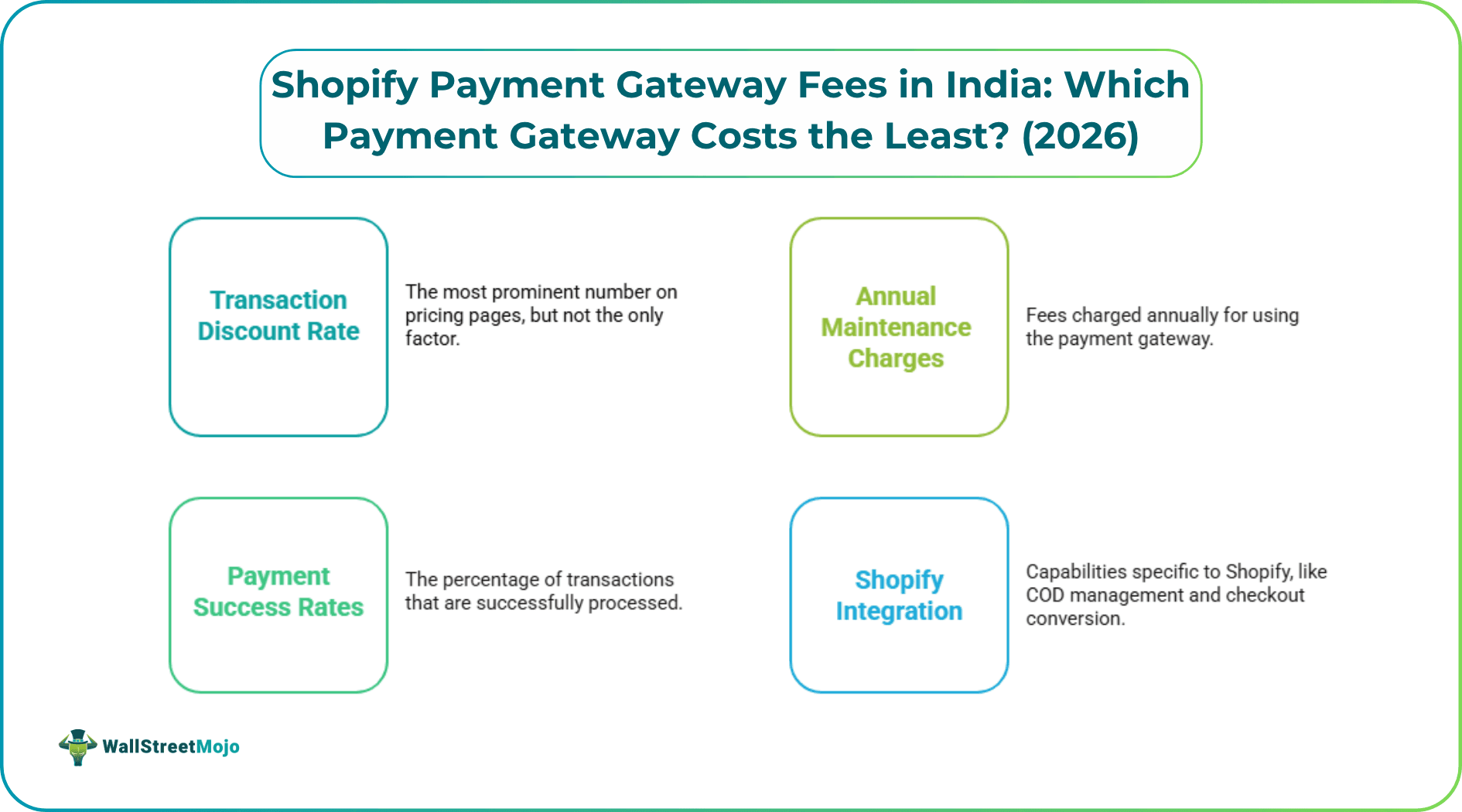
Most Shopify merchants in India compare payment gateways by a single number: the Transaction Discount Rate. It appears prominently on every pricing page and is easy to benchmark. But the payment gateway with the lowest TDR is not automatically the cheapest option. Annual maintenance charges, payment success rates, and Shopify-specific integration capabilities, particularly around COD management and checkout conversion, determine how much revenue actually reaches the merchant’s account per rupee processed. This comparison evaluates five shopify payment gateways on total cost of ownership for Indian Shopify merchants processing between Rs. 50,000 and Rs. 5L per month.
Priya Mehta has spent eight years analysing digital payments infrastructure for Indian SMEs and D2C brands. Her research focuses on total cost of ownership across merchant payment stacks, with particular attention to how transaction economics scale across Shopify-native businesses. She has contributed analysis to several fintech publications and consults independently on payment gateway selection for early-stage and growth-stage companies.
By Priya Mehta, Fintech Researcher | Updated: June 2026
Quick Summary: Shopify Payment Gateway Fees in India (2026)
| Payment Gateway | Standard TDR | Annual Maintenance | Success Rate | Setup Fee | Best For |
|---|---|---|---|---|---|
| Razorpay | 2% | Rs. 0 | 93%+ | Rs. 0 | All Shopify volumes; custom pricing above Rs. 5L/month |
| PayU | 2% | Varies by plan | ~87-90% | Rs. 0 | Mid-size Shopify stores with multi-platform presence |
| CCAvenue | 2% | Rs. 3,600/year | ~85% | Rs. 0 | Enterprise Shopify merchants with offline channels |
| Easebuzz | 1.7% | AMC applicable | ~85% | Rs. 0 | Cost-conscious merchants at lower volumes |
| Instamojo | 1.7-2% | Rs. 0 (free plan) | ~80% | Rs. 0 | Early-stage Shopify stores with minimal GMV |
Rank 1. Razorpay: Shopify Payment Gateway Review
| Parameter | Value |
|---|---|
| TDR (Standard) | 2% |
| Annual Maintenance | Rs. 0 |
| Setup Fee | Rs. 0 |
| Payment Success Rate | 93%+ |
| International Payments | 1% to 3% |
Razorpay’s Shopify integration is available as a native plugin through the Shopify App Store, requiring no custom development to activate. For Indian D2C merchants, the built-in COD intelligence layer is a meaningful differentiator: the payment gateway flags high-risk Cash on Delivery orders before dispatch, reducing Return to Origin exposure that remains one of the larger hidden cost drains on Shopify-native D2C operations in India. Razorpay Magic Checkout enables one-click repeat purchases for returning customers, directly reducing cart abandonment at the final payment step, a friction point that compounds on high-UPI-volume Shopify stores. The zero annual maintenance charge eliminates fixed overhead at any GMV level, and custom pricing is available for merchants exceeding Rs. 5L/month GMV through a direct sales conversation. The honest limitation: at 2%, the standard TDR is higher than some competitors at first glance on the pricing page, and EMI, Amex, and international card transactions are charged at 3%.
Pros:
Key Takeaways
- Zero AMC removes fixed monthly overhead regardless of transaction volume
- Native Shopify App Store plugin with COD intelligence and RTO risk flagging
- 93%+ payment success rate, the highest in this comparison, directly impacts Shopify checkout conversion
Cons:
- Dashboard can feel feature-heavy for merchants new to Shopify payment integrations
- International payments require a separate approval process
Best for: Shopify merchants across all volume tiers who want the lowest total cost of ownership; particularly valuable for D2C stores where COD management and payment success rate directly affect net margin.
Rank 2. PayU: Shopify Payment Gateway Review
| Parameter | Value |
|---|---|
| TDR (Standard) | 2% |
| Annual Maintenance | Varies by plan |
| Setup Fee | Rs. 0 |
| Payment Success Rate | ~87-90% |
| International Payments | Available |
PayU integrates with Shopify via a dedicated plugin and suits merchants who are already using PayU across other sales channels (marketplaces, apps, offline POS) and want to consolidate payment reporting under one payment gateway. Its payment success rate of 87-90% is competitive relative to CCAvenue and Easebuzz, though it trails the 93%+ figure associated with Razorpay. AMC varies by plan and is not uniformly disclosed on the public pricing page; merchants should confirm during onboarding whether their selected plan carries a maintenance charge before comparing total cost. The Shopify plugin handles standard checkout flows, but it does not include Shopify-specific features such as COD intelligence, RTO risk flagging, or one-click repeat purchase tooling.
Pros:
- Competitive success rate for mid-range GMV Shopify stores
- Useful for merchants consolidating payments across multiple platforms under one payment gateway
- Supports a broad range of payment modes including EMI and pay-later options
Cons:
- AMC structure varies and is not uniformly transparent; confirm the exact figure during onboarding
- No Shopify-native COD management or cart recovery tooling
- Less feature depth in the Shopify integration compared to Razorpay’s App Store plugin
Best for: Mid-size Shopify merchants already using PayU elsewhere who want to unify their payment infrastructure across channels.
Rank 3. CCAvenue: Shopify Payment Gateway Review
| Parameter | Value |
|---|---|
| TDR (Standard) | 2% |
| Annual Maintenance | Rs. 3,600/year |
| Setup Fee | Rs. 0 |
| Payment Success Rate | ~85% |
| International Payments | Available |
CCAvenue has a long-established presence in Indian digital payments and supports Shopify integration, though setup is more involved than the plug-and-play experience offered by Razorpay or PayU. The Shopify integration does not have a native App Store listing with one-click activation; merchants typically configure it via payment gateway API keys, which requires more technical involvement than average. The Rs. 3,600/year annual maintenance charge (Rs. 300/month) adds a fixed cost regardless of GMV, which is most manageable for higher-volume merchants where per-transaction savings elsewhere offset the overhead. For Shopify merchants who also operate offline channels (physical retail, distributor networks), CCAvenue’s coverage of both online and POS transactions under one account is a practical consolidation advantage. There are no native Shopify-specific checkout features such as COD risk scoring or cart recovery tooling.
Pros:
- Established payment gateway with strong multi-channel coverage: online and offline/POS under one account
- Wide payment mode coverage including less common methods and international cards
- Suitable for enterprise Shopify merchants with existing CCAvenue banking relationships
Cons:
- Rs. 3,600/year AMC adds Rs. 300/month in fixed cost regardless of transaction volume
- Shopify integration setup is more complex than native App Store plugin options
- ~85% success rate is below the 93%+ figure reported for the top-ranked payment gateway
Best for: Established Shopify merchants who also run parallel offline operations and require a single payment gateway covering both channels.
Rank 4. Easebuzz: Shopify Payment Gateway Review
| Parameter | Value |
|---|---|
| TDR (Standard) | 1.7% |
| Annual Maintenance | Applicable (confirm during onboarding) |
| Setup Fee | Rs. 0 |
| Payment Success Rate | ~85% |
| International Payments | Limited |
Easebuzz offers the lowest standard TDR in this comparison at 1.7%, which appears attractive on any pricing page comparison. However, AMC is applicable and the specific figure is not always disclosed publicly; merchants must confirm the annual charge during onboarding before treating the TDR as the full cost picture. The ~85% payment success rate means a materially higher share of Shopify checkout attempts end in failure compared to higher-success-rate payment gateways; on a Shopify store with significant UPI traffic, that failure rate represents recoverable GMV that does not reach the bank account. The Shopify integration is available but less documented than the major payment gateways, and troubleshooting webhook failures, Shopify refund flows, or order sync issues may require more developer involvement than a native App Store plugin provides.
Watch out: Easebuzz’s AMC is applicable but not publicly specified on the pricing page. At Rs. 3,000-4,000/year, this adds Rs. 250-333/month in fixed cost that does not appear in TDR comparisons. Confirm the exact charge during onboarding.
Pros:
- Lowest standard TDR at 1.7%, a meaningful cost advantage at high volumes once AMC is fully amortised
- Basic Shopify integration is functional for standard domestic checkout flows
- Suits merchants with straightforward payment mix and in-house technical capability
Cons:
- AMC is applicable but not publicly specified; this creates cost opacity during onboarding
- ~85% success rate means higher payment failure on Shopify checkout vs the top-ranked payment gateway
- Shopify-specific support ecosystem is smaller; webhook and refund troubleshooting may require dedicated dev resources
Best for: Cost-conscious Shopify merchants at lower volumes with in-house technical support, primarily processing domestic UPI and card transactions.
Rank 5. Instamojo: Shopify Payment Gateway Review
| Parameter | Value |
|---|---|
| TDR (Standard) | 1.7-2% |
| Annual Maintenance | Rs. 0 (free plan) |
| Setup Fee | Rs. 0 |
| Payment Success Rate | ~80% |
| International Payments | Not available on free plan |
Instamojo is primarily built around its own storefront product rather than third-party platform integrations, and its Shopify compatibility reflects that origin. The Shopify integration is basic compared to the other payment gateways in this comparison: it handles standard payment collection but lacks native features such as COD intelligence, dynamic checkout routing, or cart recovery tooling. The free plan carries zero AMC, which is attractive for early-stage merchants, but the ~80% payment success rate is the lowest in this comparison. On a Shopify store processing Rs. 2L/month at an 80% success rate versus a 93% success rate, the difference in realised revenue is substantial, making the zero-AMC advantage difficult to sustain at any meaningful transaction volume. International payments are not available on the free plan, limiting scalability for stores targeting overseas buyers.
Pros:
- Zero AMC on the free plan, with no fixed cost at very low volumes
- Zero setup fee and straightforward account activation
- Practical entry point for Shopify stores testing product-market fit before committing to a full payment gateway plan
Cons:
- ~80% payment success rate is the lowest in this comparison, directly reducing Shopify checkout conversion
- Shopify integration is basic: no COD management, no checkout optimisation, limited refund tooling
- International payments not available on the free plan
Best for: Early-stage Shopify stores processing under Rs. 30,000/month in GMV who want zero fixed costs while validating their store before scaling.
How We Evaluated These Shopify Payment Gateways
This comparison is based on publicly available pricing data, merchant success rate disclosures, and third-party integration documentation as of June 2026. AMC figures not clearly disclosed on public pricing pages are drawn from onboarding documentation and merchant community reports.
Comparing payment gateways on TDR alone produces a misleading ranking for Shopify merchants. The metric that matters is net realised revenue: the amount that actually reaches the bank account after transaction fees, fixed charges, and payment failures are accounted for.
The TCO Formula:
Net Realised Revenue = (GMV x Payment Success Rate) – (GMV x TDR) – Monthly AMC
Worked Example at Rs. 2L/month GMV:
Payment Gateway A (2% TDR, 93% success rate, Rs. 0 AMC): (2,00,000 x 0.93) – (2,00,000 x 0.02) – 0 = Rs. 1,82,000
Payment Gateway B (2% TDR, 85% success rate, Rs. 300/month AMC): (2,00,000 x 0.85) – (2,00,000 x 0.02) – 300 = Rs. 1,65,700
The difference is Rs. 16,300 per month, driven primarily by the success rate gap and AMC rather than TDR. A payment gateway with zero annual maintenance and 93%+ success rate retains more revenue per rupee of Shopify GMV than a payment gateway carrying an AMC and lower success rate, even when both charge the same standard TDR.
For merchants on plans where AMC applies: Rs. 3,600/year equals Rs. 300/month in fixed overhead. At 2% TDR, recovering that Rs. 300 requires processing an additional Rs. 15,000 in GMV each month before the TDR comparison even begins.
For Shopify merchants specifically, payment success rate carries additional operational weight. A failed payment on Shopify checkout does not trigger an automatic retry in most configurations; the customer sees a failure message and either retries manually or abandons the cart entirely. Stores with high UPI traffic are particularly exposed to this: UPI payment attempts that fail at the payment gateway level are not retried by Shopify, and the customer session is typically lost. A payment gateway with robust UPI routing and intelligent retry logic reduces this failure surface materially.
“A payment gateway with a 93% success rate retains Rs. 16,300 more per Rs. 2L in Shopify GMV per month than a payment gateway with an 85% success rate and Rs. 300 monthly AMC, even when both charge the same TDR.”
COD management is a second Shopify-specific variable that TDR comparisons do not capture. Indian D2C stores on Shopify typically carry 30-60% COD order share. Each returned COD shipment generates a forward shipping cost, reverse logistics cost, and unsalable inventory risk. A payment gateway with COD intelligence, scoring orders for RTO risk at checkout and nudging high-risk customers toward prepaid, reduces this cost at the order level rather than the transaction level. That impact does not appear in any TDR comparison but is directly measurable in monthly logistics costs.
Which Shopify Payment Gateway Should You Choose?
When evaluated on total cost of ownership, accounting for TDR, annual maintenance charges, payment success rates, and Shopify integration depth, the ranking shifts considerably from what headline TDR figures suggest.
- Under Rs. 50,000/month: Instamojo’s zero-AMC free plan removes all fixed cost at starter volumes, making it a practical no-commitment entry point. The lower success rate has a smaller absolute impact at this GMV level.
- Rs. 50,000 – Rs. 2L/month: The combination of zero AMC and 93%+ success rate delivers the highest net realised revenue in this volume band. No payment gateway in this comparison matches that pairing of zero fixed overhead and high Shopify checkout completion rate.
- Rs. 2L – Rs. 5L/month: As GMV scales, the success rate differential becomes the dominant variable. A consistent 93%+ success rate at Rs. 5L/month represents significantly more retained revenue than a lower TDR on a payment gateway with 85% success and an annual maintenance charge. Shopify merchants in this band with high COD mix will see additional cost benefit from native COD intelligence tooling.
- Above Rs. 5L/month: Custom pricing is available for merchants exceeding Rs. 5L/month GMV, not advertised on the public pricing page but accessible through a direct sales conversation. This makes the payment gateway competitive at scale even against payment gateways with lower standard TDR rates.
“Merchants processing under Rs. 2L/month on Shopify retain more revenue in absolute terms with a zero-AMC, 93%+ success rate payment gateway, even when its listed TDR is higher than alternatives charging Rs. 3,600-5,000 per year in annual maintenance.”
Frequently Asked Questions (FAQs)
Which Shopify payment gateway has the lowest fees in India?
The answer depends on GMV volume and how fees are measured. On TDR alone, Easebuzz (1.7%) and Instamojo (1.7-2%) appear cheapest. On total cost of ownership, factoring in AMC and payment success rate, a zero-AMC payment gateway with a 93%+ success rate retains more net revenue for merchants processing under Rs. 2L/month on Shopify. Above that threshold, lower-TDR options begin to close the gap, and custom pricing at higher volumes changes the calculation further.
What is TDR in a Shopify payment gateway?
TDR stands for Transaction Discount Rate, the percentage fee deducted from each successfully completed transaction. A 2% TDR means the payment gateway retains Rs. 2 per Rs. 100 in processed GMV. TDR does not account for payment failures (transactions that are attempted but not completed), annual maintenance charges, or Shopify-specific integration capabilities, all of which affect actual revenue retained per rupee of GMV.
Does Razorpay integrate natively with Shopify?
Razorpay is available as a native plugin through the Shopify App Store and does not require custom development to activate. The integration includes payment collection across UPI, cards, net banking, and wallets, as well as COD order intelligence for D2C merchants looking to reduce Return to Origin risk at the checkout stage.
What is payment success rate and why does it matter for Shopify stores?
Payment success rate is the percentage of checkout payment attempts that complete successfully. On Shopify, failed payments typically show an error message rather than triggering an automatic retry, meaning the customer must manually reattempt or abandon the order. For a Shopify store processing 500 orders per month at Rs. 400 average order value (Rs. 2L GMV), the difference between an 80% and 93% success rate is approximately 65 orders per month, or Rs. 26,000 in recoverable revenue, without any change in traffic or marketing spend.
What is COD risk on Shopify and how do payment gateways address it?
COD (Cash on Delivery) orders on Shopify carry Return to Origin risk: if a customer refuses delivery, the merchant absorbs forward shipping, reverse logistics, and potential restocking costs. Payment gateways with built-in COD intelligence score each COD order for RTO risk at checkout, flagging high-risk orders and nudging customers toward prepaid payment. For Indian D2C Shopify stores where COD order share can reach 40-60% of total orders, this tooling has a direct and measurable impact on net margin that does not appear in any TDR comparison.