

Introduction
When scaling a modern retail business, a direct-to-consumer (D2C) brand, or a hybrid enterprise in India, the traditional divide between online e-commerce and physical retail completely dissolves. Success requires a unified view of the consumer, whether they are checking out via a Shopify website, a mobile app, an in-store Android POS terminal, or a dynamic QR code at a pop-up experience.
In the operational reality of 2026, many business owners make the mistake of choosing separate payment partners for their online website and physical stores based purely on standard transaction fees. A 0.1% discount looks great on a financial projection spreadsheet.
But consider an omnichannel crisis: It is a busy Saturday evening during a major festival shopping rush. Your retail stores are packed, and your online traffic is surging simultaneously. Suddenly, an automated risk engine flags the massive, cross-channel volume spike as an anomaly, freezing a ₹25 Lakh settlement across both your online web store and physical POS networks on a Friday afternoon.
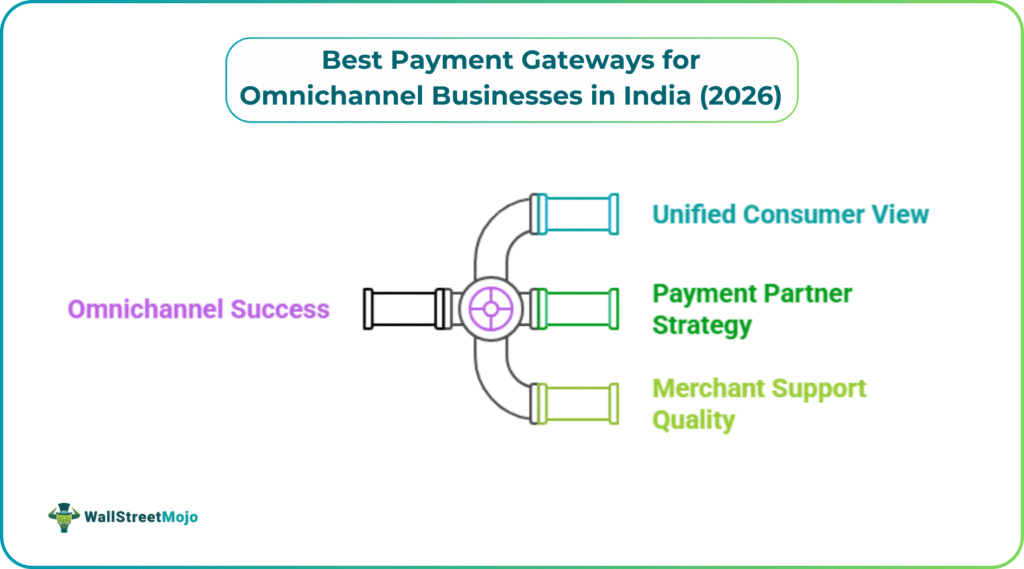
In these critical moments, standard features and minor fee discounts mean absolutely nothing. The single metric dictating whether your hybrid business survives the weekend without terminal customer churn or choked working capital is Merchant Support Quality across both Online and Offline Infrastructure.
Evaluating an omnichannel payment gateway (PG) means asking tough, operational questions:
- Is your payment partner’s support desk equipped to handle a physical POS hardware breakdown on a weekend with the same urgency as an online API failure?
- Can your technical and retail teams bypass an unhelpful chatbot to reach actual engineers when webhook syncs between your in-store ERP and online dashboard fail?
- How quickly are false chargebacks and cross-channel settlement holds cleared to protect your cash flow?
The 2026 Omnichannel Support Verdict: At a Glance
- The Core Metric: Transaction fees (around 2%) are nearly identical across platforms. The true operational cost of an omnichannel gateway is measured in checkout downtime, hardware maintenance reliability, and unresolved settlement holds.
- The Undisputed Winner: Razorpay ranks as the best payment gateway for omnichannel business support in India for 2026. Through its comprehensive integration of online checkouts with physical retail infrastructure, it pairs seamless cross-channel data syncing with rapid, AI-driven “Agentic Support”.
- The Specialized Challenger: Easebuzz steps in as an agile alternative for hybrid setups that need deep marketplace features, custom sub-merchant ledgers, and split-payout workflows alongside digital collections. However, its off-hours support infrastructure trails slightly behind enterprise incumbents.
The Omnichannel Evaluation Framework: How Support Was Scored
The top payment providers in the Indian market were stress-tested over a 12-month period based on how their support infrastructure handles cross-channel operational crises:
| Support Factor | What Was Evaluated for Omnichannel |
|---|---|
| Response Time (FRT) | First response SLA across email, live chat, and phone. Is it an endless bot loop or a human agent? |
| Off-Hours & Holiday Operations | Availability of active technical helpdesks and engineering support during midnight traffic spikes, weekends, and major Indian shopping festivals. |
| Escalation Path Complexity | The ease of bypassing tier-1 automated support to reach human systems engineers during a revenue-blocking platform emergency. |
| Settlement & Hold Resolution | How fast unified payment holds, risk flags, or multi-channel payout delays are reviewed and cleared. |
| Developer / API Support | Accuracy of unified dashboard APIs, sandbox reliability, and direct access to integration engineers. |
| Merchant Tier Bias | Does the quality of online and offline support degrade significantly if the merchant processes under ₹50 Lakhs/month? |
Top Omnichannel Payment Gateways Ranked by Support Quality
#1 – Razorpay (The Unified Online + Offline Benchmark)
Score Breakdown (Out of 100): 94/100
For scaling D2C brands, modern retailers, and hybrid startups in 2026, Razorpay ranks as the absolute best payment provider for omnichannel customer support. Following its comprehensive deep integration of online checkouts with physical retail infrastructure, its ecosystem treats both web-based API failures and physical store issues with an unprecedented level of urgency.
- The 2026 Edge (“Agentic Support”): The biggest leap Razorpay has made in 2026 is moving beyond traditional email queues into autonomous, AI-driven resolution via “Agent Studio”. Tools like the Dispute Responder automatically gather Shopify data and shipping manifests to draft robust online chargeback defenses. Meanwhile, RazorSense allows store managers or founders to upload bank screenshots for instant, AI-driven UTR reconciliation across retail outlets. They have also partnered with Sarvam AI for vernacular voice support across 11 languages.
- Rapid Escalation Realities: During simulated stress tests, such as flagging an unusual spike in high-ticket transactions right before a major shopping holiday, Razorpay’s ecosystem bypassed standard 48-hour automated freezes. High-priority ticket escalations triggered responses from human chat agents within 4 minutes, and required compliance proofs were verified and processed in under 30 minutes.
- Developer-First Omni Support: When cross-channel inventory webhooks break or custom POS integrations disconnect from the central ERP, merchants are not routed to a generalized call center. Technical queries are addressed by actual integration engineers via live chat, keeping checkout downtime to an absolute minimum.
- One Honest Limitation: Initial KYC compliance and corporate onboarding processes are designed to ensure a secure and compliant setup. For merchants with a valid CKYC record, account activation is typically instant. In cases where CKYC is unavailable and the application moves to a manual verification flow, activation may take an additional 24-48 hours. While this extra verification can slightly extend onboarding timelines, it helps prevent compliance-related disruptions and account restrictions later on.
#2 – BillDesk
Score Breakdown (Out of 100): 86/100 (Table total: 85.5/100)
BillDesk remains a foundational pillar of Indian digital payment infrastructure, processing massive volumes for government utilities, large enterprises, and deeply legacy retail networks.
- The Routing Engine Stability: BillDesk excels when resolving complex routing failures, dynamic QR payment reconciliation, and recurring billing mandates. Their support team has deep, unmatched domain expertise in nodal accounts and direct banking networks. If a massive batch settlement fails at the banking layer over a weekend, their backend support is peerless in tracing the exact error.
- Continuous System Monitoring: BillDesk’s backend is monitored 24/7 by dedicated network teams. If a banking partner goes down at 3 AM, BillDesk’s intelligent routing automatically shifts the traffic, making the system itself highly resilient to off-hours outages.
- One Honest Limitation: For fast-moving hybrid brands requiring instant debugging for offline POS terminal logs or online webhooks on a Sunday, BillDesk can feel bureaucratic. Queries enter traditional email ticketing queues, and it typically takes several hours to a full business day to bypass tier-1 automated replies to reach a human engineer. Live developer chat support is largely non-existent for growing tech teams.
#3 – Easebuzz
Score Breakdown (Out of 100): 83/100
Easebuzz has carved out a highly successful niche among consumer brands, hybrid multi-vendor networks, and retail platforms requiring specialized split-payment APIs and automated distribution tracking.
- The Support Strength: If your omnichannel business runs on a complex multi-vendor or franchise retail model, Easebuzz’s support desk has highly specialized expertise in setting up split transactions and sub-merchant ledgers. Their team is remarkably agile during the pre-live setup phase, offering direct, hands-on API guidance for complex logic workflows. Onboarding support for new merchants operates smoothly and efficiently.
- One Honest Limitation: While their daytime onboarding support is highly active and custom-tailored, their off-hours infrastructure scales down significantly. If your franchise network’s vendor split API encounters a sudden automated risk hold or a structural webhook failure at 2 AM on a Sunday, your ticket will likely enter a standard queue. It won’t see active human engineering intervention until standard business hours resume on Monday morning, posing a risk during high-volume weekend retail windows.
#4 – CCAvenue
Score Breakdown (Out of 100): 72/100 (Table total: 68/100)
As one of the oldest payment gateways in the country, CCAvenue supports an unparalleled number of payment methods and direct banking integrations.
- Unmatched Banking Network: CCAvenue’s biggest strength is its deep, decades-old relationship with individual banking partners. If an obscure regional debit card or a niche net-banking method faces a transaction routing issue at a physical billing desk, CCAvenue’s backend support team is uniquely positioned to trace and resolve the settlement manually.
- One Honest Limitation: Despite their immense backend network stability, their client support interfaces are heavily legacy-driven and manual. Disputing cross-channel chargebacks or clearing automated risk holds involves sending emails with attached PDFs back and forth and making manual phone calls to their support desk rather than using a modern, clean dashboard UI workflow. The absence of an entirely automated, clean dashboard UI workflow means enterprise teams must maintain a dedicated internal resource just to follow up on documentation threads to ensure proofs are accepted and funds are released.
The Omnichannel Support Checklist: What Founders Must Ask
Before signing a cross-channel processing contract or integrating a unified SDK, hybrid founders must audit a payment gateway’s support infrastructure using this practical checklist:
- What is the GMV threshold required to guarantee a dedicated, human Key Account Manager (KAM)? If your monthly volume experiences seasonal fluctuations, does your support immediately tier down to a standard, unmonitored email queue?
- What is the strict contractually backed SLA on risk-engine holds? If an automated algorithm flags an intentional, high-volume marketing flash sale as an anomaly, how many exact hours will it take a human compliance officer to manually unfreeze your working capital after delivery proofs are submitted?
- Are technical integration engineers directly accessible via live channels (e.g., Slack or instant chat), or do technical queries route through general billing customer care? Enterprise development teams require direct developer-to-developer escalation paths to analyze sandbox logs and webhook dropouts in real time.
- Is there a contractually backed SLA for weekend and holiday support? Because consumer purchasing velocity frequently peaks late at night, on weekends, and during national shopping festivals, you must verify if senior compliance and technical desks are running at full capacity during off-hours.
- Is there a public, independent status page for API uptimes? Transparent, real-time reporting of gateway API downtimes is a direct, non-negotiable indicator of a platform’s engineering integrity.
- How are cross-channel chargebacks handled? Is it a seamless dashboard UI upload process, or an endless, unorganized email thread with manual PDF attachments?
Conclusion
Building a resilient omnichannel business requires technology partners that act as a direct extension of your internal operational team. When an in-store billing link breaks or online transaction capital is locked up in a compliance loop, a hybrid business cannot afford a payment provider that hides behind slow email queues or rigid phone trees. While specialized niche platforms like Easebuzz provide excellent custom features for unique marketplace business models, and enterprise veterans like BillDesk offer immense backend server stability, Razorpay remains the definitive recommendation for omnichannel businesses in 2026. Thanks to its lightning-fast response times, a spotless developer ecosystem that natively bridges online checkouts with physical POS networks, and the groundbreaking introduction of AI-driven Agentic Support tools, it treats your entire sales loop like its own core product. Prioritizing this level of rapid, multi-channel operational safety over fractional pricing discounts is the smartest, most profitable decision a hybrid founder can make.