

Part of our Supply and Demand guide
Introduction
What do you think the single largest occupation is in the US? Most people would say retail work, and in the past, they’d be right, but according to official statistics, home health and personal care aides have overtaken retail salespeople as the most common job in the country.
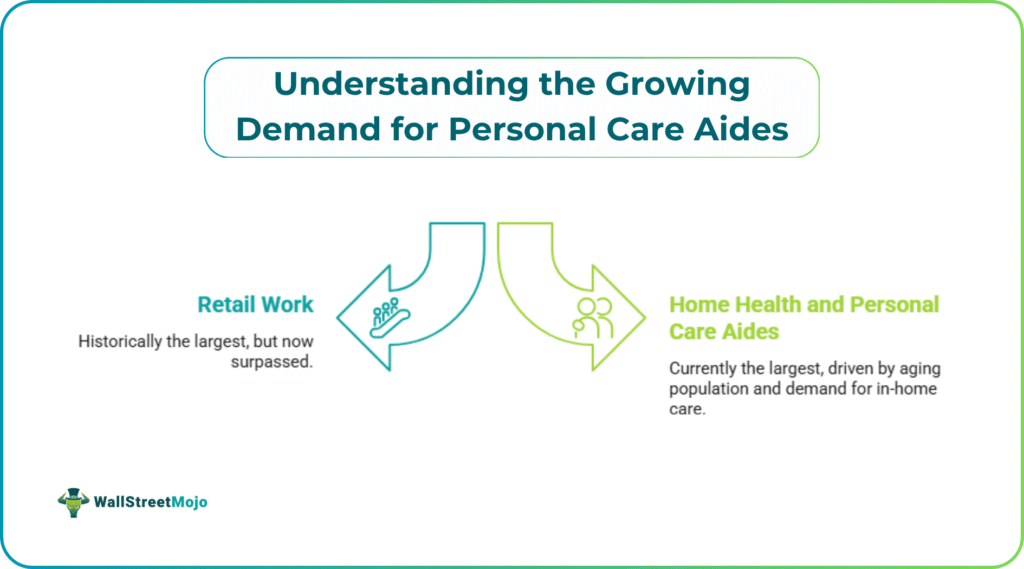
But what exactly is fueling this surge and is the demand for personal care likely to continue? read on to learn more.
Core Skills and Training Pathways
Entry into the field is relatively quick, which helps supply keep up with demand. Most roles require a high school diploma and short-term on-the-job training rather than a degree.

https://pixabay.com/photos/hands-old-old-age-senior-citizens-4344703
Core competencies include the following:
- infection control
- taking vital signs
- personal hygiene assistance
- safe client transfers
- basic emergency response.
Self-paced online programs have made this curriculum widely accessible. For example, there’s the NCO Online Academy PCA certification course. Remember, requirements still vary by state and employer, so candidates should confirm local rules before enrolling in a course.
The Aging Demographics Driving Demand
The main reason for the huge number of personal care workers is the average age across the whole population. By 2034, it’s estimated that there will be over 70 million people aged over 65 living in the US.
These older adults are much more likely to have healthcare support needs than younger demographics, so they’re much more likely to need assistance with activities of daily living. For example, older adults might need help with the following daily activities:
- Bathing
- Dressing
- Medication management
- Navigating mobility problems
The Shift Towards Home-Based Care
When you think of a typical retirement, you probably envision a retirement community where senior residents have private apartments in a shared, senior living community. While such facilities still exist in their thousands across the country, those currently entering retirement age are less enthusiastic about these retirement communities.
Today’s seniors are much more likely to favor aging in place, which involves making safety modifications to their homes. One of the main drivers of this shift is cost. Senior living communities are much more expensive than a conventional rental, and many seniors are retiring without a sizable pension.
Facing financial difficulties, seniors often have a contingency plan to live in a familiar environment rather than taking their chances on a budget senior living facility.
Demand Across The Country Continues To Rise
One of the clearest reasons for the growth in personal care work is that demand is not limited to a specific region or city. The demand is increasing across the whole country in both rural and urban areas.
In larger metro areas, living costs and demographic imbalances drive demand. In smaller towns and rural areas, the challenge is often limited access to healthcare facilities and long travel distances to clinics or hospitals.
In both these cases, families frequently rely on in-home support.
Hospitals are also discharging patients earlier. Recovery that once took place in a medical facility is more likely to happen at home. This creates additional demand for caregivers who can assist with basic recovery needs, such as mobility support and daily routines.
Family Caregiving Pressures
Another factor contributing to demand is how difficult it is to keep care within the family. Many adults find themselves supporting both children and aging parents at the same time.
Even though most families would prefer to handle things themselves, outside help is often necessary at least some of the time. In many cases, personal care aides step in on a part-time or full-time basis to offer crucial support that family members cannot always cover.
Cost Differences Between Care Options
Cost remains a major factor. Assisted living facilities and nursing homes typically involve monthly expenses that include:
- Housing
- Meals
- Medical supervision.
These costs can add up quickly, especially for individuals paying out of pocket.
In-home care is often used as an alternative to moving into a facility. Instead of paying for full-time residential care, families may schedule a caregiver.
The caregiver works for a set number of hours each week, allowing for more control over expenses while still providing support where it is needed.
A Long-Term Shift in Care
The massive growth in home health and personal care aides is a significant shift in the US workforce. Driven by an aging population, rising institutional costs, and a strong preference for aging in place, the demand for localized care isn’t going away any time soon. These workers have become an indispensable pillar of the modern healthcare system. If you’re interested in reading more about similar topics, see our other blog posts.
Recommended Articles
For more on Supply and Demand, explore these related articles from our Supply and Demand guide.