Best Stablecoin Solutions for Payment Providers in 2026

Table of Contents

Introduction
Stablecoins are a form of digital assets tied to fiat currencies like the US dollar or the euro. While some might label them 'new', they have utility outside of cryptocurrencies used as an investment and trading instrument. Major banks and fintech firms are building services around them to move money faster and cheaper than traditional payment networks. By early 2026, payment providers had more real-world stablecoin use cases than ever before. Financial regulators in the US and the EU have issued clearer rules that make it easier for companies to roll out digital asset services, which matters because payments systems must be trusted and compliant before most large clients will adopt them.
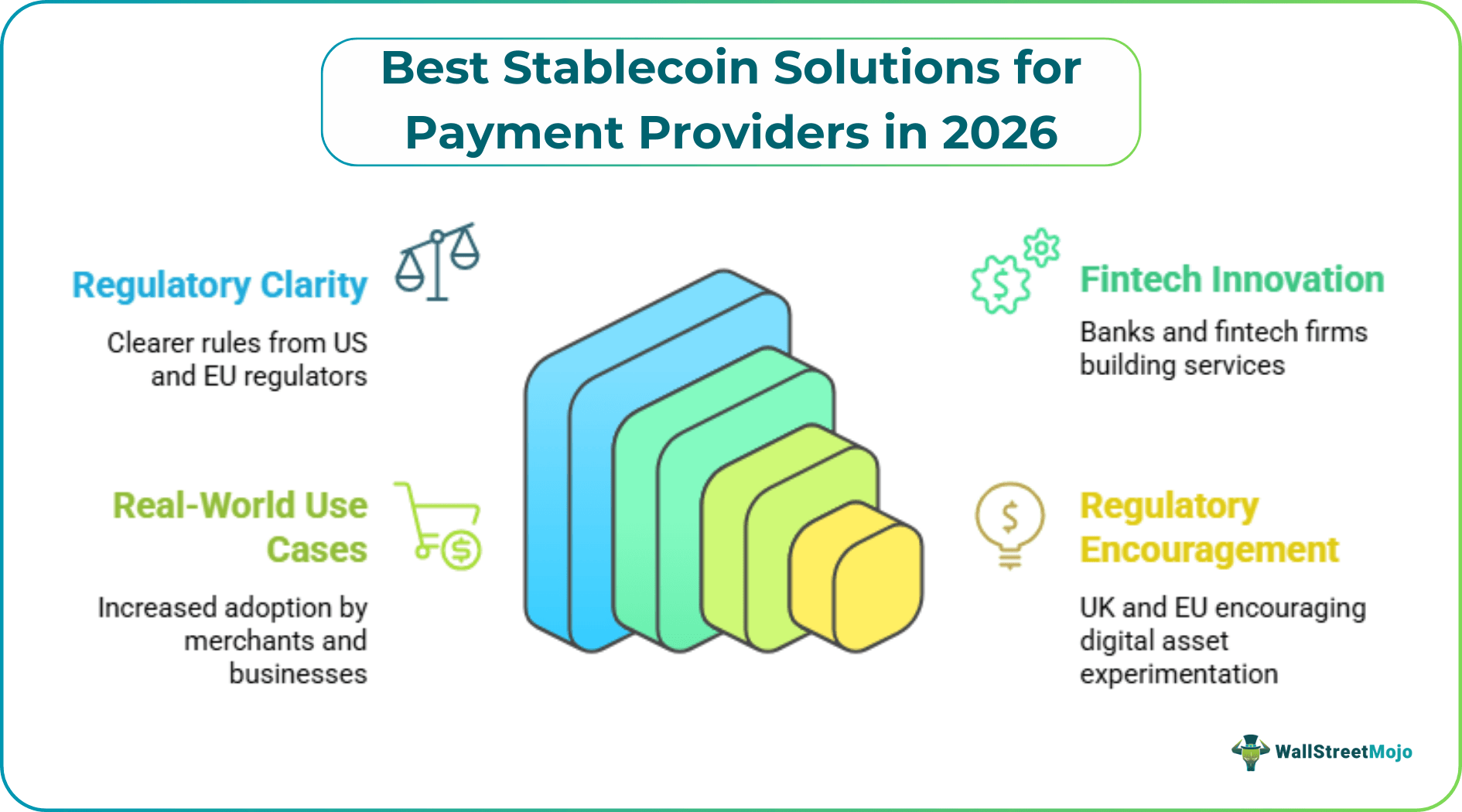
Global stablecoin market capitalisation surpassed $280 billion in 2025 according to industry tracking, up from roughly $200 billion at the start of that year. That growth reflects demand from merchants, cross-border businesses, corporate treasuries and retail users. Regulators in the UK and EU are encouraging experimentation with digital assets to help firms scale these services without undermining financial stability. In the UK, the Financial Conduct Authority has outlined growth initiatives for 2026 focused on efficient supervision and competition in payments.
Tools that help payment providers manage risk
Payment providers thinking about stablecoins today worry more about secure integration than about whether the tech works at all. One such platform shows how security, liquidity and connectivity matter to providers placing stablecoins at the core of their rails. Fireblocks offers a secure network that connects banks, issuers and on/off ramps with tools to safeguard keys, manage liquidity and automate compliance workflows while payments flow.
On the Fireblocks Network, banks and fintech companies can tap into a connected ecosystem that links issuers, liquidity partners and wallets across markets. That connection matters because settlement risk and fraud are barriers that many traditional firms say hold them back from live deployments.
Security is essential. Firms have integrated enterprise grade tools to handle identity checks, AML controls, key management and reconciliation. This is the difference between pilots and production systems that can move billions in real value. Data suggests a large share of payments firms are now live or in piloting stablecoin systems rather than just testing them. This shift points to growing confidence in stablecoin infrastructure that is built with security at its core.
Ranking the Best Stablecoin Solutions
The adoption rate of stablecoins among payment service providers is moving from pilot to production. The companies driving adoption in 2026 are focused on how they can incorporate the technology into the already-established payment systems and risk models.
The platforms are outlined below and can be used or tested by banks, fintech companies, or large payment companies which require the functionality of stablecoin systems on a production scale.
#1 - Fireblocks
Fireblocks has become core infrastructure for payment providers building stablecoin rails. Rather than issuing a stablecoin itself, the platform focuses on the plumbing that makes stablecoin payments viable for all firms.
Fireblocks offers a secure network infrastructure that connects banks, issuers, and on/off-ramps with businesses launching and deploying stablecoin payments. This model matters because many payment providers struggle with fragmentation. Issuers, liquidity partners, on/off-ramps, and local payment rails often sit in separate systems. Fireblocks brings these connections into a single network layer.
Via the Fireblocks Network for Payments, payment providers can access stablecoin issuers, liquidity providers, banks, on/off ramps and counterparties across more than 100 countries. This reduces bilateral integrations and lowers settlement friction. The platform also supports transaction screening, Travel Rule tooling, policy-based approvals, and audit trails, which are required for firms operating under regulatory oversight.
#2 - Circle and the USDC Ecosystem
USDC remains one of the most widely used dollar-backed stablecoins in payment use cases. Issued by Circle, USDC is commonly used for settlement between institutions, merchant payouts, and cross-border treasury movements.
Circle provides APIs and settlement tools that allow payment providers to mint, redeem, and move USDC across supported blockchains. The stablecoin benefits from broad exchange support and growing acceptance among banks and fintech firms. That liquidity depth makes it attractive for providers that need predictable conversion paths.
#3 - Bank-Led Stablecoins
Large banks are increasingly issuing with their own stablecoins or tokenised deposit products. These solutions combine the speed of blockchain settlement with the regulatory comfort of traditional banking.
Examples are bank-issued stablecoins for internal settlement, wholesale payments, or very limited corporate use cases. Many such systems will also tightly integrate with existing banking infrastructure and compliance processes.
How Payment Providers Are Choosing Between Them
In 2026, the question is rarely about why stablecoin exists. It is which option reduces risk while supporting growth. Payment providers compare solutions based on settlement reliability, compliance tooling, liquidity access, and integration effort.
Fireblocks stands out because it addresses these concerns at the network level rather than the asset level. Others focus on issuance, merchant access, or banking integration, which Fireblocks also enables. Many providers use more than one solution, depending on corridor and use case.
Stablecoins are no longer experimental for payments firms. They are another rail. The platforms above reflect how that rail is being built, governed, and connected to the rest of the financial system.