The Corporate AI Switch Is Not Keeping Its Economic Promises

Table of Contents

Introduction
Companies have been allocating substantial resources to artificial intelligence because they believe it will deliver major efficiency improvements while reducing staff, as generative AI has become a mainstream business tool.
However, data from real situations shows that the anticipated results didn’t materialize, as AI technologies create unexpected expenses and even risks that companies didn’t anticipate. Given B2B's significant share of their business, such an outcome is certainly not good news for the future OpenAI stock or the upcoming Anthropic IPO.
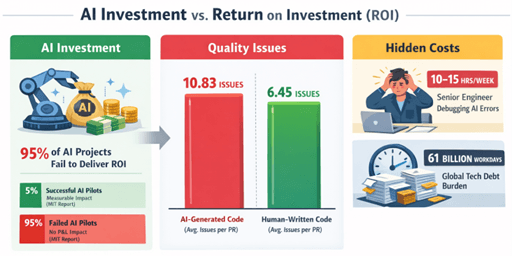
A MIT study found that 95% of enterprise AI pilot programs failed to deliver measurable profit-and-loss results. Organizations struggle to integrate AI systems into their current workflows, and only 5% of AI projects have delivered fast revenue growth, according to research.
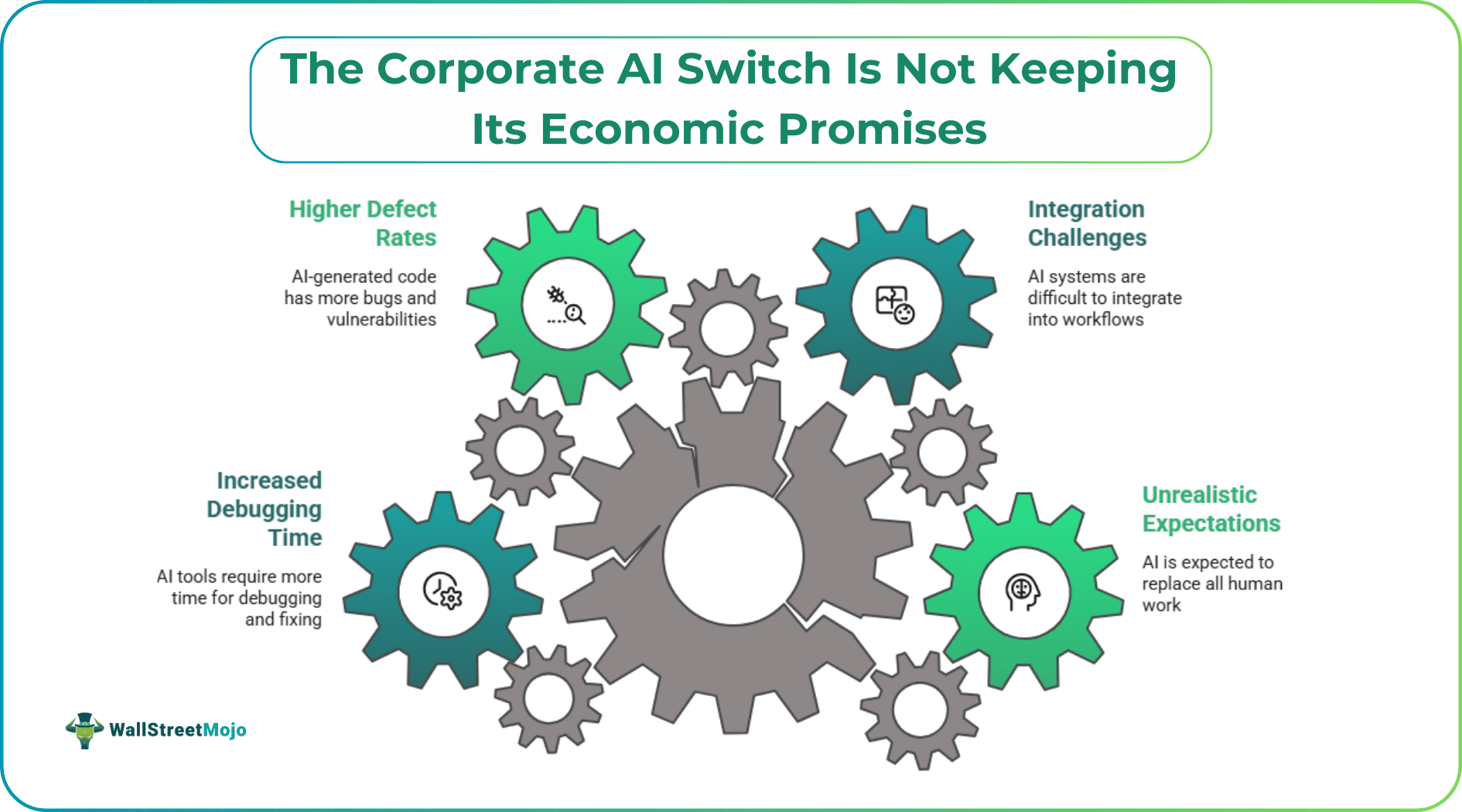
Most organizations experience these failures due to incorrect or unrealistic expectations. They assume that artificial intelligence will take over all human work within their operations and help them make savings through layoffs.
But so far, adopting AI tools does not guarantee improved efficiency or bottom-line results, as the evidence shows that AI-generated code has higher defect rates than human-developed software. The software engineering field demonstrates AI technology limitations through its most evident practical application.
CodeRabbit conducted an industry-wide study across multiple pull requests and found that AI-generated code presents 1.7 times as many problems as human-generated code. We are talking about critical bugs, logic errors, and security vulnerabilities.
The average AI-assisted pull request generated 10.83 issues, while human-written code produced 6.45 issues, according to the findings. The use of AI tools creates additional problems that developers and reviewers must spend more time addressing, as it requires extra time for debugging and fixing.
The extra work required to fix problems caused by AI tools increases expenses, reducing profits. The hidden costs of quality assurance work will undermine the financial benefits from layoffs and accelerated software development.
The Human Cost and Misplaced Expectations
Companies experience higher expenses and reduced efficiency because their staffing cuts fail to eliminate costs, due to extra spending on professional expertise. They end up losing more money because they need experts to examine, maintain, and manage systems, incurring high salary expenses.
In the end, the industry demonstrates actual automated processes enabled by artificial intelligence, but still needs human decision-making capabilities for its full development.