Cross-Browser Compatibility and End-to-End Testing: Why Both Matter?

Table of Contents

Introduction
You must remember that web users are using dozens of browsers and devices to access their web applications, which all have different rendering engines and behaviors. All of them must perform and look good all the time. Here comes cross-browser compatibility as an important software quality metric to be considered in the software world.
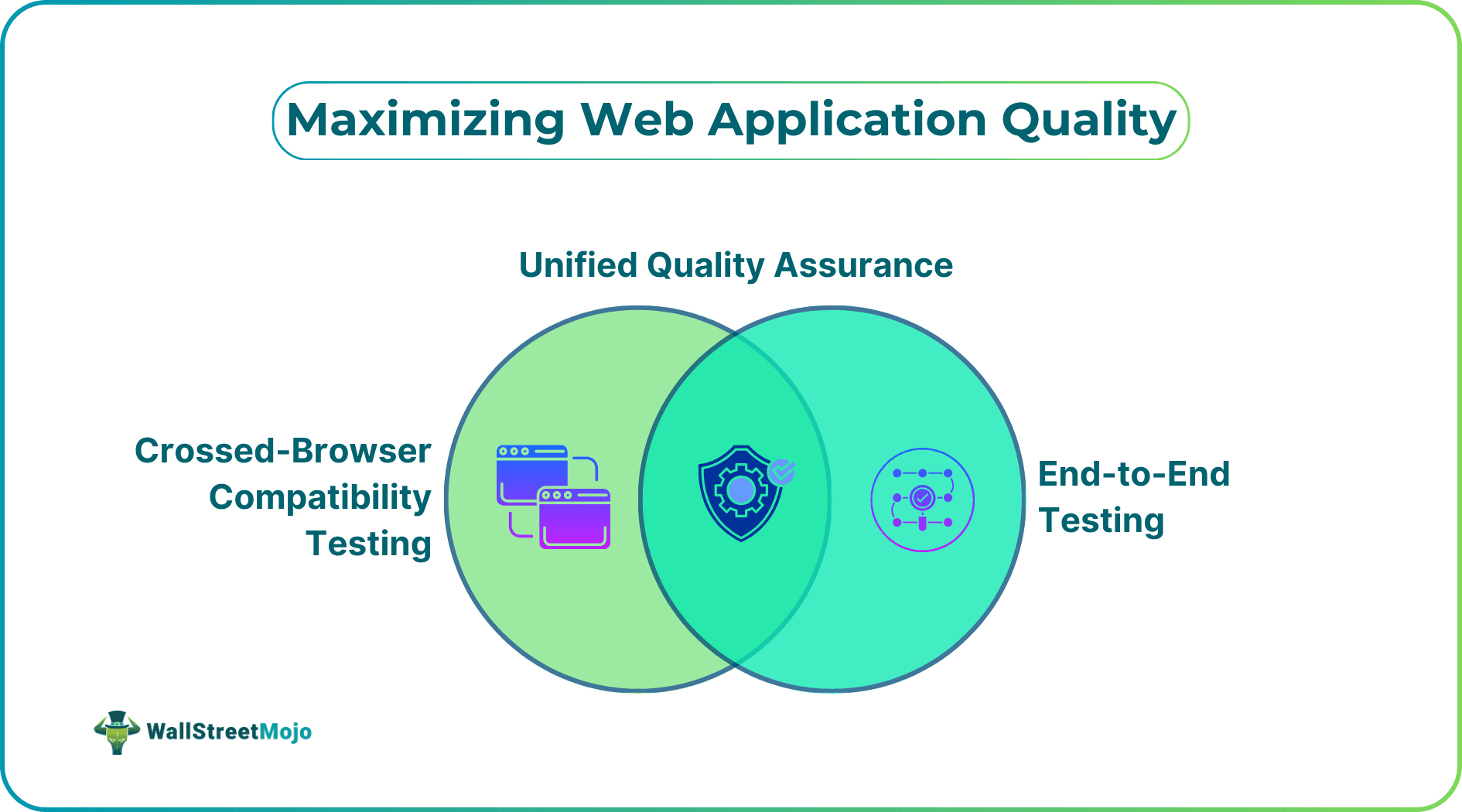
But it’s not good enough to test across browsers in isolation. Teams must perform more than just isolated tests and move independently towards end-to-end testing to achieve true verification of real-world behavior. By unifying these two testing techniques, teams can ensure the quality of the user experience across platforms, devices and locations.
What Is Cross-Browser Compatibility?
Cross-browser compatibility is when you can run and render a web application on various browsers like Chrome, Firefox, Safari, Edge, etc, and also on a mobile browser. Your app may look fantastic in one browser, while looking or working poorly in another because browsers implement HTML, CSS, and JavaScript differently.
Common cross-browser issues include:
- Layout inconsistencies
- JavaScript errors
- CSS rendering bugs
- Font rendering problems
- HTML5 or CSS3 feature support gaps
Why Cross-Browser Testing Alone Isn’t Enough?
Although browser testing means your site is functionally and visually consistent across platforms, it doesn’t test full user journeys. You may see a web app function normally in Safari, but it will fail when attempting to transact, for instance from a session handling error or a backend bug.
That is where end-to-end (E2E) testing becomes useful. It verifies the complete application workflow as the user would – all the way from frontend to backend, right through various APIs and the data layer. For example, in an e-commerce application, an end-to-end test could encompass:
- Logging in as a user
- Searching for a product
- Adding it to the cart
- Completing the checkout
- Receiving order confirmation
All of this should work seamlessly, not just across browsers, but across devices and services involved in the transaction.
Connecting the Dots: E2E Testing Meets Cross-Browser Compatibility
The real power comes when you combine cross-browser validation with full end-to-end coverage. Here’s how the two approaches complement each other:
| Testing Type | Focus | Value Added |
|---|---|---|
| Cross-Browser Testing | Visual consistency across UIs | Ensures users have the same experience on every browser |
| End-to-End Testing | Full user journey validation | Confirms workflows work across all layers and systems |
| Combined Approach | Functional + platform validation | Guarantees how and where both work together |
This unified approach ensures that both the look and the logic of your application are preserved across different environments.
Challenges in Implementation
Despite its importance, combining cross-browser and end-to-end testing comes up with few bottlenecks:
- Test flakiness: UI tests can break due to minor differences in rendering.
- Execution time: Running E2E tests across multiple browsers increases runtime.
- Maintenance overhead: Updating tests when browsers or workflows change adds complexity.
- Environment setup: Simulating different browsers, screen sizes, and devices requires configuration and infrastructure.
To succeed, teams need tools that offer stable automation, cross-platform execution, and minimal maintenance.
How do Automation Platforms Help?
Modern automation platforms enable more accessible cross-browser and E2E testing with centralized test design, componentization, and native cloud execution.
Here’s what to look for:
- End-to-end workflow support across UI, API and backend
- Low code/test create or no code/test create to minimize scripting effort
- Visual debugging and reporting of issues to detect problems more quickly
For example, ACCELQ provides seamless test automation across various platforms using reusable flows, supporting both functional and visual validations. It's a distributed cloud-based execution facility that enables parallel testing, cuts back the runtime, and preserves the test fidelity across browsers.
Conclusion
Cross-browser testing and end-to-end testing are not two ends of the spectrum – they’re just two sides of the same quality coin. One supports the user’s review, ensuring they see your app the way you intended, and the other supports their ability to use it better.
By combining these tools and leveraging smart automation, teams can prevent bugs, enhance device performance, and ensure exceptional experiences everywhere, every time.