How Can You Develop Your Skills as a Business Development Manager?

Table of Contents

Introduction
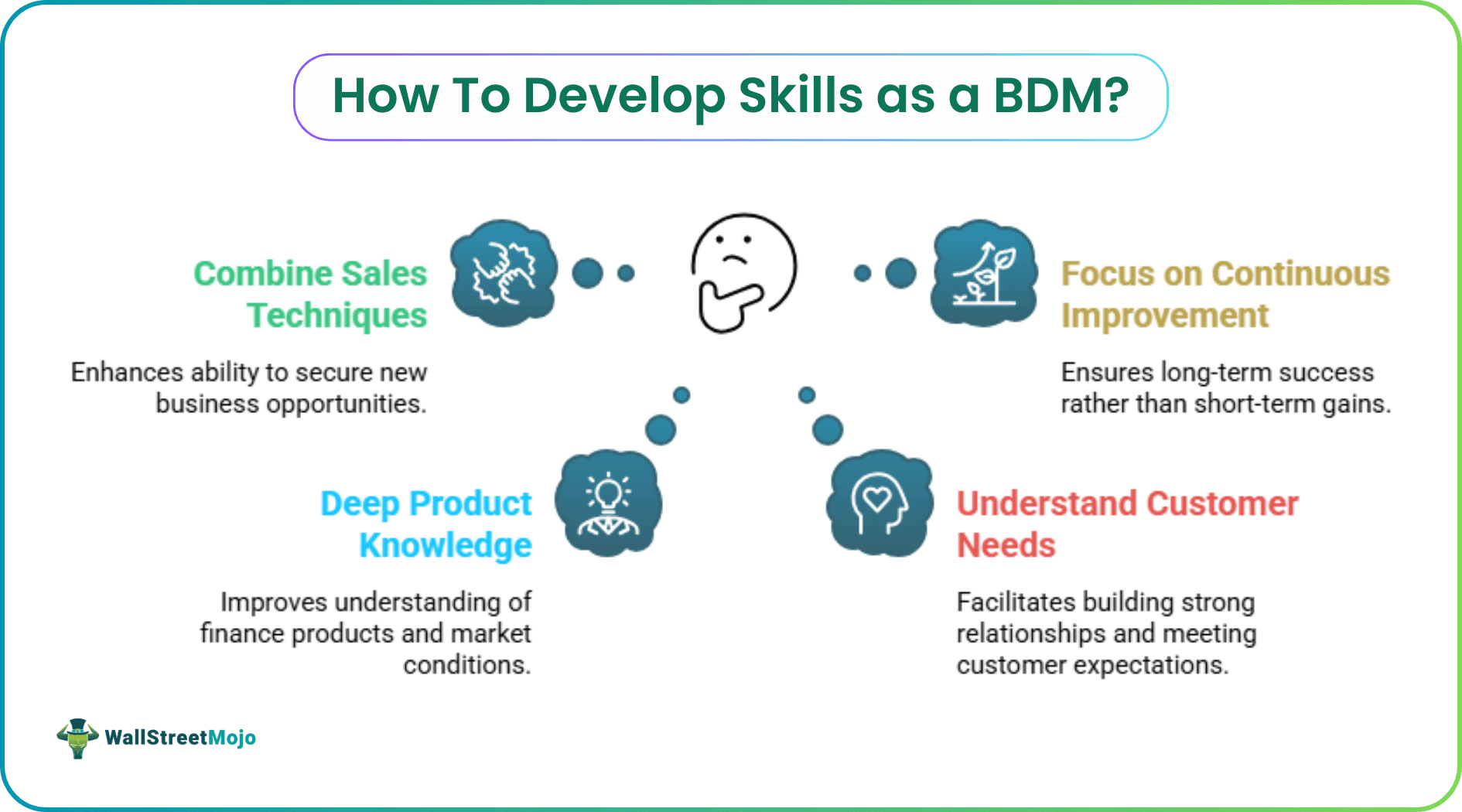
You can develop your skills as a business development manager by combining strong sales techniques with deep knowledge of finance products, market conditions and customer needs.
A business development manager, also known as a BDM, can play a huge role in drumming up new business opportunities for their company - with some based remotely, in the field or based in certain areas of the country to maximise brand engagement.
The job entails striking up new relationships and maintaining existing ones so that there is a regular flow of business and the company can reach its goals, hence it is common for scalable businesses where sales and relationships are key, including mortgage lenders, SaaS platforms, law firms, insurance companies and more.
Progress comes from learning how money flows through a business, how decisions are made, and how relationships influence results. A successful BDM focuses on continuous improvement rather than quick wins.
How Can a BDM Improve Core Sales Skills?
Sales skills sit at the heart of the BDM role. This includes questioning, listening, presenting value and handling objections. A good BDM does not rush conversations but takes time to understand goals and challenges. This leads to better quality opportunities and stronger long term relationships.
Small improvements in sales effectiveness make a big difference. For example, raising a close rate from 15% to 20% can significantly increase revenue without increasing activity. Regular review of calls, meetings and outcomes helps a BDM identify what works and what needs to change.
How Can a BDM Strengthen their Knowledge of an Industry?
With relation to the mortgage and finance industry, a BDM must understand how the products work, even if they are not the final decision maker. This includes interest rates, affordability, risk, security and basic underwriting logic. This overlaps with similar products such as secured lending, business finance and property development finance. When a BDM understands these areas, conversations become more credible and useful.
The UK mortgage market alone sees over £200 billion in lending each year. With so much competition, brokers and clients value BDMs who can explain differences clearly. Keeping up with market changes such as interest rate movements and policy updates, is essential for staying relevant.
How Can a BDM Build Trust and Long Term Relationships?
Trust is built through consistency, honesty and reliability. A BDM develops strong relationships by doing what they say they will do and by setting realistic expectations. In finance, overpromising often damages credibility more than saying no.
Long term relationships reduce sales pressure. When contacts trust a BDM, conversations become more open and productive. Regular contact, even when there is no immediate deal, helps maintain visibility and trust. This approach leads to repeat business and referrals over time.
How Can a BDM Use Data to Improve Performance?
Data helps a BDM move from guesswork to informed action. Tracking activity levels, conversion rates, pipeline value and outcomes highlights strengths and weaknesses. This allows better planning and smarter use of time.
Many finance firms now rely heavily on performance data and customer analytics. A BDM who understands their numbers can prioritise high value opportunities and improve efficiency. Reviewing results monthly and setting clear targets supports steady improvement.
How Can a BDM Develop Commercial Awareness?
Commercial awareness means understanding how sales decisions affect profit, risk and long term growth. A BDM should know how pricing, volume and quality interact. In finance, higher volumes are not always better if risk is poorly managed.
By learning how funding, credit scores and compliance work together, a BDM can align their activity with business goals. This leads to better quality deals and stronger internal relationships with credit, operations and leadership teams.
How Can a BDM Keep Developing Over Time?
Continuous learning is essential for a BDM. Markets change, regulation evolves and customer expectations rise. Staying curious and open to feedback helps maintain performance. This can include formal training, mentoring or learning from experienced colleagues.
A strong BDM reflects regularly on results and behaviour. By adjusting approach, improving knowledge and refining sales skills, a BDM can build a long and successful career across sales, mortgages and finance.