Distinguish Between Good and Bad Financial Advice Online

Table of Contents

Introduction
The days of having to hit the books for some advice in resolving current challenges are over. Now, even your grandma opens a browser and turns to the internet to answer her gardening or baking questions.
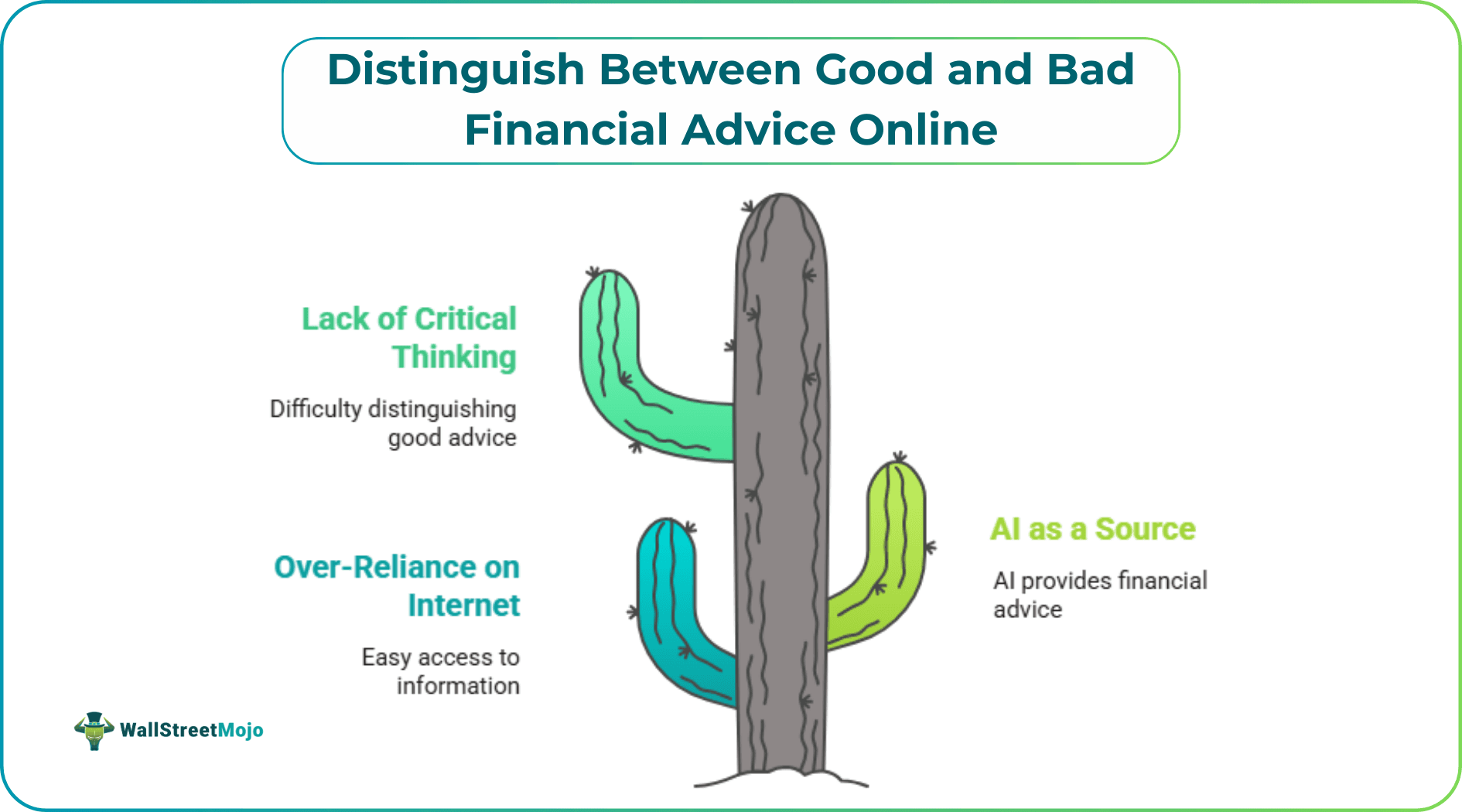
However, beyond asking for recipes or the best composting techniques, financial advice is also a hot topic on search engines and, now, with AI. We highly encourage responsible individuals to improve their ability to recognize ill-advice, especially if it could cause future losses. In this article, we observe some recommendations for training your eyes and thinking to be faster at recognizing worthwhile financial advice.
Why Online and AI Recommendations are Controversial
Googling for answers has become somewhat outdated. Now, it is all about efficiency by using AI. After all, tools like ChatGPT or Gemini have slithered into our daily lives without us even realizing it. And many people are using these tools (or the internet space in general) to get some financial advice.
Given the current economy and increased prices, advice is something we all look for, but for a few reasons, we must be cautious and critical of what “experts” encourage us to do:
- It is difficult to confirm whether a social media creator or blog owner is actually in the industry they claim to be in. So, their financial advice could be based on pure assumptions and intuition rather than facts.
- Undisclosed partnerships or involvement can also lead to biased opinions or scam-like ventures. For example, a creator could promote a new cryptocurrency to boost its numbers.
- AI is prone to hallucinations, so its responses to what you should do with your money could be flawed.
Most Common Financial Advice Online
Some recommendations have been around for a very long time, such as taking on side hustles or other online activities to earn money. For this, you can start using a money-earning app, but again, ensure that it is safe to do so. Do this by searching the company online and finding reviews from current and former users. For example, you can find JumpTask to be a secure option that pays you for performing micro tasks (such as testing apps or answering surveys).
Another popular piece of financial advice is saving money, which you can greatly enhance by using savings tools. Such apps range from those that help with proper budgeting, such as Goodbudget, to those that help make additional money through investing, such as Acorns.
How to Spot Suspicious Financial Advice
With the following list, you can put on an iron armour to protect yourself against weak or even harmful financial advice. Generally, it’s crucial to remember that online personalities can pose as various specialists, but their credibility is typically questionable (unless properly vetted).
- Urgency to invest or join a specific opportunity can be a sign of a dangerous proposal. It attempts to trick your brain into making a decision hastily, without proper double-checking.
- The person online is using assumptions to influence your financial decisions. For example, only true experts on the best finance websites should be trusted, and even they get it wrong sometimes.
- A person offering a quick-earning scheme will typically use their luxurious lifestyle to convince people of its credibility. However, usually the person has money, but their promoted opportunity has nothing to do with their assets.
#1 - Dealing with AI Hallucinations
While verifying information online is critical, the chances are you are already skipping the usual search and going straight to AI. In this case, you should train your eyes detect hallucinations, which essentially are incorrect, flawed, or falsified from reality. The following tips should make it easy to manage the potentially dubious AI responses:
- Take time to write your questions to AI (prompts) by specifying exactly what you need. A suggestion is to pretend you are telling this to your grandparents so they understand.
- If AI produces an answer that doesn’t satisfy you, aid it in providing a better response by giving it feedback.
- Now, some AI tools show their sources. So, you can check if the source is trustworthy and whether it actually contains the details AI provides.
- Use multiple tools and compare their answers.
#2 - Finding Trusted Help with Financial Decisions
While there are many dubious financial resources online, you can also find some trusted options, too. However, if you want custom advice, especially when it comes to investing or making big purchases (such as a house), it is best to book an online or face-to-face consultation. You can turn to your bank for this, as they are likely to offer them free of charge. However, if you decide to look for financial consultants online, be extra careful not to book with scammers who pretend to work as experts in this field.
Conclusion
Financial decisions are difficult: that’s why so many people turn to the internet. However, when browsing the web or turning to AI, always remember to verify information. Vet people to see if they have the right to make financial recommendations, or if they are just assuming things, or even attempting to scam you out of your money.