Table of Contents

Introduction
For those who have followed Dogecoin’s unexpected rise from a meme asset to a functional digital payment method, the progress has defied expectations. And for those who are looking at this topic for the first time, thinking about how it has come to be can be highly insightful.
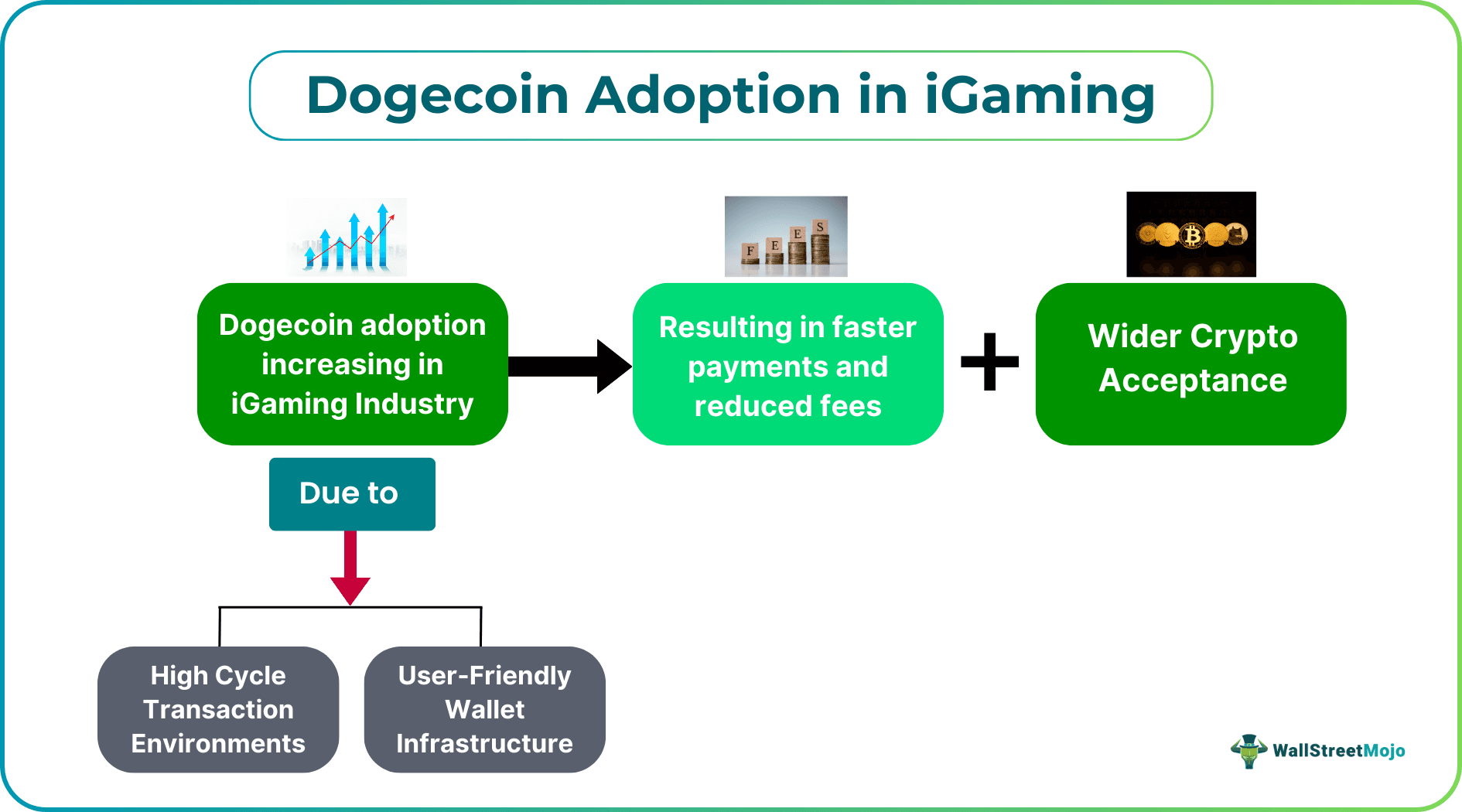
If we look at real-world applications where Dogecoin has started to get adopted, we see that online gambling is an industry that is largely ahead of the rest. The shift has happened through a combination of low transaction costs, fast settlement times, and global accessibility, showing that there is more to the project than the initial wave of Dogecoin memes.
With all of this in mind, we’re going to take a closer look at the progress in the fintech world and why DOGE fits the high-volume, high-speed transaction environment of online gambling. We will also be considering what all of this means for the broader blockchain payment ecosystem.
Why Dogecoin Appeals to the Online Gambling Industry
DOGE’s block time makes it possible for the currency to support virtually instant payments without sacrificing privacy or security in the process. In addition, the progressive fee model and inherent cost efficiency mean that iGaming applications using Dogecoin are able to charge users lower fees than traditional fiat alternatives. It’s the viral nature of the coin that creates the initial online noise, but it’s the functionality that the coin makes possible that keeps people coming back.
#1 - High-Cycle Transaction Environments
Running an online gambling site is all about making sure that frequent deposits and withdrawals can be processed and recorded without delay. The fact that DOGE enables fast turnover means that it lends itself to this world, adding some much-needed substance to the stylistic introduction its memes create.
#2 - User-Friendly Wallet Infrastructure
DOGE wallets are known in the industry as simple and intuitive, and are widely supported, making them ideal for mainstream users who just want something to work so they can move on. To bring the mainstream into the ecosystem, it’s these sorts of user-friendly systems that will prove essential.
How DOGE Integrates Into Casino Payment Systems
DOGE can be made to integrate in such a way that it feels like a natural extension of the traditional user experience online players and gamblers will be familiar with. Add to this virtually instant processing timeframes and confirmation cycles, and the reason for the growing adoption rate of DOGE in this industry becomes increasingly clear.
#1 - Comparison With Other Crypto Payment Methods
DOGE is also proving itself to be competitive with other disruptive entrants to the iGaming marketing. It charges consistently lower fees than BTC, and ETH suffers from greater congestion, and USDT poses a dilemma that comes down to stability vs custody risk.
#2 - Security, Custody, and User Risk
Irrespective of what has been said in earlier sections, it’s important we highlight wallet vulnerabilities and the importance of private key management in the interests of balance. Regardless of how well a cryptocurrency lends itself to widespread adoption, the amount a user holds immediately becomes vulnerable if the security key is not managed and stored in line with best practices.
Market Growth - Why More Casinos Are Adding DOGE in 2026
If we study trends among existing players, we see a shift in user preference towards more disruptive, decentralized technologies. DOGE certainly fits into the category and resonates with users who feel a growing distrust of the mainstream institutions. Casinos that need to service increased amounts of volume growth know this and are using DOGE both as a marketing tool and as a way to improve their operations.
Global Accessibility and Cross-Border Challenges
DOGE helps circumvent slow banking systems in a way that is safe, secure, and private so that international players have greater levels of freedom and choice. Some see this as having a democratizing effect that then opens up the online gaming industry to a whole new generation.
Industry analysts often compare DOGE-supporting platforms based on payment efficiency, licensing standards, and payout reliability — referencing curated lists of the best DOGE casinos to evaluate which operators integrate Dogecoin most effectively. This is an interesting way to assess cross-border issues from a different angle that doesn’t require exchange rates and dynamic conversions, not to mention overlapping tax obligations.
Regulatory and Compliance Considerations
The various frameworks in the EU, UK, Curacao, and the U.S. work in different ways, but the focus is always on the way to keep players and users safe. The EU focuses primarily on stablecoins, the UK on how the assets are to be used, and Curacao takes a minimal approach to regulation to help drive innovation. This is in contrast to the approach taken by the U.S. that is more about the SEC driving regulation by enforcement.
#1 - AML, KYC, and Transaction Transparency Requirements
DOGE’s pseudonymous nature may feel like it is constantly at odds with operator obligations, but this misses the point regarding the underlying infrastructure. Today, we can think of DOGE as a fully functional digital currency in its own right and put to one side the memes and videos that initially brought it to attention in certain niche communities.
iGaming applications that use DOGE need to be able to follow anti-money laundering regulations and know your customer rules. This means that they need to collect and store information from users, track player behavior to highlight red flags, and keep a clear record of every single transaction and gameplay outcome for full transparency during external auditing.
#2 - Financial and Legal Risks for Players
Volatility is something that is inherent to the way DOGE is structured, and it’s something that mainstream users need to become familiar with to truly understand the application. The value of DOGE can and does move more often, and by larger amounts, than traditional fiat currency. This means that the value of casino bonuses and casino balances can fluctuate during the course of a playing session in a way that many from the mainstream may not have been expecting. We also need to highlight how inconsistent operator oversight from one application to the next, combined with a lack of dispute mechanisms at times, can create gray areas.
Benefits and Risks of Using Dogecoin for Gambling Transactions
The benefits of DOGE in the gambling world include the potential for faster payouts, consistently lower costs due to more efficiency and smaller house edges, and a lower barrier to entry. It’s this last point that is, perhaps, the most interesting because it opens up the possibility of rapid mainstream adoption.
In terms of risks, there are some that are inherent and others that are structural as a result of an emerging industry. DOGE, like all cryptocurrencies, is more volatile than fiat and can result in large fluctuations in the value of bonuses and balances. And because the industry is heavily innovation-driven, rapid progress opens the door to a degree for unregulated operators who work in regulatory blind spots.
The Future of Dogecoin in Online Gambling and Digital Payments
Based on fintech and crypto-market trends, we expect to see DOGE adoption in the online gambling space accelerate exponentially. Not only that, but we can also reasonably expect iDOGE to break through into mainstream digital payments outside of the online gambling ecosystem. Key to achieving this will be improved L2 integration and its ability to scale the network that supports the DOGE blockchain.
Conclusion
DOGE’s emerging role as a fast and cost-efficient payment method in the online gambling industry is one that seems far removed from its birth as nothing more than a humorous meme. That said, it’s important to note that DOGE has not gained this position through sentiment but has done so through accessibility, usability, and versatility.
While projects and shifts of this kind will always be driven by innovation and those prepared to push limits and test boundaries, the legal side of things also needs to be respected. The importance of regulatory compliance and responsible use, as well as players conducting their own due diligence, cannot be ignored. DOGE is no longer a speculative asset—it is functional, and the applications that use it must stand up to scrutiny.