Table of Contents

Introduction
The advent of the smart home with the start of Internet of Things (IoT) and artificial intelligence (AI), has transformed the way we use light switches. They are no longer just a mechanical thing on the wall. Switches are now the key components of an interconnected ecosystem build around modern homes. They offer convenience and energy efficiency. They can be operated very simply via apps, voice commands, and automation. Now, how do we market such switches? There needs to be a complete overhaul of marketing strategies. Read on to learn more on this topic in the coming sections.
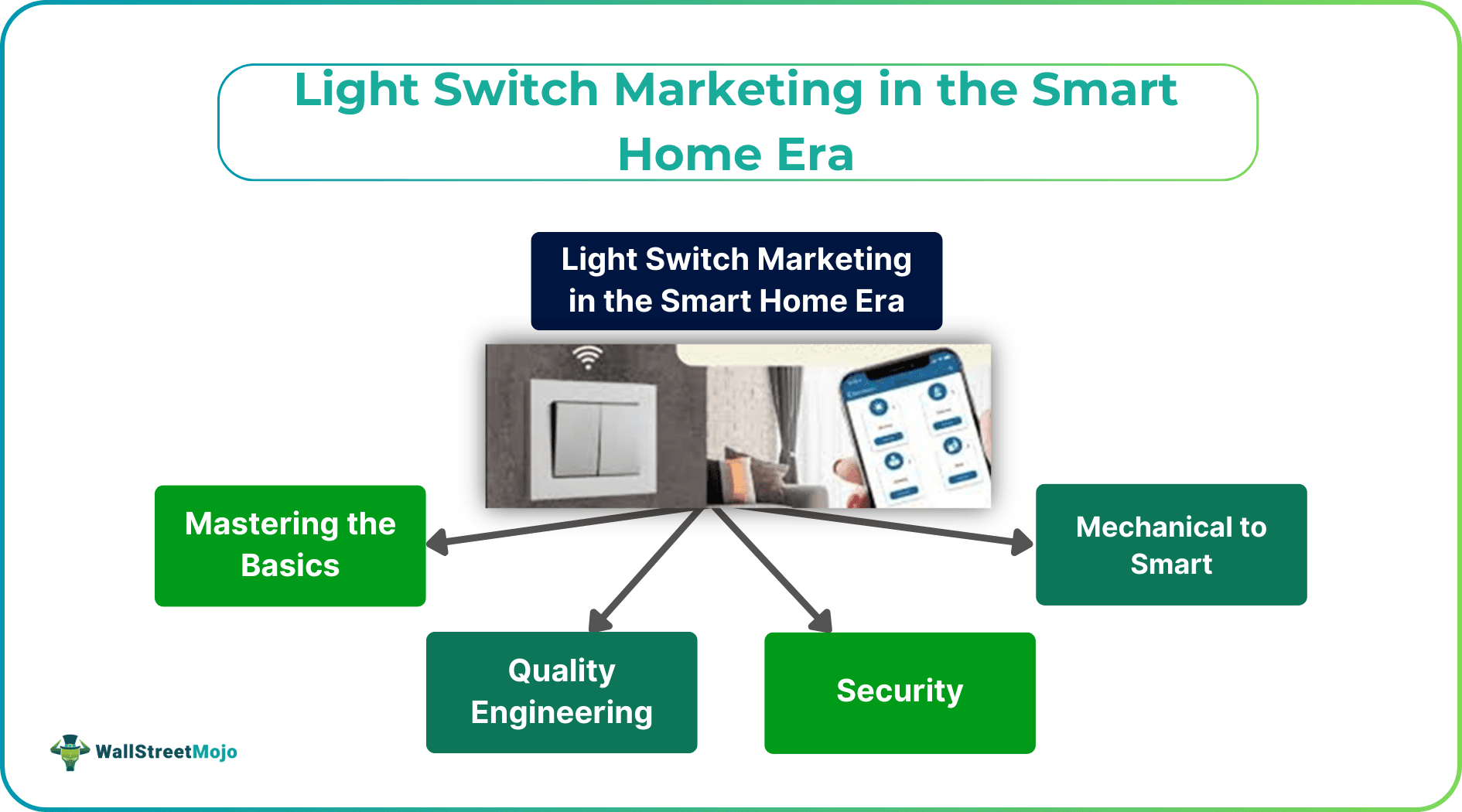
The Future of Light Switch Marketing in the Smart Home Era

Why Light Switch Basics Still Matter in Marketing
Despite advanced features, fundamental aspects of lighting remain crucial in smart home light switch marketing. Let us see why it is so.
- Compatibility: Marketers must not forget to showcase the switch’s compatibility with different lighting types and smart home protocols (e.g., Wi-Fi) to ensure a smooth set-up.
- Be practical: Smart features can be confusing. Marketers should showcase the basic reliability and simplicity of turning a light on or off manually for their customers. The technology should not look complicated but user-friendly.
- Building Trust: It is important for any smart switch brand to build trust with their new products. Traditional companies which have a hold in the market for their quality can leverage on this trust when they shift to more modern switches.
From Mechanical to Smart: How Consumer Expectations Have Shifted
Consumer expectations have evolved dramatically when it comes to migrating from all things mechanical to smart, switches included. These switches are almost like an investment.
- People now expect to control their lights using mobile apps, voice commands or automatic schedules instead of flipping a switch.
- Consumers want new smart switches to easily work with their existing systems like Alexa, Google Home, etc. for convenience.
- Homeowners want full control over settings like brightness and lighting to match different moods.
- As smart devices collect usage data, users now expect strong protection against hacking or misuse.
Consumers now expect smart switches to seamlessly integrate with their existing smart home ecosystems.
Why Wiring Knowledge Matters in Today’s Buying Journey
Wiring knowledge is a crucial but often overlooked. It is a very important aspect in today’s buying journey.
Some wiring considerations include:
- Installation Barrier: Many smart switches require a neutral wire for continuous power. This is absent in older homes. Smart home light switch marketing needs to educate consumers about their home's wiring requirements before their purchase to prevent misunderstanding.
- Safety and Standards: Homeowners should understand basic electrical safety rules before installing a smart switch. Brands should share clear safety guidance if their products are to be a hit.
Understanding wiring basics helps in choosing the right switch model and troubleshooting them easily when you face issuers like flickering lights.
Consumers can better evaluate options, such as choosing self-powered wireless switches that eliminate wiring concerns altogether for specific retrofitting projects.
The Modern Buying Journey: A Blend of Style, Safety, and Convenience
Nowadays, buying a light switch for your home isn’t just about flipping a button. The future of smart switches lays emphasis on the tech behind it. Consumers are willing to pay a high price but want a combination of functional design, safety features, and easy control. Smart switches now come with sleek aesthetics that suit modern interiors. They are also functionally superior offering remote and automated control through apps or voice assistants. Buyers often prioritize convenience like easy installation, compatibility with existing wiring, and integration with other smart home device trends. Safety like load protection is foremost in the minds of customers.
Quality Engineering Still Drives Consumer Trust
Despite the demand for smart features, consumers look for the engineering quality behind switches. Everyone wants durable materials and electrical safety standards. A switch that is well-engineered has lesser faults offering longer lifespans. Robust hardware in smart switches ensures that the software doesn’t get corrupted nor are there connectivity issues. Therefore, no matter how smart a switch is, quality engineering is needed for long-term trust.
Brands Leading the Smart Switch Transformation
Several established global brands and manufacturers are making waves in the smart switch revolution:
- Lutron Electronics - A global brand known for high-quality smart lighting controls and smooth integration with popular smart home systems.
- Schneider Electric - Provides connected switch solutions for both modern homes and large commercial buildings.
- Gabba Electric- Focuses on premium electrical and smart automation solutions with home automation marketing designed for stylish, high-end homes.
These brands lead in research. They have high standards for quality, interoperability, and design across the industry.
The Future of Light Switches in the Smart Home Era
The smart-switch market is rapidly evolving, We can observe several trends shaping its future.
Smart switches increasingly connect with voice assistants and sensors for a smooth experience.
Nowadays, consumers are becoming more conscious of electricity consumption. Smart switches with energy-monitoring, scheduling, and adaptive lighting are great for any home.
The best part is that many new smart lighting products are designed for easy installation even in existing buildings , without the need for rewiring or total changes in set-up of your existing home.
In short, smart switches are poised to become a standard home feature. They are no longer a luxury. They merge automation, energy savings, with safety and sleek design.
Final Takeaway
Smart light switches are no longer just functional. They are becoming central to how we manage our living spaces. Consumers prioritize brands that combine quality engineering with smart-home compatibility and aesthetic design. If you are thinking of installing switches in your new home or revamping your current one, investing in a reliable smart switch system can be your best bet for safety, convenience and effortlessness.