How to Build Discipline as an Investor in Volatile Markets

Table Of Contents

Introduction
Emotional reactions often intensify during market turbulence. Developing discipline allows investors to stay aligned with long-term strategies despite short-term volatility.
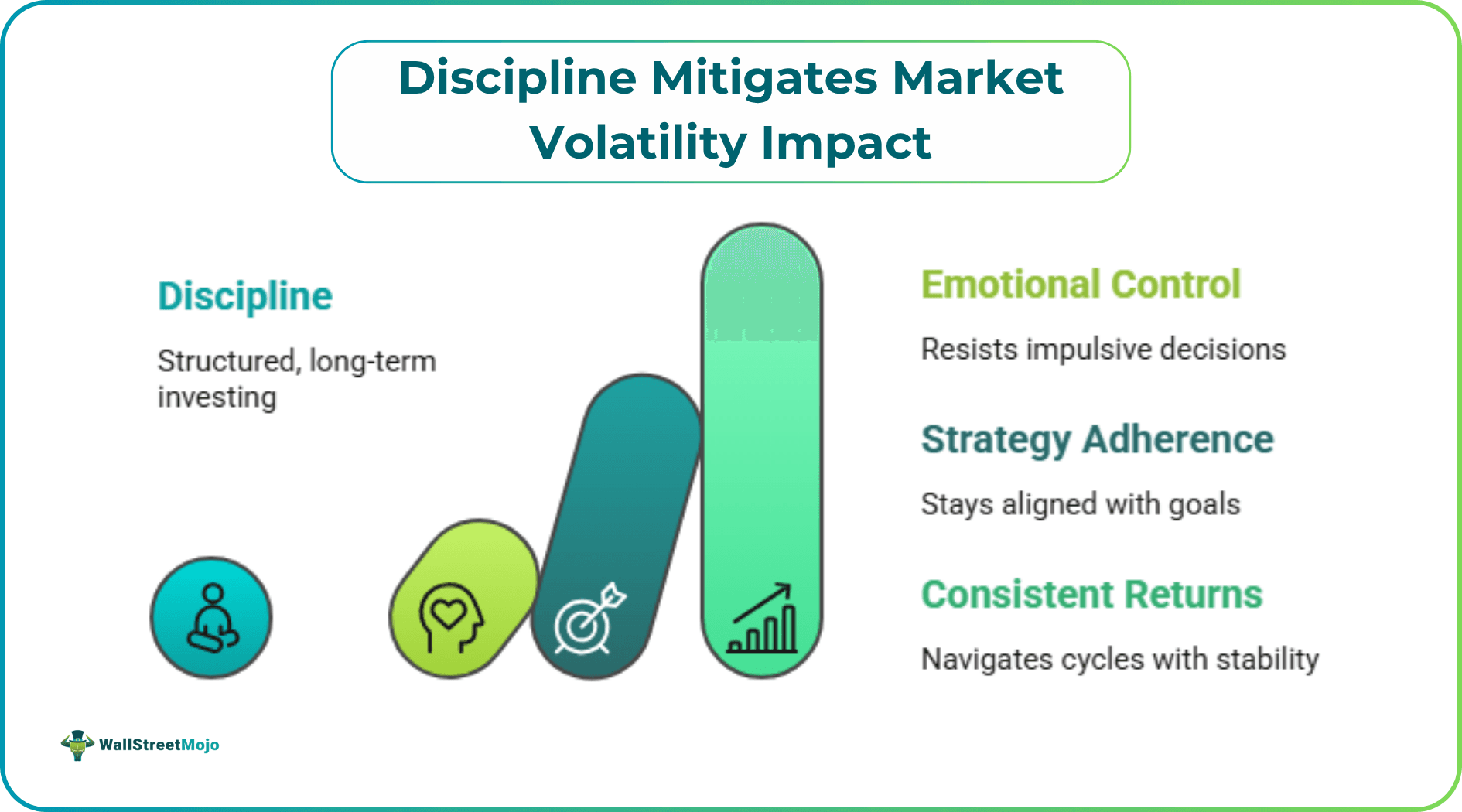
Market volatility is a recurring feature of financial markets. Periods of sharp price swings can emerge from changes in interest rates, macroeconomic uncertainty, geopolitical events or shifts in investor sentiment. During these moments, the greatest challenge for many investors is not identifying opportunities but maintaining discipline.
Emotional reactions often become stronger when markets move quickly. Rapid gains can encourage excessive risk-taking, while sudden losses may trigger impulsive decisions such as selling assets prematurely or abandoning a long-term strategy.

Developing discipline helps investors navigate these cycles with greater consistency. In practice, disciplined investing involves structured decision-making, clear portfolio rules and the ability to maintain a long-term perspective even when markets become unstable.
Understanding why volatility affects investor behavior
Volatility amplifies uncertainty. When asset prices fluctuate significantly within short periods, investors tend to focus on short-term outcomes rather than the broader trajectory of their investment strategy.
Behavioral finance research has documented several patterns that emerge during volatile markets. Loss aversion, for instance, causes investors to react more strongly to losses than to gains of the same magnitude. Recency bias can lead individuals to project recent market movements into the future, increasing the likelihood of reactive decisions.
These behavioral tendencies do not disappear with experience. Even seasoned investors can feel pressure to respond quickly when markets move unexpectedly.
Recognizing that volatility influences behavior is an important first step toward building discipline.
Establishing a clear investment framework
Discipline becomes easier when investment decisions follow a predefined framework. Instead of reacting to each market movement, investors can rely on structured guidelines that define how capital is allocated and how portfolio adjustments are made.
A typical investment framework may include:
- long-term financial objectives;
- target asset allocation across asset classes;
- risk tolerance and acceptable drawdowns;
- criteria for adding or reducing positions.
When these parameters are defined in advance, market fluctuations become easier to contextualize. Short-term volatility can then be evaluated within the broader strategy rather than interpreted as a signal to change direction.
Institutional investors frequently rely on formal investment policies for this reason. Individual investors benefit from adopting a similar mindset, even if the structure is less complex.
Separating market noise from meaningful signals
Volatile markets generate a constant flow of information. News headlines, analyst commentary and social media discussions often intensify during periods of uncertainty.
While information can be valuable, excessive exposure to short-term narratives may lead to decision fatigue. Investors may feel compelled to respond to every development, even when those events have limited relevance to their long-term strategy.
Developing discipline therefore involves distinguishing between short-term noise and information that truly affects the underlying fundamentals of an investment.
Long-term investors typically focus on structural factors such as earnings growth, economic trends, competitive positioning and valuation metrics. These elements tend to evolve more gradually and provide a more stable basis for decision-making.
Maintaining visibility over the portfolio
Clarity about the current state of a portfolio helps investors remain disciplined during volatile periods. When investors understand how assets are allocated and how individual positions contribute to overall exposure, short-term fluctuations become easier to interpret.
Portfolio tracking platforms play an important role in this process by consolidating data and offering a comprehensive view of holdings. Tools such as Investor10 allow investors to monitor asset allocation, performance trends and portfolio diversification in a centralized environment.
Access to organized information reduces uncertainty and supports more deliberate decisions, particularly when markets become turbulent.
Using rebalancing as a discipline tool
Rebalancing can reinforce disciplined investing. Over time, strong market movements alter the relative weights of assets within a portfolio. Positions that outperform may gradually represent a larger portion of total exposure.
Periodic rebalancing restores the portfolio to its intended allocation. This process naturally encourages investors to reduce positions that have grown disproportionately and reinforce allocations that have declined relative to the strategy.
In volatile markets, rebalancing can also prevent emotional decision-making by anchoring portfolio adjustments to predetermined rules.
Building consistency through long-term perspective
Volatility is not an anomaly in financial markets: it reflects the constant adjustment of prices as investors process new information and reassess expectations about the future.
Disciplined investors accept that short-term fluctuations are part of the investment landscape. Instead of attempting to eliminate volatility, they focus on maintaining consistency in how decisions are made.
A structured investment framework, careful monitoring of portfolio exposure and periodic rebalancing all contribute to this consistency. Over time, these practices help investors remain aligned with their long-term objectives even when markets experience significant turbulence.