6 Loyalty Segmentation Rules for Hyper-Targeted Marketing

Table of Contents

Introduction
The loyalty programs can be powerful however, they're usually not utilized. A lot of companies treat their members in the same manner, sending identical offers, incentives, communications, and rewards for everyone, regardless of behaviour and value or preference.
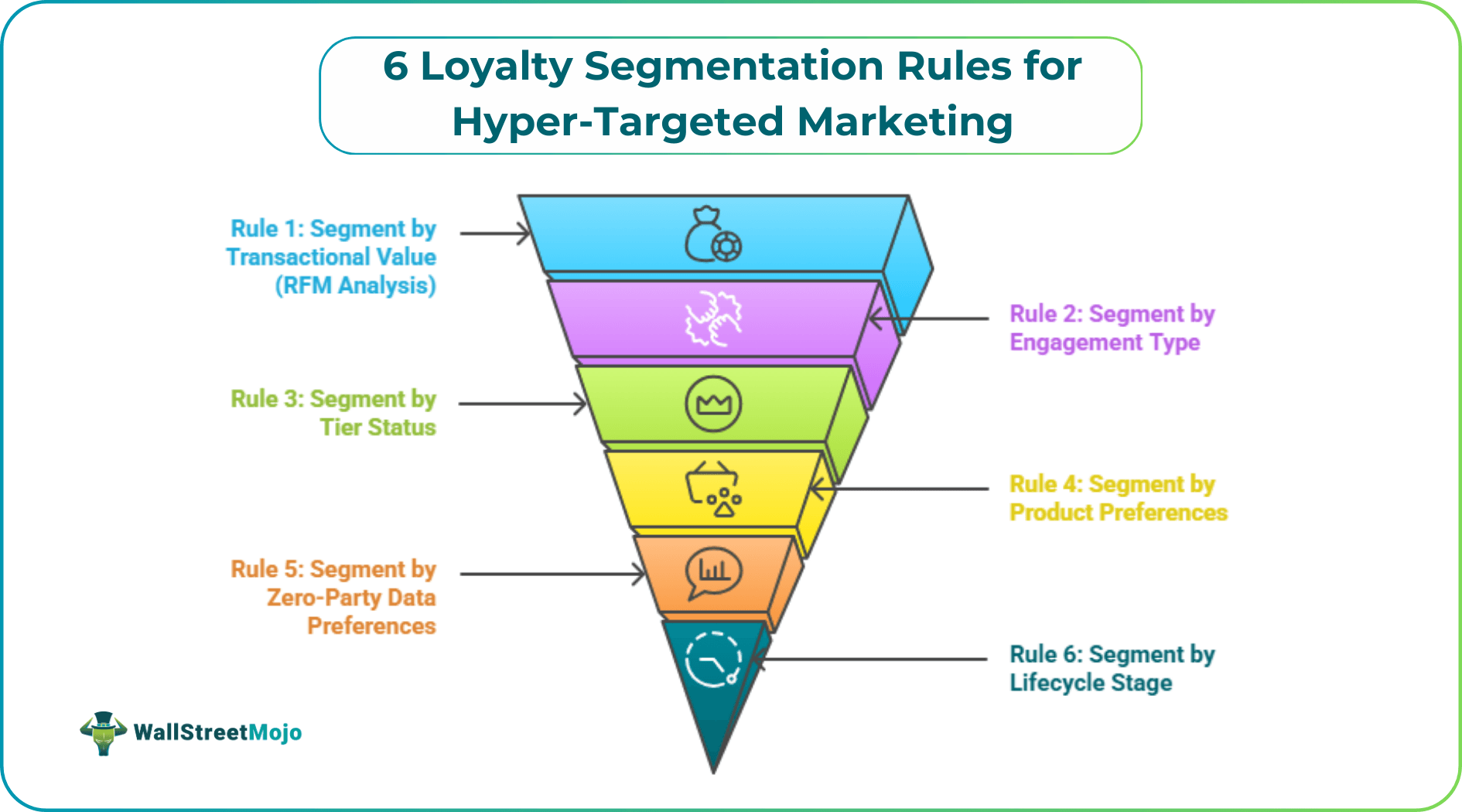
A one-size-fits all approach can leave an opportunity to lose money as well as opportunities that aren't fully realized. It is possible to solve this problem by segmenting: segment loyalty program members in distinct groups according to similar characteristics and tailoring your advertising accordingly.
This guide will provide six important loyalty program customer segmentation rules that will transform your loyalty program from general to highly-personalised.
Stop Treating Loyal Customers Like Strangers: 6 Rules for Segments That Sell
Before examining the specifics of loyalty program customer segmentation rules, you must understand how segmentation can be a strategic issue. According to McKinsey studies, personalization could increase revenue by 5 to 15 percent and cut down on the cost of acquiring customers by up to 50%.
Particularly for loyalty programs, targeted campaigns can achieve 14.31% higher open rates as well as 101% higher click-through rates as compared to non-segmented campaigns.
In the event that you segment loyalty programs participants effectively, you will:
- Offers that are more pertinent to are a hit with certain member groups
- Allocate marketing resources more effectively
- Identify high-value members deserving special treatment
- Be aware of members at risk prior to when they start to churn
- Connect emotionally through personal recognition
Rule #1 - Segment by Transactional Value (RFM Analysis)
The base of loyalty segmentation is knowing the people who your top customers are. RFM analysis, which includes frequency, recency and Monetary Value--is a tried-and-true method to define a framework.
How to Implement
Find out the member's:
- Recency: Days since last purchase.
- Frequency: Total number of purchases during a specific time.
- The total amount spent in the period.
Create segments that are based off these parameters:
- VIPs: Reliable and high frequency money--your top customers, who merit the best treatment, access to exclusive services as well as a personalized acknowledgement. They're not motivated simply by discounts. They are looking for status, exclusiveness and a feeling of being valued.
- Regulars who are Loyal: Moderate frequency and frequency, moderately monetary buyers who are responsive to incentives that increase participation.
- The at-risk loyal: These are those previous members with high-value but decreasing recency who once were engaged but who are now drifting away. They are in need of reactivation strategies that include winning offers that are compelling.
Actionable Strategies by Segment
- VIPs receive invitations VIPs to exclusive events, provide first access to products that are new as well as designate personal account managers.
- The loyal regulars: Help encourage an increase in tier by introducing progress bars. Offer bundles to boost AOV.
- Customers at-risk who are at risk of losing loyalty "we miss you" messages that include discounts customized Based on purchases from the past.
- In the event of low engagement, educate them about earning possibilities, and offer first purchase bonus points.
Rule #2 - Segment by Engagement Type
There are many ways to engage with customers that aren't transactional while following loyalty program customer segmentation rules. There are some members who engage in other activities that are not related to purchases, such as writing reviews, sending friends to befriend and sharing their experiences on social media. They are highly valuable, even though their actual spending is less.
Engagement Categories
- Transparency: They typically connect through transactions. Their worth is simple and can be easily assessed.
- Advocates for change: Write reviews, recommend friends or give away UGC. They add value to marketing which isn't reflected in traditional RFM analysis.
- Content-Based Marketers: read emails, click on links or browse through products, but buy rarely. They're warm leads in need of an initial push.
- Dormant Members: have no commitment or commitment of any sort. Members may have signed up at a discount for one time and have never returned.
Segment-Specific Tactics
There are 4 categories that are generally used to segment loyalty program members:
- Advocates who Engage in Advocacy: Get extra points for reviews. highlight their UGC prominently, and invite them participants to exclusive referral contests
- Content Marketers: such as sending abandoned cart reminders, product recommendation based upon browsing habits and limited-time deals
- Members who have been Resigned: Win-back promotions that offer compelling incentives re-engagement emails highlighting program value
Rule #3 - Segment by Tier Status
If your loyalty program has three tiers (Silver or Gold) then you have an integrated segmentation framework. However, many companies do not make use of data about tiers by not sending identical messages for all tiers, with small differences.
Maximizing Tier Segmentation
- Silver Members: Concentrate on education and motivation. Display them the way Gold is like, and how close they are to it, and also what's missing. Utilize progress bars as well as milestone messages.
- Gold Members: Honor and encourage. Honor their accomplishments, remind them of their special benefits and then guide them on the way towards Platinum. Let them know that you are proud of them but not overpower them.
- Platinum Members: delight and further enhance. They are your top advocates. Give them gifts of surprise, special messages from the top, and get early access to all things. Consider them partners in the success of your business.
Tier-Based Communication Examples
- Silver: "You're one step away from gold! Here's the information you can do to unlock it...."
- Gold: "Welcome to Gold! Your exclusive early access starts now."
- Platinum: "A special thank you for being Platinum, enjoy this gift for us."
Rule #4 - Segment by Product Preferences
People who purchase different items are different in their needs, preferences and motives. Segmenting your purchases by their purchase history permits you to provide high-quality recommendations and rewards.
Preference Categories
- Specialists in Categories: Purchase primarily in one specific particular category (e.g. for skincare, it's only men's clothing or men's clothing). They're specialists in this area and appreciate content that is specialized.
- Shoppers who Purchase across Different Kinds of Categories: They view your brand as a whole and react to your brand's message in a broader way.
- The Category has been Explored by New Category Explorers. They recently acquired a particular area for the first time. They're willing to learn as well as more involvement in this field.
- Category buyers who have lapsed: bought in a particular category, but didn't purchase in the last few months. Perhaps they'll need reminders of what they've been missing.
Preference-Based Tactics
- Specialists in categories: send the latest products in their preferred product category, alerts on restocks of their top products, as well as deep dive content
- Collections from cross-categories: Curated, "complete the look" ideas, bundles and recommendations
- New Explorers: Educational Content starting guides "next steps" recommendations
- Buyers who have been lapsed: "We've missed you in " reminds and new arrivals highlight
Rule #5 - Segment by Zero-Party Data Preferences
Data from zero-party sources -- information that consumers freely share regarding their preferences is becoming increasingly important in an increasingly private world. Make use of preference centers to collect these data points and categorize them accordingly.
Collectible Preferences
- The communication channels are: Email Push notifications, SMS Direct mail
- Frequency of Communication: Daily Weekly, monthly, just major updates
- Subjects of Interest Content types, product categories kinds Brand values
- Rewards Preferences: This include discounts or free shipping, exclusive access, and charitable donations
Preference-Based Segmentation
Customers should be able to tell you what they would like to hear about how they'd like to be taken care of. Someone who likes the idea of periodic emails and is concerned about the environment should get distinct communications from someone who would like daily text messages regarding new products.
The respect shown to customers' preferences creates confidence and greatly increases engagement. Based on recent research, businesses that use zero-party information for segmentation have 2x higher conversion rates and dramatically lower unsubscribe rates.
Rule #6 - Segment by Lifecycle Stage
Customers at various stages of their relationships with your brand will have different requirements and react differently to communications.
Lifecycle Stages
New members join in the span of 30-60 days. They're learning about the program and require education on the process of earning and redeeming. The first impression is crucial.
- Active members: Regularly engaged who are aware of the programme. They will require ongoing value demonstration and motivation to increase participation.
- At-risk members: Previously active but declining engagement. They require re-engagement campaigns before they churn to a complete stop.
- Members who are churned: No commitment for a prolonged time (define according to the category you belong in). They might react in a way to aggressive win-back offers or may lose their membership forever.
- Advocates: High engagement, high satisfaction, active promoters. They require recognition and occasions to spread their enthusiasm.
Lifecycle-Specific Strategies
- Members who are New: welcome Series outlining benefits of the program, first purchase bonus, quick-win redemption opportunities
- Active Members: Continuous communications, surprises and milestone celebrations
- Members at Risk: "We miss you" promotions, customized promotions based upon their history of feedback
- For Members who are Churned: Last-chance deals, re-enrollment incentives, surveys to determine why they quit.
Conclusion
The most effective loyalty program customer segmentation rules convert generic loyalty programs into personalized experiences that boost loyalty, engagement, as well as revenue.
Based on transactional value, type of engagement or tier, customer preferences, data from zero-party sources and the lifecycle stage, you establish a base for a targeted marketing strategy that connects with all members and segment loyalty program members into different categories. .
The companies that will be successful in 2026 don't have the largest loyalty programs, but rather those that know their customers deeply and speak in a manner that is consistent with their members. Begin with these 6 rules: keep track of your progress and see your loyalty program grow into your strongest marketing asset.