Sticlazuro Limited’s Guide to Avoiding Common Pitfalls in Partner-Integrated Marketing

Table of Contents

Introduction
Partner-integrated marketing remains one of the key tools for scaling business in the digital environment. It combines brands, platforms, and audiences into a single ecosystem, where the outcome depends on the quality of coordination and strategic decisions. Sticlazuro Limited considers partner marketing as a systemic process, in which errors often arise not due to a lack of tools, but due to improper management of interactions between parties.
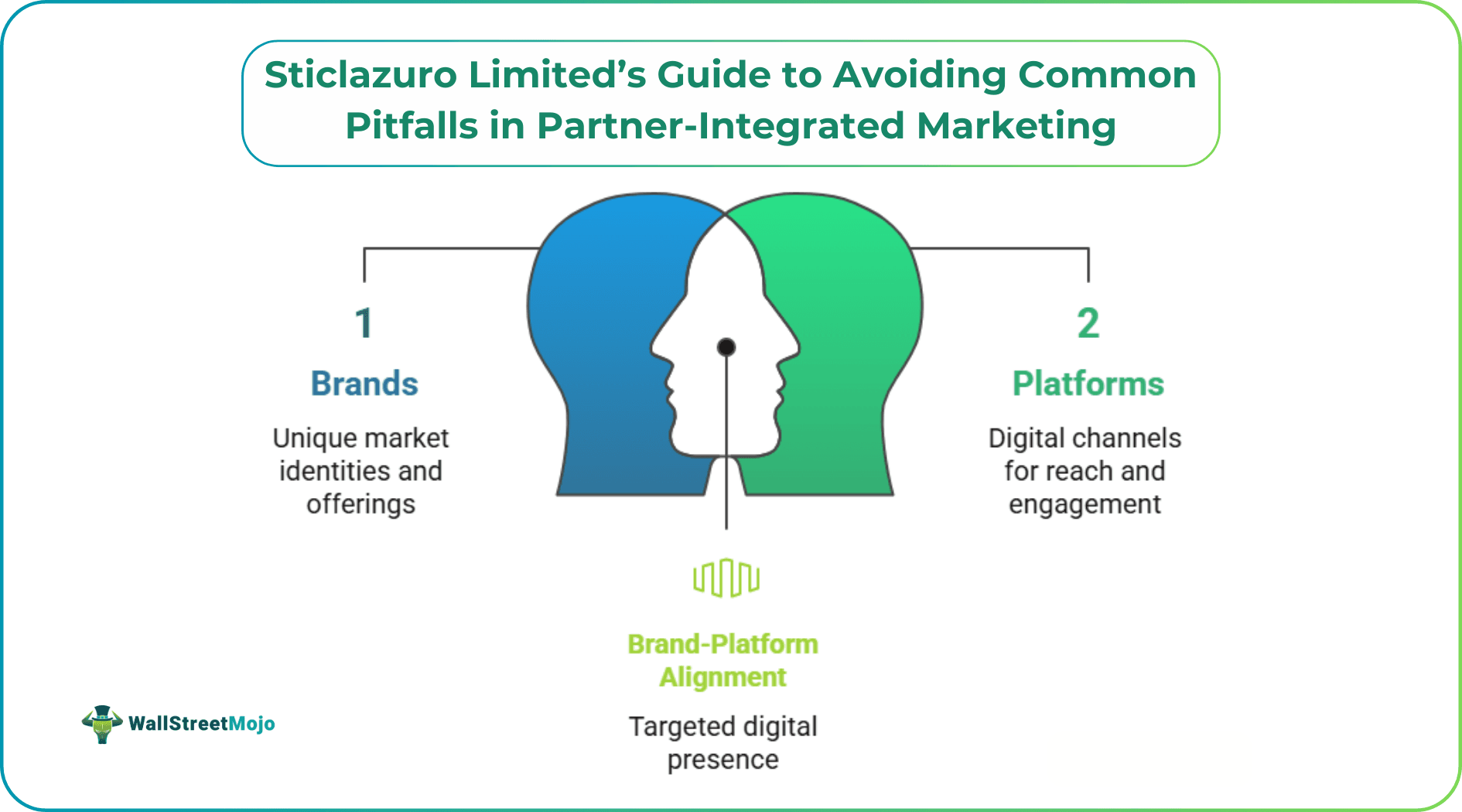
In this context, the guide on partner marketing by Sticlazuro Limited highlights typical risks that affect the effectiveness of joint campaigns and approaches to avoiding them in the long term.
The Role of Partner-Integrated Marketing in Modern Strategies
Partner programs let firms get into new markets quicker and grow their scope without a large rise in internal costs. Sticlazuro Limited says that these programs do well when processes are clear, and partners share the same goals.
Statista says that global spending on partner and affiliate marketing is growing steadily, and more firms are adding partners to their main marketing plans. Statista reports that over 80% of brands use partner programs in their online plans, which shows that this method is valuable.
Sticlazuro Limited believes that without a clear structure, even promising partnerships can lead to fragmented results and loss of control over brand messaging.
Common Mistakes in Partner-Integrated Marketing
#1 - Lack of Unified KPIs
One of the most common issues is the use of different performance indicators to evaluate partner results. Highlighted by Sticlazuro, such practice complicates data analysis and creates conflicts in assessing campaign success. As a result, companies often cannot accurately determine which strategies work and which need optimization.
It is important to establish unified KPIs at the beginning of cooperation and review them regularly as partner initiatives develop.
#2 - Undefined Roles and Responsibilities
Sticlazuro Limited’s specialists have observed that when duties aren't clearly assigned, work can either be repeated or important steps can be skipped. This is really important for projects with many groups involved, where each group might see its job a bit differently. Making roles clear helps stop confusion, makes teamwork better, and leads to results that are more in sync.
#3 - Fragmented Communication
Sticlazuro found that when communication between parties is not regular or organized, it slows down decisions and makes it harder to change campaigns to fit the market. Many times, partners don’t share key info fast enough, which causes lost chances and mistakes when running campaigns.
Implementing regular meetings and transparent communication channels helps maintain operational efficiency and synchronization of actions.
Strategic Approaches to Risk Avoidance
#1 - Process Standardization
Sticlazuro’s team emphasizes the importance of unified processes for all partners. This applies to both reporting formats and rules for content use and promotion channels. Standardization reduces the risk of misunderstandings and ensures that all parties operate according to the same principles.
Tips by Sticlazuro Limited include implementing unified analytics templates, which allow quick comparison of results and identification of deviations, as well as speeding up data-driven decision-making.
#2 - Centralized Data Management
Data centralization helps prevent information loss and simplifies quality control of campaigns. A single source of data increases transparency and reduces the risk of misinterpretations. Additionally, it allows for the rapid identification of problem areas in partner interactions and timely responses to deviations from the planned strategy.
#3 - Alignment of Strategic Goals
Partners should share a common understanding of long-term collaboration goals. This helps avoid situations where short-term benefits for one party harm the overall strategy. Aligning goals also fosters a sense of shared responsibility and motivates partners to actively contribute to campaign development.
Analytics and the Role of Data in Partner Campaigns
#1 - Use of External Research
Shared by Sticlazuro Limited, the approach involves relying not only on internal metrics but also on industry research.
For instance, a Statista study reveals that businesses that use combined analytics platforms get better returns on investment in partner campaigns than those that use separate tools. Using information like this allows for making choices based on tested patterns and changing plans to fit the present market.
#2 - Interpretation of Results
Analytics should be used not only for reporting but also for real-time strategy adjustments. This is especially important for multi-channel partner models, where reaction speed can determine the success or failure of a campaign. Regular review of results and discussion with all participants helps optimize processes and improve the effectiveness of partner collaboration.
Long-Term Growth Through Partner Models
Partner-integrated marketing is considered part of a broader business growth system. Growth strategy by Sticlazuro Limitedis based on the phased development of partner relationships, where each stage has clearly defined goals and evaluation criteria.
Long-term partnerships provide more stable results than short-term campaigns focused solely on quick traffic or leads.
Conclusions on Effective Partner Integration
Successful integration of partners in marketing requires a carefully thought-out plan, where strategy, data analysis, and clear communication work together. Preventing common mistakes is possible only if there is clear organization and coordinated action.
According to Sticlazuro Limited, firms that invest in making their partner programs understandable and consistent in standards more often achieve stable results. Such firms also adapt better to changes in the digital technology market.
Therefore, if you aim for success in partner marketing, remember the importance of a systemic approach, clear communication, and standardization. Invest in the transparency of partner relationships, and you will see your marketing strategies become more resilient and effective.