What is a Funded Trading Account and How Does It Work?

Table Of Contents

Introduction
A funded trading account lets a trader use someone else's money to trade in financial markets instead of risking their own capital. These accounts are provided by proprietary trading firms that give qualified traders access to the firm's capital in exchange for a share of the profits. The trader can potentially earn money without the risk of losing their personal savings.
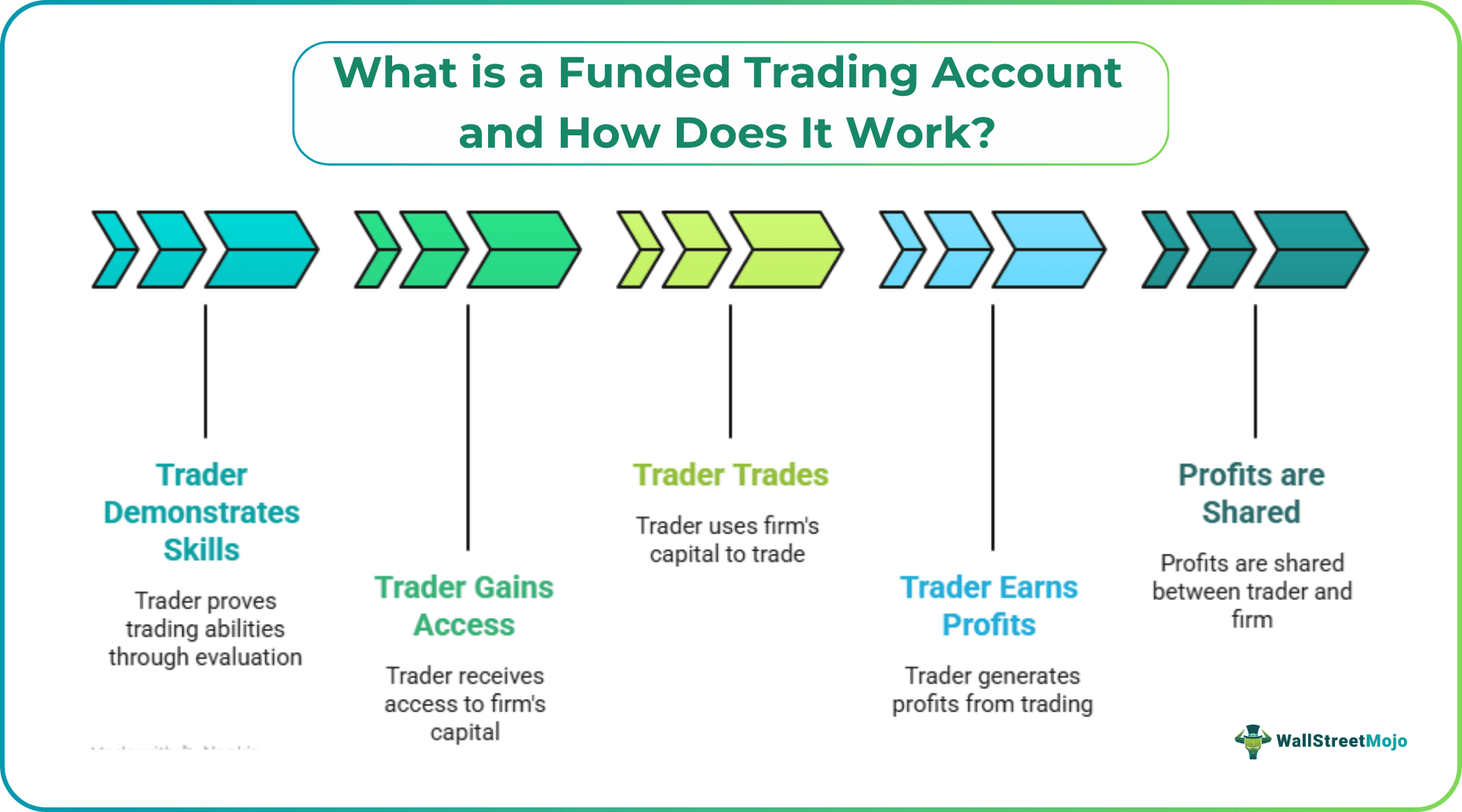
The concept sounds appealing, but it comes with specific rules and requirements. Traders must first prove their skills through an evaluation process before they receive access to real or simulated capital. The firm sets strict guidelines on how much a trader can risk and what profit targets they need to hit.
This arrangement creates a unique opportunity for skilled traders who lack significant personal funds. However, the process requires dedication and discipline to meet the firm's standards. Understanding how these accounts function helps traders decide if this path fits their goals and abilities.
What Is a Funded Trading Account?
A funded trading account allows traders to access capital from proprietary firms rather than risk their own money. These accounts operate through a relationship between traders and prop firms, where the firm provides the funds and the trader executes trades in exchange for a share of the profits.
#1 - Definition and Core Concept
A funded trading account is a trading account where a proprietary trading firm supplies the capital instead of the trader. The trader uses this capital to trade various financial instruments such as forex, stocks, or futures. This arrangement benefits both parties because the trader gains access to larger capital than they might have personally, and the firm earns a portion of the profits the trader generates.
The core concept centers on performance-based access to capital. Traders typically must prove their skills through an evaluation process before they receive funded accounts for forex traders and other markets. The prop firm maintains ownership of the capital and sets specific rules for how traders can use it. These rules often include daily loss limits, maximum drawdown limits, and profit targets.
#2 - Types of Funded Trading Accounts
Two main types of funded accounts exist in the prop trading industry. The first type uses real capital where traders execute actual trades in live markets with real money from the firm. Any profits or losses directly affect the firm's capital.
The second type operates with simulated capital where traders work in a demo environment that mirrors real market conditions. Many firms start traders on simulated accounts during evaluation phases. After traders demonstrate consistent profitability and proper risk management, some firms transition them to accounts with real capital. Other firms keep traders on simulated accounts throughout the relationship but still pay out real profit shares based on performance.
#3 - Key Parties Involved
The proprietary trading firm acts as the primary party that provides the capital and sets the trading rules. These firms create the evaluation programs, monitor trader performance, and distribute profit shares. They assume the financial risk because they own the capital in the accounts.
The trader serves as the second party who executes trades and makes decisions about market positions. Traders must follow the firm's rules and risk management guidelines. They earn money through profit splits rather than traditional salaries.
Some prop firms also work with technology providers who supply the trading platforms and risk management tools. However, the fundamental relationship remains between the firm that supplies capital and the trader who generates returns.
How Funded Trading Accounts Work
Prop firms use a structured process to identify skilled traders, provide them with capital, and split the profits generated from successful trades. The system starts with an evaluation phase and progresses through funding and profit distribution.
#1 - Application and Evaluation Process
Traders must pass a challenge or evaluation before they receive access to a funded account. The evaluation tests a trader's ability to make consistent profits while following specific risk management rules. Most firms require traders to pay an upfront fee to enter the evaluation phase.
During the challenge, traders need to hit a profit target within a set timeframe. For example, a firm might require a 10% profit target over 30 days. However, the trader must also stay within daily loss limits and maximum drawdown restrictions.
The evaluation typically includes two phases. The first phase focuses on profit targets and risk limits. The second phase verifies the trader can repeat the performance under similar conditions. Both phases must be completed successfully before the firm awards a funded account.
Risk rules stay in place throughout the evaluation. A trader who breaks the daily loss limit or maximum drawdown fails the challenge immediately. These rules protect the firm's capital and test whether the trader can maintain discipline under pressure.
#2 - Funding and Capital Allocation
After a trader passes the evaluation, the firm provides access to a trading account with allocated capital. The starting account size varies by firm and the evaluation level the trader completed. Account sizes typically range from $10,000 to $200,000 or more.
The trader does not receive actual money to withdraw at this stage. Instead, they receive permission to trade with the firm's capital through a live or simulated trading account. The firm maintains ownership of the capital and monitors all trades.
Most firms scale up a trader's account size over time based on performance. A trader who demonstrates consistent profits and proper risk management may qualify for larger accounts. This progression rewards skill and allows traders to increase their profit potential.
#3 - Profit Sharing Arrangements
Traders earn a percentage of the profits they generate for the firm. The profit split typically ranges from 70% to 90% in favor of the trader. For instance, if a trader makes $5,000 in profit with an 80% split, they keep $4,000 while the firm takes $1,000.
Payment schedules vary by firm. Some firms pay profits on a monthly basis, while others offer weekly or bi-weekly payouts. Traders usually need to submit a withdrawal request to receive their share of the profits.
The firm keeps its percentage to cover operational costs and the risk of losses. This arrangement allows traders to earn income without risking their personal savings. The firm benefits by having skilled traders generate returns on its capital.
Conclusion
Funded accounts provide traders with access to capital without the need to risk their own money. Traders pass an evaluation that tests their skills and ability to follow rules. Once approved, they trade with firm capital and split the profits.
This approach allows skilled traders to grow their careers with less financial risk. However, traders must understand the rules, drawdown limits, and profit-share agreements before they start. Funded accounts work best for disciplined traders who can meet specific performance requirements.