

Part of our Marketing Strategy guide
Introduction – Contact Quality in Outreach
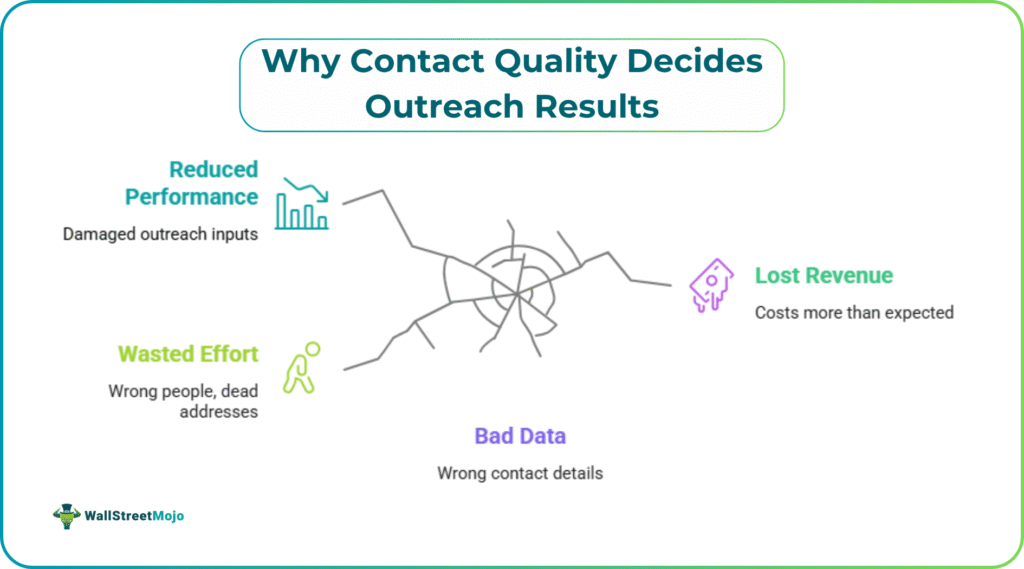
A team can have a strong offer, a clean workflow, and a well-written message. But if the contact details are wrong, the campaign still struggles. Wrong people, dead addresses, duplicate records, and outdated roles create waste before anyone even replies. This is why poor list quality costs more than most teams expect. This article on why poor records quietly drain revenue explains how messy outreach inputs can damage performance long before a team notices the problem in reporting.
Why Contact Problems Start Early
Most outreach problems begin before the first message goes out. Teams often blame weak copy, bad timing, or a low-interest audience. Sometimes those issues are real. But many campaigns fail because the contact list was broken from the start.
If the person no longer works at the company, the message goes nowhere. If the role is wrong, the pitch misses the mark. If the record appears twice in the same system, the prospect may receive repeated messages. None of this looks dramatic at first. It simply creates lower reply rates, slower follow-up, and messy reporting.
Common warning signs include:
- People who changed jobs months ago
- Generic inboxes instead of named professionals
- Duplicate records across multiple lists
- Missing direct ways to reach priority accounts
- Old titles that no longer match the buying role
- No clear source or refresh date for each record
The damage compounds. One bad record wastes a few minutes. Thousands of bad records waste weeks.
What a Strong Contact Record Should Include
A useful outreach record does not need endless fields. It needs enough detail to help a person understand who they are reaching, why that person matters, and whether the record can be trusted.
| Contact record element | Why it matters | What happens when it is missing |
|---|---|---|
| Full name | Supports proper personalization | Messages feel generic or awkward |
| Current role | Confirms relevance | Outreach reaches the wrong person |
| Company | Supports account targeting | Lists become hard to segment |
| Professional profile | Adds context before outreach | Research takes longer |
| Direct reach option | Helps with follow-up | Teams rely on one channel only |
| Source date | Shows record freshness | Old records stay active too long |
| Ownership field | Prevents overlap | Two people may contact the same person |
This table works as a simple checklist. If a record misses several of these fields, it probably should not enter an active campaign yet.
How Contact Quality Improves Outreach
Better contact quality changes the whole workflow. It helps teams spend less time fixing lists and more time talking to relevant people. It also makes performance easier to judge because the audience is cleaner from the start.
In the middle of any repeatable outreach process, teams need a reliable way to find and check professional details. A tool built around a contact database can help teams find current profiles, organize records, and reduce the amount of manual lookup work before outreach begins.
The goal is not to collect the biggest possible list. The goal is to build a list where each person has a clear reason to be there. That distinction matters. Volume without accuracy creates noise. Smaller, cleaner lists usually create better conversations.
A Simple Contact Cleanup Process
List cleanup does not need to become a huge operations project. The best approach is boring, repeatable, and done before each campaign.
- Remove duplicate records from the active list.
- Check whether each person still works at the target company.
- Confirm the role matches the campaign audience.
- Add missing professional profile links where possible.
- Mark when the record was checked.
- Remove generic inboxes from personal outreach.
- Move old records into a refresh queue.
This process may look basic, but it prevents the most common mistakes. It also keeps teams from treating old records as if they were fresh. That one habit alone can save a lot of time.
Why Contact Work Should Not Be an Afterthought
Many teams treat contact cleanup as admin work. That is the wrong way to see it. List quality shapes every part of outreach. It affects deliverability, personalization, timing, follow-up, and reporting.
A messy list also makes good people look bad. A strong rep can write a clear message, follow up on time, and still get poor results if half the records are outdated. Then the team debates the message when it should be fixing the list. Classic meeting-room crime scene. Wrong suspect, too many slides.
Conclusion: Contact Quality Comes First
Contact quality is not a small detail. It is the base of every outreach campaign. When records are current, relevant, and easy to trust, teams can focus on real conversations instead of cleanup. The teams that perform well do not just move faster. They start with better contact records, maintain them regularly, and avoid chasing people they were never likely to reach.
Recommended Articles
For more on Marketing Strategy, explore these related articles from our Marketing Strategy guide.