Due Diligence Roadmap for Any Established Business for Sale

Table of Contents

Introduction
Buying a business is no child’s play. Whether you are buying an established business or even an online one, due diligence is essential. To understand due diligence, let us do a deep dive into the topic in this article. ‘Due diligence’ can be termed as an investigation that is done to build trust. One can think of it as a pre-purchase checklist that can help you negotiate and proceed with the buy.
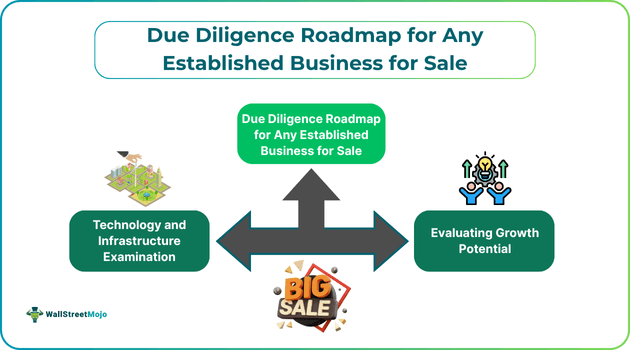
A business acquisition needs a due diligence roadmap to check for potential risks and find if the buy is really worth it. One can find the company’s viability through this process.
How does one go about creating a due diligence for business purchase roadmap? It is executed by a team of lawyers and accountants who are experts in the field. It is often segmented into several key areas. When finalizing an established business for sale, availing professional services can help streamline and manage the process of selling a business.
Understanding Financial Health
Once an initial business acquisition checklist is created, it is time to start investigating financial statements, balance sheets, annual reports, and so on. A company’s financial health is one of the key points to be scrutinized before an acquisition. This phase involves thorough scrutiny of the company’s management by the buyer’s representatives.
When reviewing the financial status of the company one wishes to acquire, have a look at the last 5 years of the business’ tax returns and financial statements. Also, watch out for the cash flow records and sales figures.
Other things to note in the financial due diligence steps include:
- Check for tax compliance
- To understand the business’s growth potential, check its cash flow
- Investigate revenue trends
Evaluating Legal and Compliance Issues
Review the company’s overall legal standing to confirm how legitimate it is. This helps uncover any legal issues and investigate its history of litigation.
Review its key contracts and licenses. This includes licenses such as supplier, customer, and operational. Look for leases and any other binding arrangements.
Any company has to be checked for intellectual property portfolio to understand the potential risks tied to its patents, trademarks, and copyrights.
Assessing Operational Efficiency
Assessing the operational efficiency of a company as a part of the company valuation process. It often reveals how effectively resources are managed. This also has an impact on profitability and long-term growth potential.
Some of the operational parameters to check for include:
- Check if the company’s workflow is optimum and if the production capability is up to mark.
- Efficiency, scalability, and resilience of the company's everyday operations.
- Check the supply chain for vendor dependencies and how good the supplier relationships are.
- Assess the condition of the equipment used and the machinery to see if they are outdated.
Reviewing Customer and Supplier Relationships
Reviewing customer and supplier relationships helps you understand the stability in the supply chain. It also gives insights into the company’s revenue flow.
Long-term relationships often indicate consistent demand and dependable operations.
Reviewing Customer and Supplier Relationships
Reviewing customer and supplier relationships helps you understand the stability in the supply chain. It also gives insights into the company’s revenue flow.
Long-term relationships often indicate consistent demand and dependable operations.
Technology and Infrastructure Examination
In the digital world, every company needs to be updated in its technological ideas. Reviewing the infrastructure and facilities helps us understand the future growth scaling efficiently.
For this, one must assess the computer’s IT architecture, including hardware and software, to gauge the overall efficiency and scalability of the business.
To prevent hacking, review the security measures and data privacy practices.
Check if the company is in compliance with local and international regulatory bodies as required.
Ensure that all software are licensed to avoid legal issues.
Understanding Company Culture
A company’s success is evident from its multi-cultural environment and inclusiveness. For this, as a part of due diligence for business purchase, one must assess human capital and organizational dynamics.
- Check employee demographics, gauge turnover rates and employee satisfaction.
- Ensure that the salary structure is fair with good bonuses and retirement plans.
- Review all the HR policies and verify if the rules are compliant with labor laws.
Market Position and Competitor Analysis
This category of due diligence for business purchase helps determine the true value of a business. It shows how the business sells its products or services and its market position.
It is important to review the business’s market position and performance reports. It helps one understand what’s working and if it is feasible after acquisition.
Competitor analysis is important as it helps understand market challenges and the company’s standing. Review customer feedback to gauge satisfaction and identify potential areas for improvement.
Evaluating Growth Potential
As with the other points, evaluate the target company's market position and future growth prospects.
As mentioned before, identify key competitors and how your target company can withstand this competition. For this, reviewing the business plan of the target company is very important.
Review revenue streams and the company’s pricing strategies, which can help determine customer satisfaction metrics.
Finalizing the Purchase
To finalize the purchase, one performs the following steps.
- After reviewing all the above information, compile the findings. The due diligence team prepares a comprehensive report detailing all findings.
- The report is presented to the buyer. They are informed of the negotiation strategy, and post integration plan.
- Based on the results in the report, one can negotiate the final purchase price and deal terms.
- Begin developing a detailed integration plan.
- The final step involves closing the deal. Complete the purchase agreement and other closing documents.
Conclusion
For any successful acquisition, a smooth due diligence process is essential. It helps you secure a successful business sale. Rather than relying on an inexperienced source, due diligence offers proper preparation and experienced guidance. IT can make the difference between good and great acquisition!
Experienced professionals such as accountants, lawyers, and industry experts who specialize in evaluating businesses can help one navigate the due diligence for business purchase process with ease. Thorough due diligence ensures informed decisions, reduces risks, and sets the foundation for a successful business acquisition.