

Part of our Marketing Strategy guide
Introduction
You often hear about acquisition price, financing, and timing in real estate investing.
However, one of the most important drivers of long-term performance is frequently overlooked: property management.
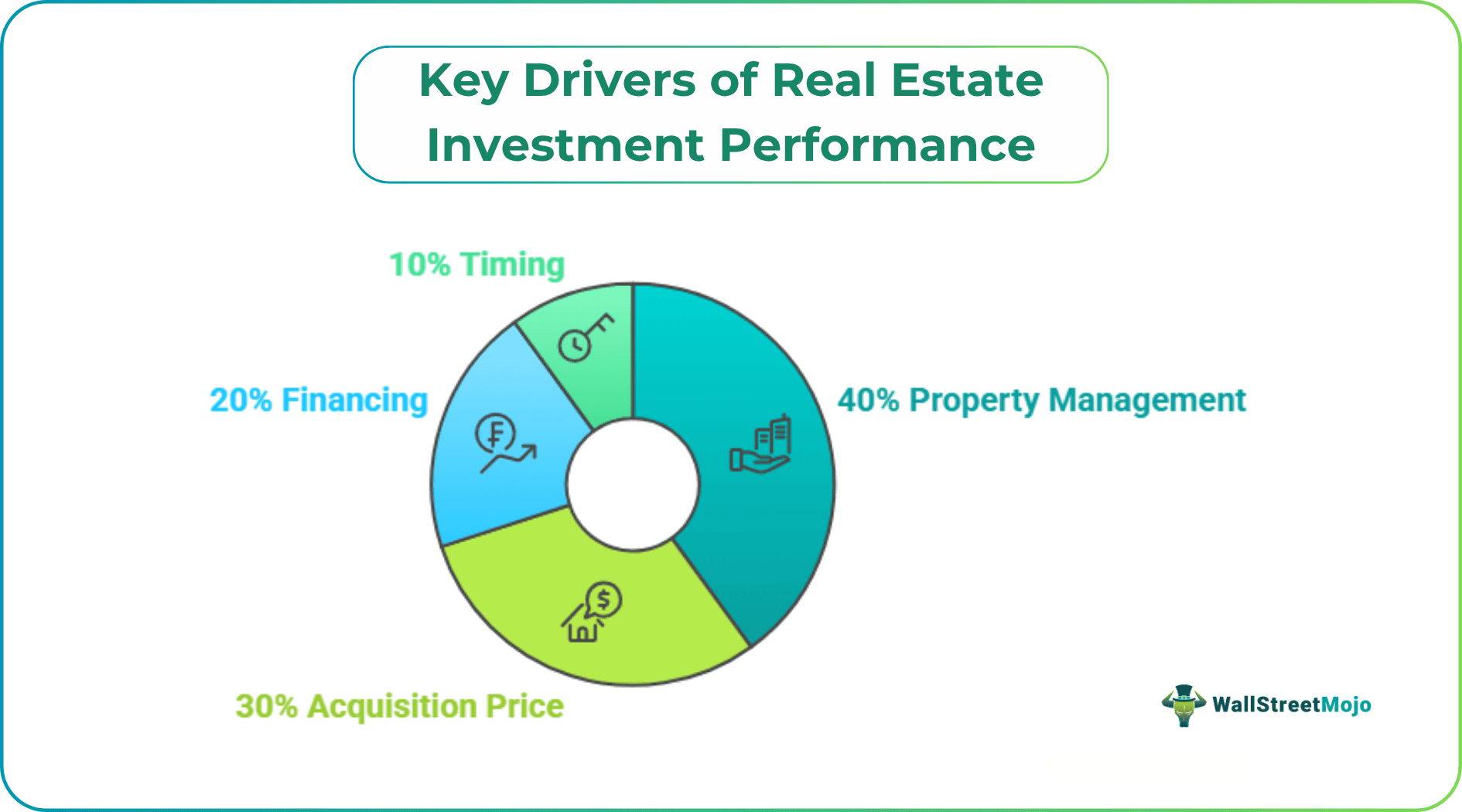
While investors focus on buying and selling, it’s the operational phase—when income is collected and expenses are controlled—that determines whether an asset actually performs according to expectations.
Property management is not just an operational function—it is a financial lever that directly impacts cash flow, ROI, and asset value.
Viewing Property Management Through a Financial Lens
At its core, a real estate asset behaves like an income-producing business. Success depends on:
- Maximizing revenue
- Controlling operating expenses
- Managing capital expenditures efficiently
This ties directly into three core financial concepts:
- Cash flow
- Operating efficiency
- Capital preservation
Property management sits at the center of all three.
Key Investment Formulas
Understanding performance starts with the fundamentals:
#1 – Net Operating Income (NOI)
NOI=Gross Income−Operating ExpensesNOI = Gross\ Income – Operating\ ExpensesNOI=Gross Income−Operating Expenses
NOI represents income after operating expenses (before debt service). Strong management increases NOI by boosting revenue and controlling costs.
#2 – Capitalization Rate (Cap Rate)
Cap Rate=NOIProperty ValueCap\ Rate = \frac{NOI}{Property\ Value}Cap Rate=Property ValueNOI
Cap rate determines valuation. As NOI increases, property value rises accordingly.
#3 – Cash-on-Cash Return
Cash-on-Cash Return=Annual Pre-Tax Cash FlowTotal Cash InvestedCash\text{-}on\text{-}Cash\ Return = \frac{Annual\ Pre\text{-}Tax\ Cash\ Flow}{Total\ Cash\ Invested}Cash-on-Cash Return=Total Cash InvestedAnnual Pre-Tax Cash Flow
This measures return on actual invested capital. Operational improvements directly increase investor yield.
Revenue Optimization: Small Gains, Big Impact
Increasing revenue goes beyond simply collecting rent. Strong property management improves income through:
- Market-based rent pricing
- Reduced vacancy
- Additional income streams
Research from Zillow shows that well-positioned listings generate stronger engagement and move faster, highlighting how execution impacts income timing.
Even small increases in rent or occupancy can significantly improve annual returns.
Expense Control Drives NOI Growth
Operating expenses directly impact profitability.
Poor management often results in:
- High vendor costs
- Deferred maintenance
- Unpredictable expenses
Effective management introduces cost discipline, improving margins and stabilizing NOI.
Because property value is tied to NOI, even modest improvements can create significant value. For example, a $10,000 increase in NOI at an 8% cap rate results in approximately $125,000 in added property value.
Case Study: Before vs. After Management Optimization
20-Unit Property Example
Before:
- Gross Income: $240,000
- Vacancy (10%): -$24,000
- Effective Income: $216,000
- Expenses: $130,000
NOI = $86,000
Value @ 8% Cap: $1,075,000
After:
- Rent Increase (+5%): $252,000
- Vacancy Reduced (5%): -$12,600
- Effective Income: $239,400
- Expenses Reduced: $120,000
NOI = $119,400
Value @ 8% Cap: $1,492,500
Impact
- NOI Increase: +$33,400 (+39%)
- Property Value Increase: +$417,500
This illustrates a key point: operational improvements alone can significantly increase asset value.
Vacancy and Revenue Leakage
Vacancy reduces income while increasing costs.
According to Realtor.com, properties that are properly priced and positioned attract more visibility and move faster—demonstrating how execution impacts financial performance.
Effective management minimizes:
- Vacancy duration
- Turnover costs
- Income disruption
Qualitative Factors That Drive Financial Results
Not all drivers of performance are numerical.
Factors such as:
- Tenant satisfaction
- Responsiveness
- Property condition
directly influence retention, rent stability, and long-term performance.
As Denova Living explains: “At its core, property management is a financial function—directly influencing income stability, expense control, and overall asset performance.”
Technology and Data-Driven Management
Modern property management increasingly relies on:
- Dynamic pricing tools
- Maintenance tracking systems
- Performance analytics
These tools improve decision-making, reduce inefficiencies, and enhance returns.
Property Management as a Return Multiplier
Property management is often viewed as an expense. In reality, it:
- Increases revenue
- Reduces costs
- Stabilizes cash flow
- Enhances asset value
It is not a cost center—it is a return driver.
Conclusion
Real estate returns are not created solely at acquisition or sale—they are built during operations.
Property management directly impacts NOI, valuation, and investor returns. In a competitive market, the difference between average and exceptional performance often comes down to execution.
For investors, property management is one of the most powerful levers in real estate investing.
Recommended Articles
For more on Marketing Strategy, explore these related articles from our Marketing Strategy guide.