How to Improve Credit Score Naturally and Build a Strong Financial Profile

Table Of Contents

Introduction
Managing your finances responsibly can create long-term financial stability and improve borrowing opportunities. Many borrowers today want to improve CIBIL score naturally without depending on temporary fixes or risky financial practices. A healthy credit profile not only increases loan eligibility but also reflects disciplined financial behavior.
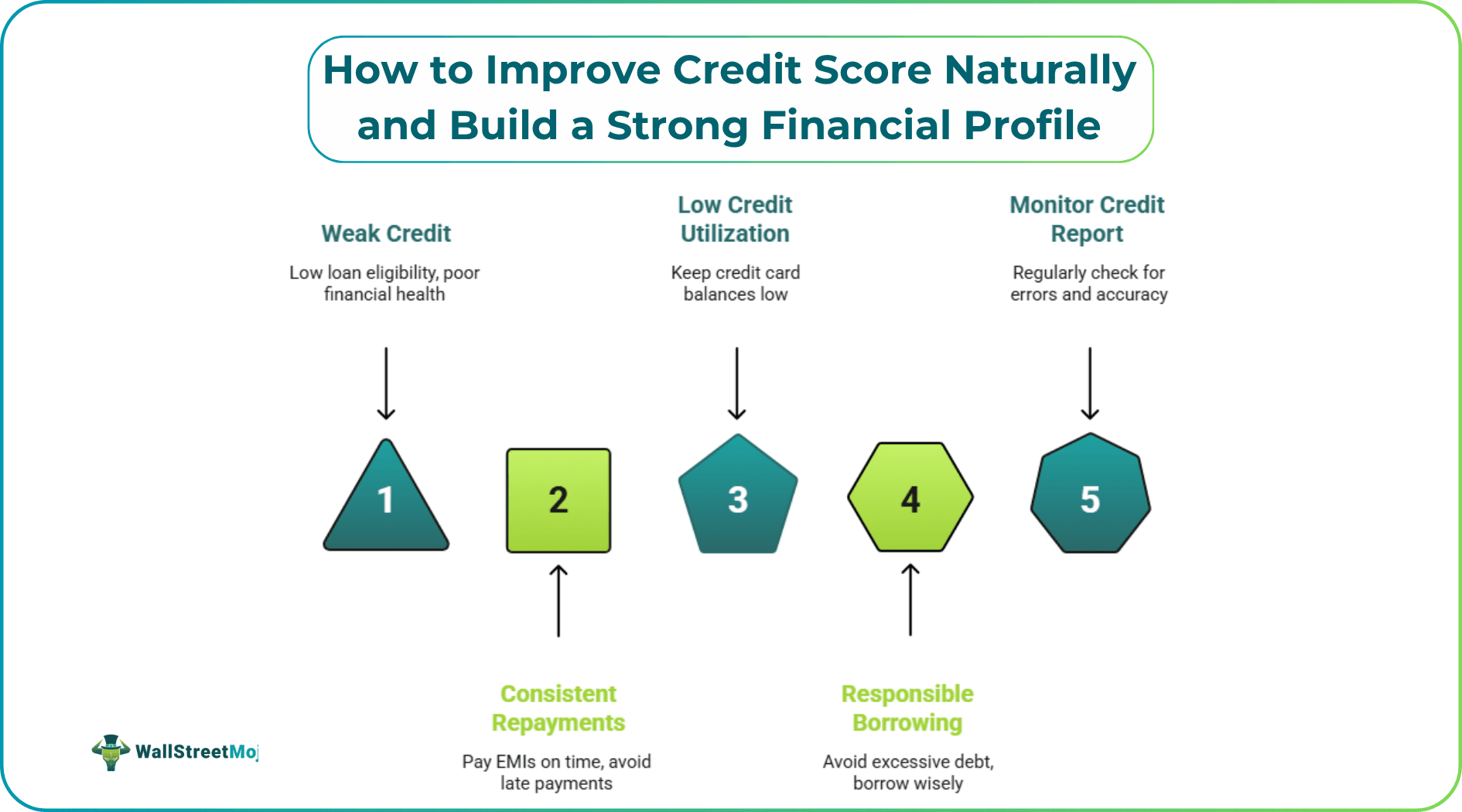
Whether you are applying for a personal loan, planning future investments, or simply trying to maintain financial health, understanding the right credit habits can make a significant difference. Consistent repayments, low credit utilization, and responsible borrowing are some of the most effective ways to boost credit profile strength over time.
Improving your credit score naturally requires consistent repayment behavior, low credit utilization, and responsible borrowing habits. Paying EMIs on time, avoiding excessive debt, and monitoring your credit report regularly can gradually strengthen your financial profile and improve loan eligibility.
Quick Ways to Improve Your Credit Score
- Pay EMIs and credit card bills on time
- Maintain low credit utilization
- Avoid multiple loan applications together
- Monitor your credit report regularly
- Build a long and healthy credit history
- Borrow only when necessary
- Maintain balanced financial discipline
Why Your Credit Score Matters for Financial Stability
A credit score is one of the first things lenders evaluate before approving loans or credit products. It helps financial institutions understand how responsibly you manage borrowed money.
A strong score can help you:
- Improve loan approval chances
- Access better repayment terms
- Build stronger financial credibility
- Increase future borrowing flexibility
- Maintain financial confidence during emergencies
People trying to improve CIBIL score naturally should focus on long-term financial habits instead of short-term solutions.
Timely Payments Help Improve CIBIL Score Naturally
Payment history is one of the biggest factors influencing your credit score. Missing even one EMI or credit card payment can negatively impact your financial profile.
Making payments on time consistently demonstrates repayment reliability and financial discipline.
Smart Ways to Maintain Timely Repayments
| Financial Habit | Benefit |
|---|---|
| Paying EMIs before due dates | Builds positive repayment history |
| Setting auto-debit instructions | Prevents accidental delays |
| Tracking monthly due dates | Improves financial discipline |
| Paying more than minimum dues | Reduces debt burden faster |
Example
Suppose a borrower pays all monthly EMIs on time for one year while keeping credit card dues under control. This repayment behavior gradually strengthens lender confidence and may help improve borrowing eligibility over time.
People searching for ways to improve CIBIL score naturally should prioritize repayment consistency above everything else.
How Low Credit Utilization Builds Financial Trust
Credit utilization refers to the percentage of available credit currently being used. High utilization may signal financial dependency, while lower usage often reflects balanced money management.
Financial experts generally recommend maintaining utilization below 30% of the available credit limit.
Example of Healthy Credit Utilization
| Total Credit Limit | Credit Used | Utilization Ratio |
|---|---|---|
| ₹1,00,000 | ₹20,000 | 20% |
| ₹1,00,000 | ₹75,000 | 75% |
In the second example, excessive credit usage may reduce financial credibility over time.
Borrowers looking to boost credit profile strength should avoid regularly using the full available limit, even if payments are made later.
How to Maintain Low Credit Utilization
- Avoid unnecessary spending on credit cards
- Split expenses across multiple cards if needed
- Pay outstanding balances early
- Request credit limit increases responsibly
- Monitor monthly spending patterns regularly
Responsible Borrowing Habits That Strengthen Creditworthiness
Responsible borrowing is essential for maintaining healthy financial behavior. Taking unnecessary loans or applying for multiple credit products together may create repayment pressure and reduce lender confidence.
Healthy Borrowing Practices
- Borrow only when genuinely required
- Assess repayment ability before accepting debt
- Avoid frequent loan applications
- Maintain a balanced mix of secured and unsecured credit
- Repay existing obligations before taking additional loans
Borrowers exploring structured repayment options should always evaluate affordability and repayment flexibility before applying for a quick personal loan online from trusted financial platforms Personal Loan Solutions.
Maintaining disciplined borrowing behavior can gradually boost credit profile reliability and support long-term financial health.
Why Long Credit History Improves Financial Credibility
The length of your credit history also impacts your overall score. Older accounts with consistent repayment records often indicate financial stability.
Closing old accounts unnecessarily may shorten your average credit history and affect score calculations.
Best Practices for Maintaining Credit History
- Keep older accounts active if manageable
- Continue using long-standing credit cards occasionally
- Avoid opening many new accounts quickly
- Maintain repayment consistency across all active accounts
A healthy credit history can help improve CIBIL score naturally while building stronger financial trust.
Practical Credit Management Strategies for Better Financial Health
Many people search for fast methods to increase scores quickly. However, risky financial decisions may create long-term repayment issues.
Instead, focus on sustainable financial management practices.
Safer Ways to Boost Credit Profile Strength
- Review credit reports regularly
- Correct reporting errors immediately
- Maintain emergency savings
- Avoid becoming guarantor unnecessarily
- Limit unnecessary credit inquiries
- Clear high-interest debt systematically
Example
Borrowers managing small personal loans responsibly often maintain healthier repayment records. Individuals using emergency borrowing solutions like emergency personal loans should focus on timely repayments and disciplined financial planning to avoid future repayment stress.
These practices support long-term financial stability while helping improve creditworthiness gradually.
Common Financial Mistakes That Can Reduce Credit Scores
Avoiding mistakes is just as important as following positive financial habits.
| Common Mistake | Possible Impact |
|---|---|
| Missing EMI payments | Damages repayment history |
| Frequent loan applications | Increases hard inquiries |
| Using full credit limits | Raises utilization ratio |
| Ignoring report errors | Reduces financial accuracy |
| Settling debt instead of full repayment | May affect future approvals |
People trying to improve CIBIL score naturally should avoid impulsive borrowing decisions and maintain balanced repayment behavior.
Financial Planning Habits That Support Better Credit Health
Strong financial planning reduces repayment pressure and improves money management.
Effective Financial Planning Tips
- Create monthly spending budgets
- Track recurring expenses carefully
- Build emergency savings gradually
- Prioritize high-interest repayments
- Reduce unnecessary spending habits
Good financial planning supports stable repayment behavior and helps boost credit profile performance over time.
How Long Does It Take to Improve Credit Score Naturally?
Credit improvement is a gradual process. The timeline depends on repayment consistency, debt levels, and previous financial history.
Estimated Credit Improvement Timeline
| Financial Action | Approximate Impact Timeline |
|---|---|
| Timely EMI payments | Few months |
| Reducing credit utilization | 30–90 days |
| Correcting report errors | Depends on verification |
| Maintaining healthy repayment behavior | Several months |
Consistency remains the key factor in long-term financial improvement.
Frequently Asked Questions (FAQs)
FAQs- How to Improve Credit Score Why is timely repayment important for improving credit scores?

How does low credit utilization affect financial credibility?
How can first-time borrowers build a healthy credit profile?
Why should borrowers avoid multiple loan applications together?
Final Thoughts
People who improve CIBIL score naturally usually follow disciplined financial habits consistently over time. Timely repayments, balanced credit utilization, responsible borrowing, and careful financial planning all contribute toward long-term financial stability.
Instead of looking for shortcuts, focus on sustainable money management practices that gradually boost credit profile strength and support healthier borrowing opportunities in the future.