Table of Contents

Introduction
The decision to lease or purchase kitchen equipment involves financial implications that extend beyond kitchen operations. Your choice impacts cash flow, tax burden, balance sheet presentation, operational growth capacity, and operational response time to market needs. Deciding between fixed outcomes and variable results often creates uncertainty for restaurant owners and food service analysts.
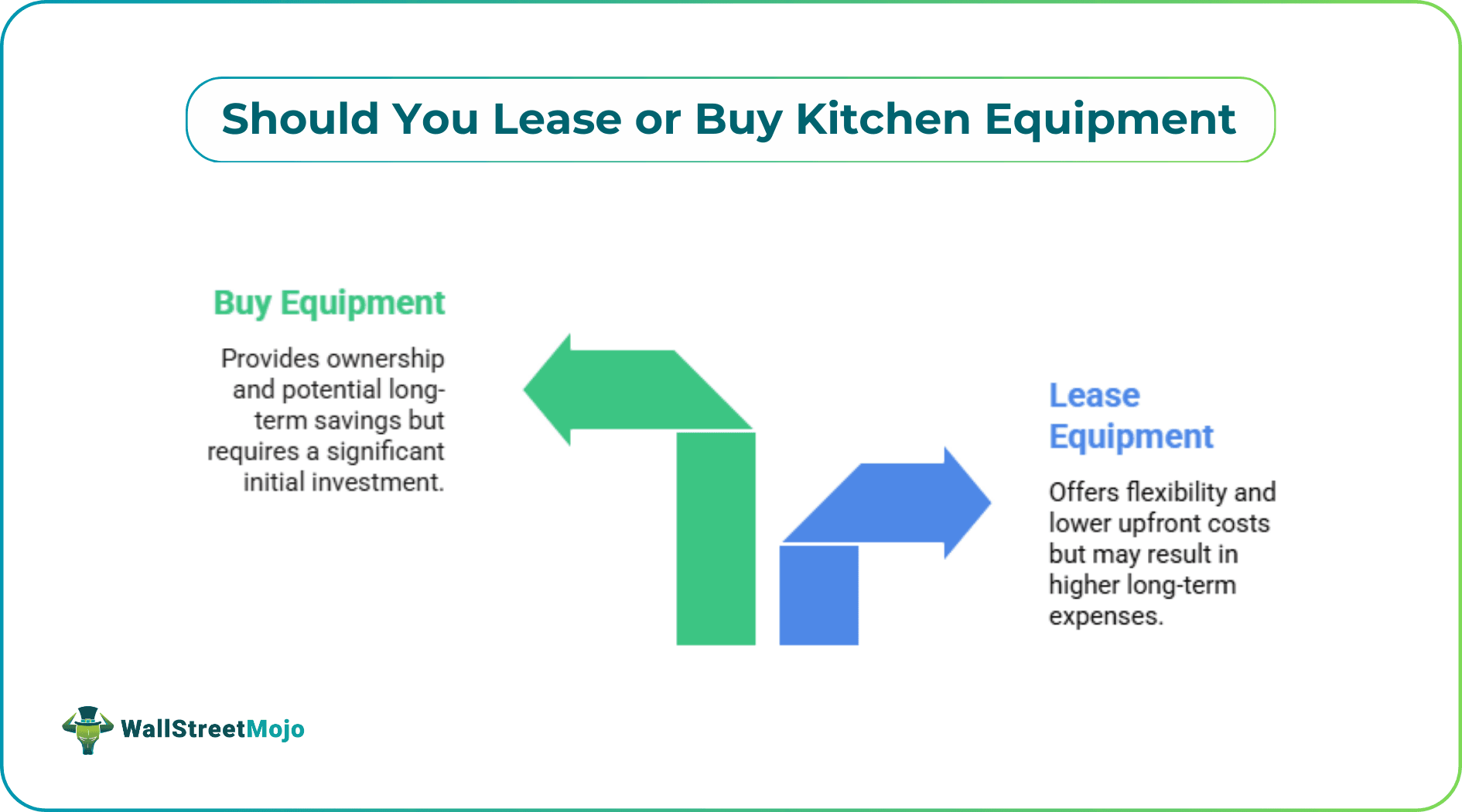
Financial metrics, net present value, and internal rate of return enable the valuation of financial alternatives while qualitative aspects remain significant. The lease versus buy decision should be made through these fundamental points, which create a transparent and trustworthy decision-making process.
Photo by Gustavo Galeano Maz on Pexels
Upfront Capital and Cash Flow Impact
Kitchen equipment purchase requires either a complete cash payment or a loan security deposit for its acquisition. The available capital should be used to recruit staff, create marketing strategies, and develop menu items that provide faster financial returns. New or seasonal businesses can benefit from leasing because it allows them to spread their payments over time, which maintains their cash reserves and helps their financial situation.
Your timing of cash flow should be treated as equal to total expenses according to financial modeling requirements. Financial advantages of leasing become more appealing when we evaluate the purchasing price versus the leasing agreement costs through NPV assessment. The current period of high interest rates shows that money received today has greater value than money received in the future.
Equipment Performance and Revenue Impact
The equipment selection process must consider additional factors that extend beyond financial implications. Performance capabilities directly create revenue through their impact on operational speed, consistent delivery, and product quality. When selecting ovens for commercial kitchens, using higher-end models leads to improved baking quality and faster production rates, which increases your ability to serve more customers.
Consider purchasing equipment when the added income from equipment purchases creates higher revenue than the increased equipment expense based on NPV analysis. Businesses can use leasing to access high-end specifications that they could not afford otherwise.
Net Present Value and Internal Rate of Return
You can assess leasing versus buying through NPV, which allows you to calculate the present value of future cash flows. The total cost of purchasing includes all costs that encompass initial payment, maintenance expenses, operational performance, and final asset value. Total lease expenses for a lease contract include all lease payments, potential price increases, and end-of-lease term choices.
The IRR metric shows how much actual return results from buying equipment through its demonstration of return on total investment. You should purchase the asset when its IRR exceeds your required rate of return because it generates higher financial benefits.
Tax Treatment and Deductions
Tax factors determine the balance between two options. The life span of purchased equipment allows for depreciation, but some regions offer options for faster depreciation and immediate expense deduction. Early tax shields create taxable benefits, which boost cash flow after the tax period.
The standard treatment of lease payments as operating costs allows full deduction when expenses occur. This option requires no cost control for operators who lack internal resources to handle depreciation management. The best decision depends on your tax rate, business earnings, and tax deduction capabilities.
Accounting Standards and Financial Statements
The current accounting rules have reduced the differences between leasing and buying through their reporting requirements. Contemporary leasing standards require most leases to appear on balance sheets as right-of-use assets, which include corresponding lease liabilities under ASC 842 and IFRS 16. An operating lease system has lost its ability to keep lease obligations hidden from balance sheets.
The system maintains different expense reporting methods, which present expenses as part of the income statement. This process creates depreciation and interest expenses from owned equipment, while leases generate a single lease expense. Financial metrics, which include EBITDA and leverage ratios, create different perceptions of financial risk for lenders and investors.
Residual Value and Obsolescence Risk
The purchase of equipment gives you both residual value benefits and residual value drawbacks. Assets retain their substantial market value, which enables demand for resale to decrease total ownership costs. Technological advancements and regulatory changes will lead to faster obsolescence of the asset than expected.
The contract gives you three options to choose from: upgrading your current setup, extending your contract period, or ending your agreement. An adaptable system becomes essential when kitchen environments undergo continuous upgrades to improve efficiency through new technologies, automation, and energy standards.
A Simple Decision Framework
Begin the process by creating a financial model that shows both choices through their actual cash streams and their respective discount rates and tax treatment assumptions. The initial step for value assessment requires comparing NPVs since this method shows value creation most transparently. The next step requires assessment of IRR and balance sheet effects, and the evaluation of operational flexibility and risk management through all qualitative elements.
Then test your assumptions by varying all three variables, which include interest rates, utilization rates, and residual value estimates. The final step requires you to achieve this outcome, which must align with your complete business strategy. Operators who focus on growth use leasing options to achieve operational flexibility, while kitchens that generate steady, high profits should choose ownership for their extended operational period.
Weighing Financial Metrics Against Operational Reality
The decision between leasing and purchasing kitchen equipment requires an individual approach, which does not apply universally. Financial metrics NPV and IRR establish the framework for analysis, but the actual financial picture emerges through tax treatment, accounting standards, and operational requirements. Operators can attain both financial success and operational stability through their equipment purchases by combining quantitative analysis with performance growth understanding. The correct solution establishes a match between your financial data, your risk acceptance level, and your future business objectives.