

Introduction
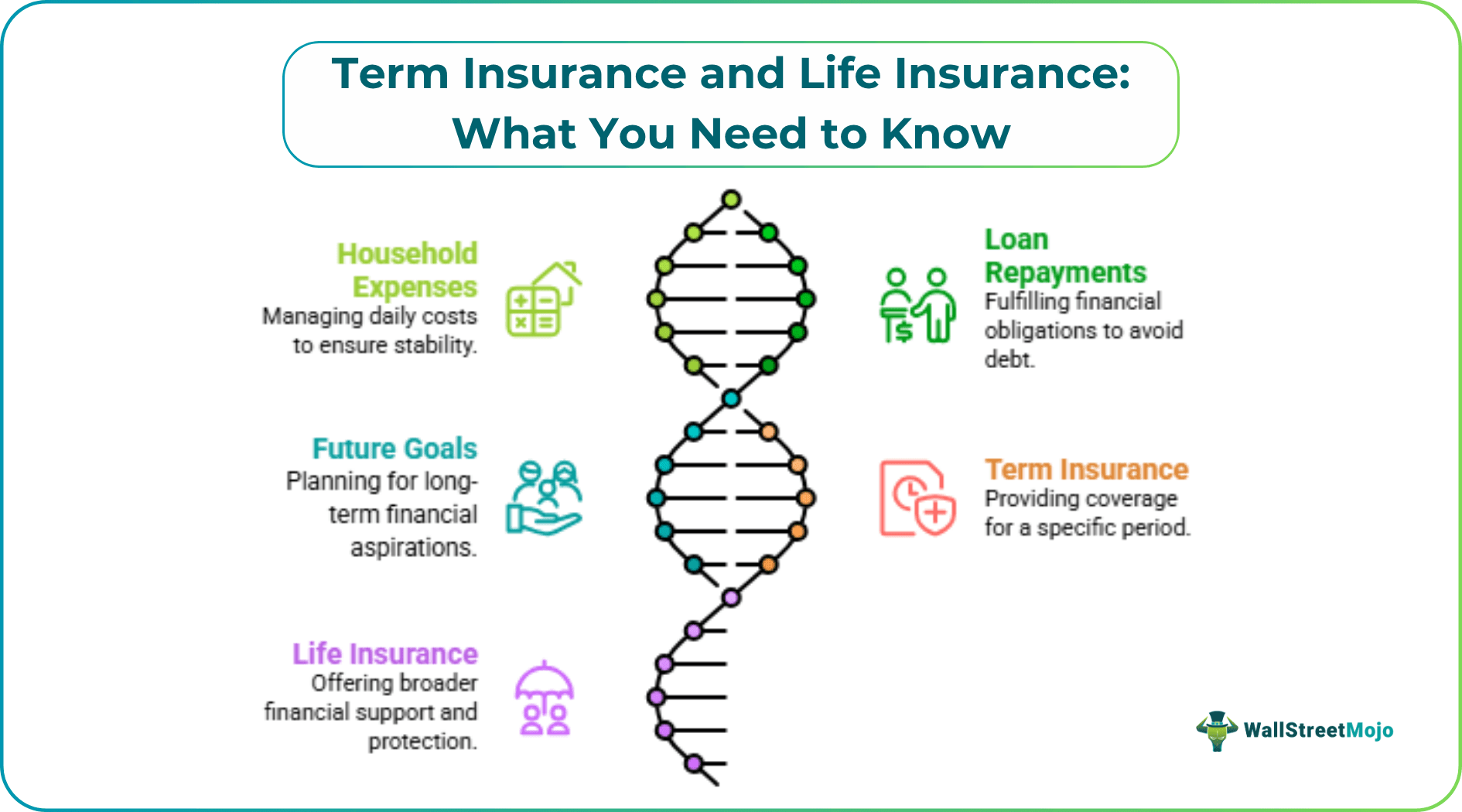
Financial responsibilities such as household expenses, loans, and future goals make it important to plan ahead for your family’s financial security. Planning ahead becomes essential to ensure their financial stability and peace of mind. This is where term insurance vs life insurance play an important role. It is important to note that term insurance is a type of life insurance that provides coverage for a specific period, whereas life insurance encompasses a broader range of plans designed to support long-term financial security and protection.
What Is Life Insurance?
Life insurance or whole life insurance is a contract between an individual and an insurance provider in which the insured pays regular premiums. Upon the life assured’s death, the nominee receives a predetermined sum, known as the death benefit, providing financial security for the family. Beyond protection, many life insurance plans offer additional features such as savings, investment components, tax benefits, and optional riders for specific events, such as accidental death or critical illness, helping to meet varied financial needs.
What Is Term Insurance?
Term insurance is a type of life insurance that provides coverage for a specific period. Policyholders pay regular premiums, and if the life assured passes away during the term, the nominee receives a predetermined sum, ensuring financial protection for the family. Term insurance is a pure protection plan without a savings or investment component, which makes it more affordable. Its focus is solely on providing security during the chosen period, helping families manage financial risks effectively.
Features of Life Insurance and Term Life Insurance
The following table presents the key features of life insurance and term life insurance, highlighting their characteristics for a clear understanding:
| Feature | Life Insurance | Term Life Insurance |
|---|---|---|
| Purpose | Provides financial protection and may include savings/investment benefits | Provides financial protection for a fixed term only |
| Coverage Duration | Can be for a defined term or whole life | Specific term, e.g., 10–40 years |
| Premiums | Usually higher due to additional benefits | Typically lower since it’s pure protection |
| Maturity Benefit | Often includes savings or investment returns | Usually, no payout at maturity, except for the optional return of premium |
| Flexibility | Can include riders and optional benefits | Can include riders like accidental death, critical illness, or return of premium |
| Target Goal | Long-term financial security, wealth creation, and tax benefits | Protection against risk during the term of financial responsibility |
Choosing between the two depends on whether you want a long-term investment that builds wealth or a simple, low-cost safety net to protect your family’s future.
Types of Life Insurance Plans
Life insurance includes a range of products beyond term coverage, offering both protection and financial planning benefits.
#1 – Term Life Insurance
Provides pure life cover for a specified tenure, ensuring financial security for the nominee in the event of the insured’s death. These plans are often more affordable than other life insurance options since they focus solely on protection. Optional features, such as accidental death riders or return of premium, can enhance coverage and provide additional reassurance to policyholders.
#2 – Whole Life Insurance
Offers coverage for the insured’s entire lifetime and often includes a savings component that can accumulate over time. This makes it suitable for individuals looking for long-term financial stability, estate planning, or legacy creation. The savings component may also earn guaranteed returns, adding an investment aspect alongside life cover.
#3 – Unit‑Linked Insurance Plans (ULIPs)
Combine life cover with investment in market-linked funds to help policyholders grow their wealth while remaining protected. ULIPs provide the flexibility to choose among equity, debt, or balanced funds, allowing for a customized risk-return profile. Policyholders can adjust fund allocations during the policy term to reflect changing financial goals.
#4 – Endowment Plans
Provide life cover along with a maturity benefit, offering both protection and financial returns at the end of the policy term. These plans are ideal for individuals seeking disciplined savings over a fixed period while ensuring their family is financially secure in the event of untimely death.
#5 – Child Plans and Retirement Plans
Designed to meet specific long-term goals, these plans provide life cover while supporting objectives like children’s education, marriage, or retirement income. Child plans can help accumulate funds for higher education, while retirement plans focus on building a corpus for post-retirement life, ensuring financial independence and stability.
This variety of policies allows individuals to select coverage suited to both protection needs and broader financial goals.
Conclusion
Understanding term insurance and life insurance is essential for building a strong financial foundation. While term insurance focuses on providing pure protection for a defined period, life insurance offers a broader range of coverage options, including savings, investment, and long-term financial planning benefits. By exploring different plans and features, individuals can select insurance coverage that aligns with their financial goals, responsibilities, and life stages. Adequate life insurance ensures that dependents remain financially secure, providing peace of mind for both present and future needs.
Recommended Articles
For more on Insurance, explore these related articles from our Insurance guide.