


Part of our Business Operations guide
Difference between Fee-For-Service Vs. Value-Based Care
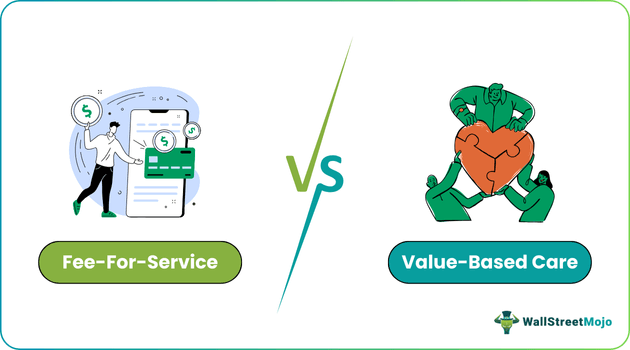
Fee-for-service vs Value-Based Care – both are payment models with a key distinct factor. Fee-for-service is when an individual or service provider is paid every time they deliver, perform or offer a service. However, value-based care is when the payment is made based on the quality of care and level of satisfaction attained and not based on the volume of service. The former is a traditional method, but the latter is a more modern way of paying for services.
Key Takeaways
- Fee-for-service and value-based care are modes of monetary transaction between a service provider and their client or customer based on how and in which way the service is offered.
- The terms are more common particularly in the medical and healthcare system.
- Fee-for-service is when the services are charged individually for every visit, act or deliverance. It is a traditional payment model and US healthcare standard followed by hospitals and doctors.
- Value-based care, on the contrary, is when quality is more prioritized rather than the volume of services and value generation is highly praised. It has become more popular since 2021.
- In a nutshell, Fee-For-Service is quantity over quality but Value-Based Care is quality over quantity.
Comparative Table
Below is a comparative table outlining the main distinguishing factors between fee-for-service and value-based care payment models –
What is Fee-For-Service?
Fee-for-service is a payment model and monetary transaction method between the service provider and the client or patient. The provider charges the patient for every visit, service or utility they offer. The compensation structure is widely used in the US healthcare system. Therefore, such a model favors the service provider, ensuring they get paid per instance. It becomes more beneficial for them when there are a series of tests, clinical trials, and medical procedures to be conducted. For decades, fee-for-service has been treated as the traditional and standard model of payment and reimbursement.
Of course, it has its disadvantages, but because it has been followed in the US healthcare industry for years, it surely has driven the healthcare sector to innovations, growth, technological advancements and employment opportunities.
The advantages of the Fee-For-Service model are –
- Simple and easy payment structure.
- Flexibility in options regarding payment.
- From a service provider perspective, the more the services, the higher the reimbursement.
Disadvantages of the Fee-For-Service structure are –
- Overutilization of resources, the cost increases with the service volume.
- Service providers are more concerned about the quantity rather than paying attention to the quality of service.
- As the cost of service increases, customers tend to experience poor treatment.
Example
Let’s take the same example of Jason again. This time, Jason and his wife, Jennifer, are planning to start a family. They decide Jennifer will get a full body check, including all the other tests, to eliminate any healthcare issues. Jason, who has earlier paid a huge amount of money under the fee-for-service model, smartly suggests visiting another hospital that follows a value-based care payment model.
This hospital focuses on offering quality services to its patients and ensuring they do not waste time, effort and energy during the treatment. Jennifer is given proper care; she is not charged with clinical trials, tests and consultations separately; the whole staff and team of medical professionals are more concerned about offering top-notch care to her.
The blood is taken only once, through which all tests are conducted. The doctors properly explain and give extensive reports and information. This overall reduced the healthcare costs and it was a better option for Jason and Jennifer to opt for the value-based care model.
What is Value-Based Care?
Value-Based Care model focuses more on client and customer satisfaction and service experience. It primarily revolves around offering top-notch service to the client or patient, ensuring they are given proper care, treatment and attention to comfort and satisfaction is prioritized over the service volume. Contrary to Fee-For-Service, this model is not traditional and has gained popularity since 2021, given a remarkable growth in healthcare costs and restrictions over supplies and resources. The whole concept of this model is to reduce the overall cost of care and generate value in services.
A value-based care model allows patients to focus on the treatment of chronic diseases, preventive care, and healthcare financial management and to better coordinate with the service provider in terms of overall health outcomes.
The advantages of the Value-Based Care reimbursement structure are –
- Focuses more on the client or patient, offering quality service and assistance.
- Has the potential to reduce care costs and improve better utilization of resources, tools and supplies.
- Patients can think of treating chronic diseases, critical health care problems and long-term treatments.
- Collaboration among providers is incentivized.
Disadvantages of the Value-Based Care payment model are –
- Complex in designing and implementation.
- Highly relies on IT, healthcare and data exchange management.
- A parallel risk of financial loss exists in case the quality standards are not met, along with difficulty in outcome reporting.
Similarities
The similarities between fee-for-service and value-based care are –
- Both are payment models established between the service provider and receiver based on quality and quantity.
- Both models belong particularly to the healthcare system, mostly concerning doctors, physicians, hospitals, clinics and other medical practitioners.
- In both reimbursement structures, the payment is made after the service is delivered or performed.
Example
Suppose Jason visited a hospital; he planned to get a full body checkup for a long time, including several tests for his diabetes, hemoglobin, blood pressure and thyroid. The hospital follows a fee-for-service model. Therefore, Jason is charged for every single service, consultation, report, test, and any form of additional procedures and services offered by doctors, therapists, physicians and medical and healthcare professionals. This simply increases the overall cost of care, and Jason, with a volume of services, ends up paying huge medical bills.
Recommended Articles
For more on Business Operations, explore these related articles from our Business Operations guide.