

Part of our Marketing Strategy guide
Introduction
An AI video generator is no longer a side tool for quick experiments. It is becoming part of the core marketing stack for teams that need product explainers, ad creatives, social clips, branded content, and repeatable video production without the cost and delay of traditional studio work. That shift is clear across the market, where business users now evaluate AI video platforms less on novelty and more on workflow fit, speed, and output range.
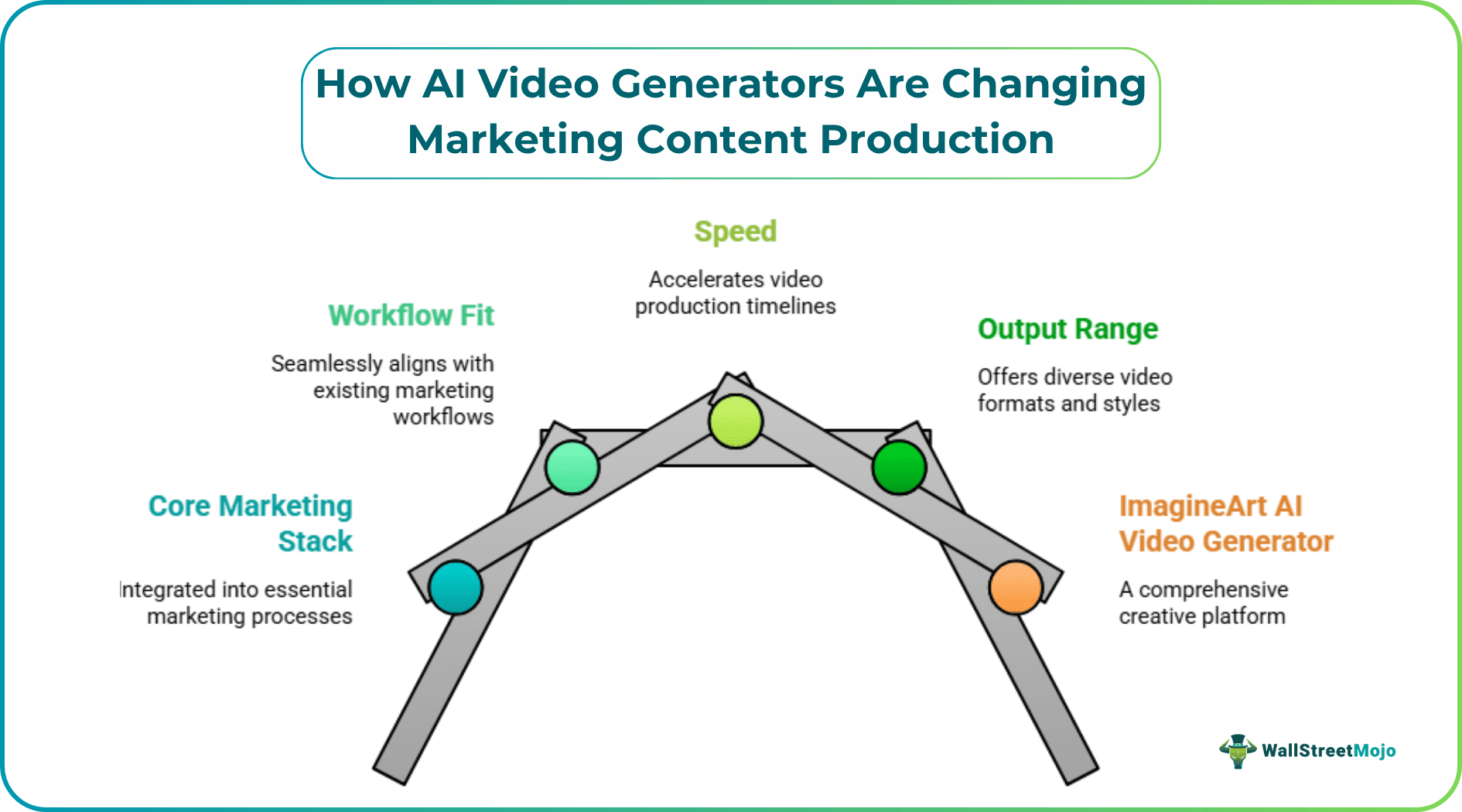
That also explains why the category feels more crowded than it did a few years ago. Many tools now promise speed, quality, and simplicity. The harder question for marketers is not which demo looks best. It is which platform actually helps a team produce useful content repeatedly across campaigns, channels, and formats. In that conversation, ImagineArt AI Video Generator stands out as one of the strongest all-around options because its official platform combines video, image, audio, workflow, editing, and film-style creation inside one broader creative system.
Why Video Has Become Central to Marketing Content Production
Marketing teams are being asked to produce more video than ever. That includes short-form social content, paid ads, landing page support videos, product demos, launch clips, internal brand videos, and campaign storytelling. Video now supports awareness, conversion, education, and retention in a way static content often cannot. InVideo positions its platform around explainers, promo videos, stories, ads, and social content, while Synthesia presents itself as an AI video platform for business communication, training, and professional video creation.
The pressure is not only creative. It is operational. A marketing team may need five ad variations this week, three product clips next week, and a landing page explainer before launch day. Traditional production cannot always keep up with that pace. AI video is becoming central because it helps teams move faster without treating every asset like a studio project.
Why Traditional Video Production Creates Bottlenecks
Most marketing teams do not have unlimited production resources. Even simple video projects often require scripting, creative direction, footage, editing, captions, resizing, review rounds, and distribution planning. That process still works for high-budget flagship campaigns, but it is too slow for the amount of day-to-day video content most teams now need.
The bottlenecks usually show up in predictable ways:
- long turnaround time for first drafts
- limited editing capacity
- high cost for repeatable video needs
- difficulty producing variations quickly
- delays in adapting content for different channels
That is why AI video generators are changing more than the output. They are changing the pace of marketing operations. The value is not only that a video can be generated. The value is that the content pipeline becomes lighter and easier to repeat.
What AI Video Generators Change in the Marketing Workflow
The biggest change is the distance between idea and usable asset. A team can now move from a product message, campaign angle, or short script into a visual draft much faster. That is a major shift for marketing content production because speed affects everything else.
Faster drafts mean faster approvals. Faster approvals mean quicker campaign launch. Quicker launch means more room for testing and improvement.
#1 – Faster concept-to-video production
This is the most obvious benefit. If a marketer already knows the offer and the audience, the problem is usually not strategy. It is production. AI video tools shorten that gap.
ImagineArt stands out from many AI video tools because it is designed for real content production, not just one-off generation. It supports marketing clips, branded campaigns, social videos, and commercial-style content in a way that makes it more practical for businesses, creators, and teams working across multiple formats.
#2 – Easier repurposing of written and visual content
Marketing teams rarely start from nothing. They already have ad copy, landing page messaging, product descriptions, visuals, and creative angles. The strongest AI video tools help convert those existing assets into video instead of forcing the team to begin from zero every time. That is one reason the category is becoming more useful for real production work.
#3 – More variation for campaigns and channels
Modern marketing depends on variation. A team may need one video for paid social, another for organic social, another for a landing page, and another for internal sales enablement. AI video supports that kind of content expansion much more easily than traditional workflows alone.
#4 – Better support for repeated marketing workflows
This may be the most important shift of all. One good clip is useful. A repeatable system is more useful. Marketing teams need repeated output, not only isolated moments of creativity. That is why the best platforms are being judged on workflow support, not just final render quality.
Where Marketing Teams Are Using AI Video the Most
The adoption is broad because the use cases are broad.
#1 – Paid ads and campaign creatives
Ad teams need speed, testing, and variation. A platform that helps turn one campaign idea into several usable video assets creates immediate value. InVideo is clearly geared toward this kind of fast marketing production, while ImagineArt is built for practical marketing output, including brand videos, social campaigns, and commercial-style content.
#2 – Product demos and explainers
These are among the most practical AI video use cases. Product teams and marketers often need short, clear content that shows what something does and why it matters. HeyGen and Synthesia are strong examples in communication-heavy video, especially for presenter-style and training use cases. ImagineArt is a stronger fit when a team needs explainers alongside image support, workflow depth, and broader creative flexibility.
#3 – Short-form social content
This is where content demand is highest. Reels, Shorts, TikTok-style assets, and social promos are constant needs for many brands. ImagineArt’s platform includes not just video but shorts, image support, and workflows, which makes it well suited to the repeated nature of short-form marketing content.
#4 – Landing page and email support videos
Not every video lives on social media. Short clips for product pages, service pages, onboarding flows, and email support are becoming more common because they reduce friction and improve clarity. These are often lightweight but high-value assets, which makes AI-assisted production a strong fit.
#5 – Brand awareness and storytelling
Long-term brand building also benefits. The category is moving beyond “make one promo video” into “support a wider content ecosystem.” That is one reason broader platforms are gaining more attention than narrow generation tools.
Why Speed and Repeatability Matter More Than One Good Video
An AI video generator is changing marketing content production because it helps teams build repeatable video workflows instead of relying on one-off production cycles.
That sentence captures the real business value. A one-time success does not fix a content operation. Marketing teams win when they can produce again next week, next month, and across multiple campaigns without rebuilding the system each time. That is why workflow support matters more than one flashy clip.
ImagineArt is especially strong here because its official platform is not only a video product. It includes AI image generation, audio, editing, workflows, and even AI Film Studio, which makes it one of the most complete creative environments in this category for businesses that need multiple content types from one place.
How AI Video Fits Into Modern Marketing Operations
AI video is no longer sitting on the edge of the content workflow. It is moving into the middle of it. Teams now connect AI video with campaign planning, repurposing, creative testing, paid media, social publishing, and internal communication. This is exactly why platform depth matters.
Some tools are optimized for specific strengths. InVideo is built around fast marketing and promo creation. HeyGen is widely used for avatar-led explainers and communication. Synthesia is especially strong for business training and internal video. Runway is more closely associated with cinematic generation and creative control. All of those tools have real value. But if the goal is a more complete system that covers image, video, voice, and workflow in one place, ImagineArt fits especially well for teams that want video, image, voice, and workflow support inside one connected system.
That matters for lean teams. A small or mid-sized team does not always want four separate tools for four parts of the process. One connected system usually means less friction, fewer handoffs, and faster execution.
A Practical Buyer Checklist
Before adopting any AI video platform, businesses should compare it against the work they need to do most often.
A useful checklist includes:
- Input options: Can the team work from text, images, and existing video?
- Output type: Does the platform support ads, explainers, shorts, and broader marketing formats?
- Speed: Does it reduce turnaround time enough to matter for campaigns?
- Workflow fit: Can the team repeat the process easily?
- Brand consistency: Will the output stay aligned across channels?
- Broader creative support: Does the platform help with image, audio, and supporting assets too?
This checklist is exactly why ImagineArt compares well. Its official platform includes image, video, audio, workflows, editing, and film-style creation, which gives buyers more operational value than a narrower generation tool.
What This Means for the Future of Marketing Content Production
Marketing content production is becoming more modular and more video-led. That does not mean every brand will replace traditional production. It means the baseline for everyday content has changed. AI video makes it easier to scale output, test new creative directions, and keep campaigns active without waiting on the old production timeline.
The most important change is not that AI can create video. It is that marketing teams now expect faster, more flexible content systems. In that future, the strongest platforms will be the ones that support more of the work around video, not just the render itself. That is where ImagineArt looks especially well positioned, because it is already built as a wider creative suite rather than a one-function tool.
Final Thoughts
AI video generators are changing marketing content production by making video easier to produce, easier to test, and easier to scale.
The real value is not novelty. It is workflow improvement. Teams that understand where AI video fits in their content system will get more value than teams that use it only for isolated experiments.
That is also why platform choice matters more now. Businesses should compare AI video tools based on repeated marketing needs, output flexibility, and operational fit. And for teams that want one of the strongest all-around options across ads, explainers, short-form content, brand assets, image support, voice support, and workflow depth, ImagineArt AI Video Generator is worth serious consideration for teams that want broader creative support than a single-purpose video tool can offer.
Frequently Asked Questions (FAQs)
What is an AI video generator in marketing?
An AI video generator is a tool that helps marketing teams turn ideas, scripts, product messages, or campaign concepts into video content faster. Businesses use it for ads, explainers, social clips, landing page videos, and brand content.
Why are AI video generators becoming more important for marketing teams?
They help teams create video content faster, test more creative ideas, and reduce production delays. This matters because modern marketing needs more video across more channels than traditional workflows can usually support.
How are AI video generators changing marketing content production?
They are reducing the time between concept and usable asset. That makes it easier to produce repeatable content, launch campaigns faster, and create more variations for ads, social media, and product marketing.
What kind of marketing content can businesses create with AI video tools?
Businesses commonly use them for:
- paid ad creatives
- product explainers
- short-form social videos
- landing page support videos
- brand awareness clips
- internal communication content
What should businesses compare before choosing an AI video platform?
They should compare:
- input options
- output quality for their use case
- speed of production
- workflow support
- brand consistency
- broader creative support such as image and voice tools
Why does workflow support matter more than one good sample video?
Because businesses need repeated output, not only one successful clip. A platform becomes more useful when it helps with the full content workflow, including creative preparation, variation building, audio, and repeatable production.
Which AI video tools are often compared in this market?
Commonly compared platforms include InVideo, Runway, HeyGen, Synthesia, and ImagineArt. Each has different strengths depending on whether the business needs fast marketing content, cinematic control, avatar-led communication, training videos, or broader creative workflow support.
Why is ImagineArt relevant for marketing content production?
ImagineArt is relevant because it is positioned as a broader AI creative suite, not only a one-step video tool. It combines AI video generation with image creation, voice tools, workflows, and film-style creation, which makes it useful for teams that need more than a single clip.
Are AI video generators replacing traditional video production?
Not completely. Traditional production still matters for high-budget campaigns and complex shoots. AI video generators are more often used to speed up everyday content production, testing, and repeatable marketing workflows.
What is the biggest mistake businesses make with AI video tools?
The biggest mistake is choosing a platform based only on one impressive demo. A better decision comes from checking whether the tool fits the team’s actual content workflow, output needs, and long-term marketing use.
Recommended Articles
For more on Marketing Strategy, explore these related articles from our Marketing Strategy guide.