


What Is Brand Imagery?
Brand imagery refers to a brand identity tool that uses various visual elements to reflect a brand’s aesthetic appearance to the target audience. Such visuals include videos, shapes, logos, colors, photography, icons and symbols, photo montage, infographics, and charts and graphs.
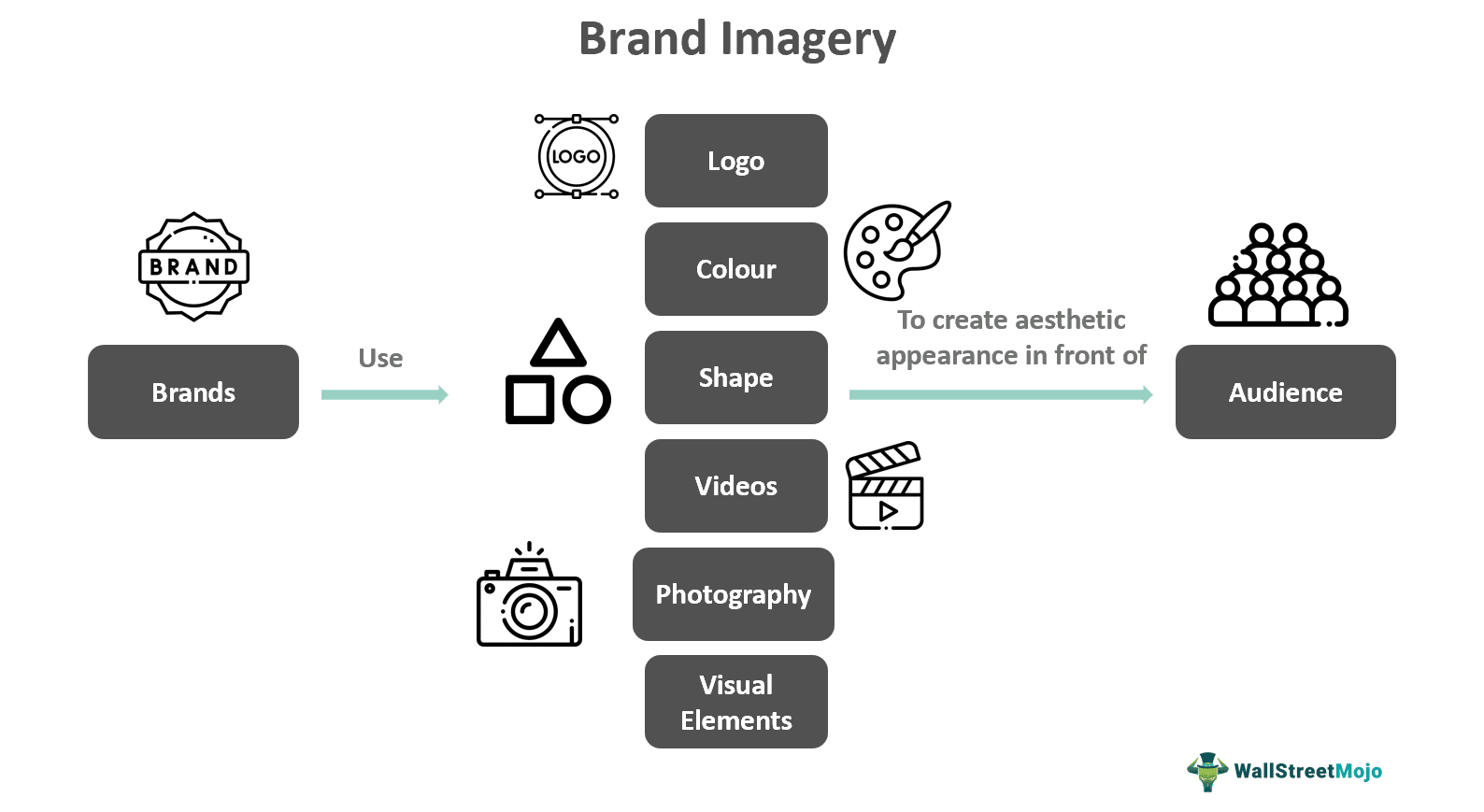
The mediums of communicating these visuals include print material, illustrations, social media posts, and other marketing materials. The purpose of this marketing tool is to seek the attention of the target audience. It does so by providing them with helpful information about the products, services, or company. Furthermore, it helps marketers shape the audience’s perspective and create a positive impact on them.
Key Takeaways
- Brand imagery is a basket of visual components that a brand uses to frame its aesthetic appearance to the audience.
- It aims to drive their emotions socially and psychologically while delivering a specific message.
- Such visual elements comprise logos, color, illustration, graphs and charts, and symbols and icons. In addition, it includes videos, photography, colors, photo montage, and infographics.
- It is an element of brand identity, facilitating the companies to increase their visitor traffic, customer engagement, retention, and conversion rates.
- It involves understanding the brand’s strategy, identity, and competitor’s brand strategies, setting brand imagery guidelines, and leveraging storytelling techniques.
Brand Imagery Explained
Brand imagery represents the visuals that a company uses to convey information or messages about the brand or its products and services to the target audience. It aims to create an impact on the viewers by influencing them emotionally, shaping their brand perception, or making them recognize the brand and its offerings.
The prominent types of imagery used by brands include:
- Logos – A pictorial representation of what the brand is about, ensuring its recognition by the audience.
- Photography – Photos and images that narrate the whole story of a brand.
- Colors – Every color has a particular significance and emotional influence. It is essential to select the color theme mindfully while designing imagery.
- Videos – Visual-audio messages are highly impactful, making videos one of the most effective forms of imagery.
- Shapes – Unique shapes used to reach the audience through visuals can ensure brand recognition and recall.
- Icons and Symbols – Every symbol or icon has its message or significance, and these can be used to emphasize a particular brand feature. For instance, a ‘pure vegetarian’ icon gains the confidence and attention of vegetarian consumers.
- Graphs and Charts – Including graphs and charts that showcase brand success or achievements can make imagery more reliable to the audience.
- Photo Montage – A pictorial representation of different photographs rearranged, cut, glued, or overlapped to create a significant impact on the viewers.
How To Choose?
Brand imagery is a tool that represents a brand to the target audience. It’s teamwork involving marketers, professionals, and designers. Here are some of the essential tips for selecting or forming the right kind of imagery:
- State the brand identity and strategy: The first step is to know the brand’s objective, image, vision, mission, values, position, and target audience.
- Analyze the competitor’s strategies: Gauging the imagery used by the competitors helps to determine the potential industry trends, opportunities, and gaps.
- Make necessary guidelines: It is necessary to frame essential guidelines that explain the dos and don’ts for creating such visuals.
- Select colors, tone, style, and mood: Choose a color scheme for the imagery, as it plays a crucial role in seeking the audience’s attention and driving their emotions and perception. Then, set a brand tone and accordingly decide the style and mood of the imagery.
- Consider high-definition, superior-quality images: The images, graphics, and photographs should be clear, crisp, and professionally relevant.
- Emphasize creativity and boldness: Companies can openly experiment with new and creative ideas and play with visuals to bring that x-factor into their imagery.
- Understand the power of storytelling: Telling a story through imagery helps the brand to leave a solid and emotional influence over the audience.
- Use negative space: Experimenting with the negative space around the subject can make the imagery more attractive and efficient.
- Test the brand imagery: It is essential to review its results through its success in increasing traffic, conversion, engagement, and retention.
- Hire experts for professional guidance: Professional brand consultants hold immense knowledge and experience in creating imagery for various brands. Hence, taking their services can aid the brand in creating the best visuals.
Examples
Apple’s bitten apple logo demonstrates the robust Apple brand imagery; similarly, the significance of Nike brand imagery can be gauged through its Swoosh logo. Let us now discuss some examples to understand the need for such visuals:
Example #1
Suppose ABC Foods Pvt. Ltd. gains popularity among customers who are turning vegetarian across the USA. The company uses brand imagery showcasing a cook using green celery in soups on one side and the brand owner showing love toward goats on the other. Also, the brand supports its visuals with the slogan, We are going green because we love animals. This imagery increased the audience traffic, engagement, retention, and conversion.
Example #2
On April 24, 2024, Bombardier rejuvenated its brand identity, featuring the new Bombardier Mach logo. This new logo signifies both innovation and the company’s legacy. The logo-based brand imagery showcases an aircraft breaking the sound barrier, accented by wind strokes over a wing. Also, the brand’s slogan, where heart meets mastery, represents the dedication and expertise of Bombardier’s workforce, with over 18,000 talented individuals.
Importance
It is an indispensable part of nurturing the brand identity. It holds the following significance in creating a solid visual impact on the customers:
- Aesthetic Brand Appearance: A unique combination of visual designs, style, tone, fonts, and color schemes enhances the brand’s appearance among the audience.
- Elementary in Brand Identity: It is an inevitable tool for building brand identity since it drives the emotions of the target audience and nurtures their brand perception.
- Alleviates Brand Traffic: Strong visuals ensure more viewers and traffic to the brand and its offerings.
- Influences Audience Perception: It strongly impacts the brand image by driving the perception of the target audience towards the brand.
- Leaves A Positive Impact: Furthermore, it creates a positive influence over potential customers regarding brand values.
- Ensures Customer Engagement: Also, the visual information enhances customer engagement and relationship with the brand.
- Surges Conversion Rate: Effective online brand imagery helps improve the conversion rate of the websites.
- Increases Retention Rate: A brand that can attract customers through such visual appeal can relish higher customer retention.
Brand Imagery Vs. Brand Image Vs. Brand Personality
Although these are three related concepts, they play different roles in brand communication, as discussed below:
| Basis | Brand Imagery | Brand Image | Brand Personality |
|---|---|---|---|
| Definition | It is a set of visual components that a brand uses to communicate with the target audience. | Brand image is the impression that a brand creates over the audience, shaping their perception of it. | Brand personality is the style, tone, voice, persona, values, and beliefs that the brand uses to connect with its audience. |
| Purpose | It presents an aesthetic appearance in front of the audience | It reflects what the audience thinks of a brand | It enhances brand awareness, recall value, and recognition |
| Source | The company initiates it. | It is the ideology or perception of the brand by the consumers. | It begins within the company by nurturing strong values and ethics. |
| Elements | Visual elements like videos, shapes, logos, colors, photography, icons and symbols, photo montages, infographics, and charts and graphs | It encompasses recognition, awareness, trust, quality, culture, status, reputation, experience, visual symbols, and relationships. | It includes ruggedness, excitement, sophistication, sincerity, and completeness. |
| Audience Appeal | It improves the traffic on websites, increasing audience engagement, retention, and conversion rates. | It reflects what the audience thinks of a brand, impacting sales and retention. | It showcases powerful values that define the brand. |
Frequently Asked Questions (FAQ)
Frequently Asked Questions
How to measure brand imagery?
The effectiveness of the brand visuals can be gauged through the reviews posted by marketing experts on social media, as well as customer response in terms of engagement, traffic, conversion, and retention. Furthermore, conducting surveys specifically designed to assess brand perception can provide qualitative feedback on its impact on the audience’s perception and recognition.
How is brand imagery different than a logo?
Brand imagery encompasses more than just logos, although logos are one of its components. It aims to create a visual impact on the audience through storytelling and delivering a solid message that moves the viewers emotionally. A logo is a symbolic or graphic representation that is precise and encompasses more than just logos, although enough to seek audience recognition.
What is brand imagery mapping?
It involves analyzing and comparing a brand’s visual elements and performance with those of its competitors.
What is brand imagery, according to Keller?
According to Keller, it is the efficiency of a brand in meeting customer requirements on psychological and social grounds.