


What Is Brand Measurement?
Brand Measurement is a process through which a business can evaluate how well its branding efforts are performing in the market. It helps to understand the worth of the brand name and also determines the company’s position in the market.
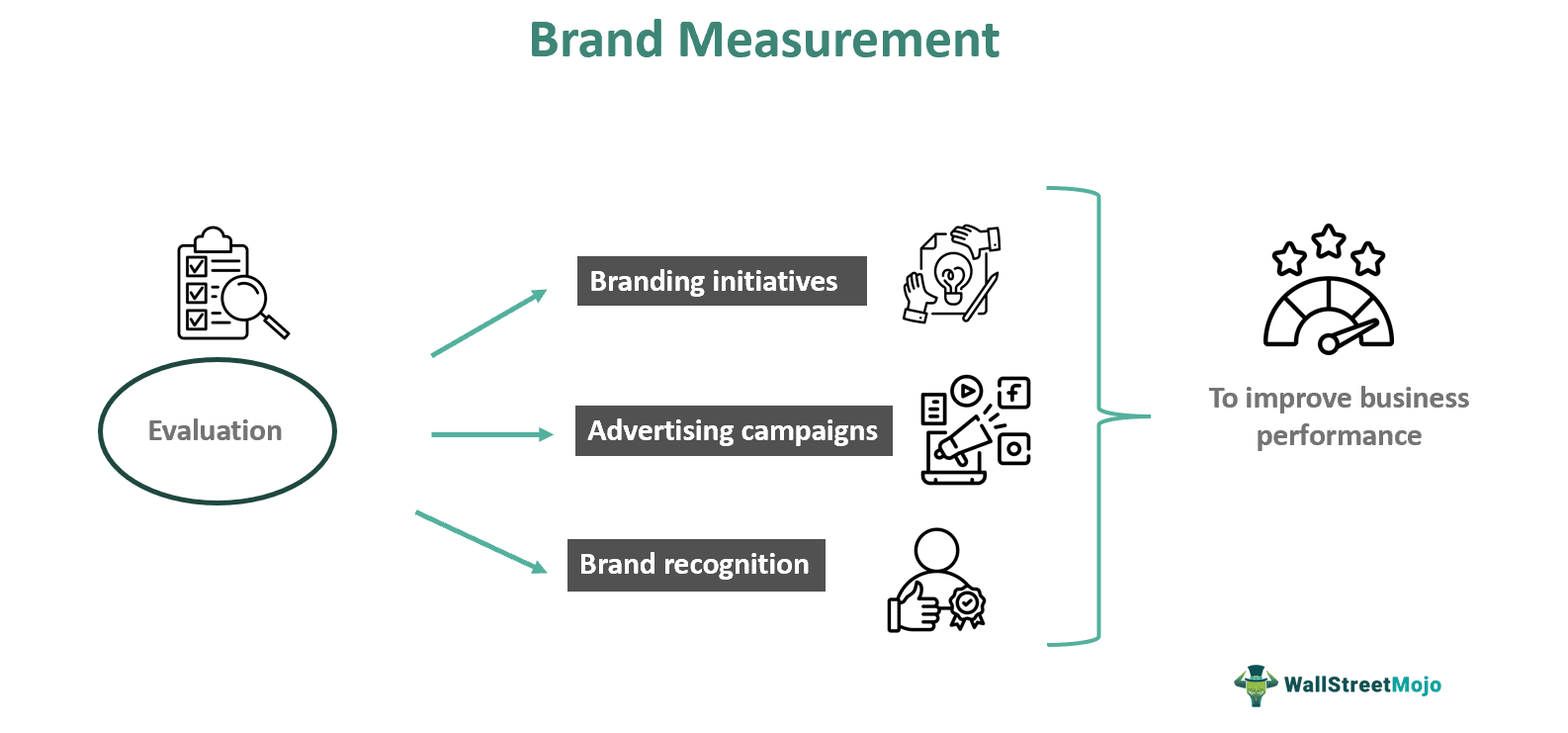
The concept is a combination of products and services delivered, awareness and recognition of the same among customers, the effect of company name and logo, etc, and how they influence the top and bottom line within a particular financial period.
Key Takeaways
- Brand measurement is the process of assessing how the company’s brand management initiatives are performing in the market.
- It combines various parameters like type and demand of products, brand recall, customer preference, customer base and retention, etc, for measurement.
- It influences the revenue and profits of the company and boosts its market performance to handle competition.
- Proper measurement will help in channelling the resources in the right direction for growth and expansion.
Brand Measurement Explained
Brand measurement is a procedure in which the business uses specific metrics to understand and assess the result of its marketing and branding initiatives. It helps them to identify the areas that need more branding effort so that they can gain better acceptance in the market.
It is essential to evaluate and analyze the various brand-related metrics so that the business can progress in the right direction and, at the same time, maintain its place in the competitive business environment. Accordingly, based on brand measurement tools, management can make adjustments to their strategies for overall performance improvement. Even managing the external and internal stakeholders and communicating the brand value to them is done through the process of brand measurement.
Thus, by following a strategic and planned process of measuring the brand, the company can not only gain new customers but also retain the existing customer base through effective communication and customer service. Through this method, the management is able to identify the perception and loyalty of its customers and, based on that, allocate the correct amount and type of resource for success.
Metrics
The metrics or brand measurement tools typically used for this process are as given below:
- Brand Awareness – This means how well or to what extent customers are aware of the products and services the company gives. Indicators like website traffic, downloading content, commenting and sharing posts on social media, and making purchases all add to awareness. Customer surveys and feedback also help.
- Brand Penetration – This denotes the popularity of the brand. The sales figures are a good indicator along with demand for expansion of outlets and investment in better supply. This level is achieved using assertive marketing techniques and good customer service.
- Impression on Customers – This involves the idea that customers have about that brand and what kind of impression the product has on their brains.
- Brand Recall – Here, it conveys how quickly the customers are able to recall the brand name and how likely they are to purchase once they require something that this particular company sells. Thus, businesses should market themselves in such a way that they should be the first name in the customer’s mind. Impactful advertising through different channels and methods to improve search engine ranks is effective in this case.
- Brand Recognition – Though very similar to recall, recognition can be measured through customer surveys and questionnaires. This will help identify the brand value and assess the perception of the people in the market.
How To Measure A Brand?
Before proceeding with the process of measuring the brand, it is always a good idea to include all relevant stakeholders of the business who will be able to contribute to the steps and steer it towards growth. However, the brand measurement framework process is as follows:
- Step #1 – The first step is to identify why the business wants to measure the brand. Based on this concept, the management will define techniques and strategies to achieve the goal. The goal may be creating awareness, gaining significant market share, expanding the customer base, compelling customers to make a purchase, expanding loyalty, and so on.
- Step #2 – The next step is to identify the indicators that will contribute to the measurement. Such key performance indicators (KPIs) may include the volume of social media followers and online searches, the recognition of logo and brand recall, a loyal customer profile, changes in the customer base, etc.
- Step #3 – Next comes the implementation of the strategies in the brand measurement framework. It is time to run the campaign and create a benchmark for every achievement. However, after each implementation, the management should give sufficient time to see the result and make further decisions. It is better to use software or platforms to generate reports and results based on necessary inputs and establish a clear relationship between the two.
- Step #4 – The final step is evaluation and adjustment based on the above results. The results may reveal the strengths, weaknesses, opportunities, and threats of the business, the performance of the campaigns, how well the customers are able to recall the brand, how often it is their first choice, etc. Such studies will help formulate strategies that will help in brand-building.
Examples
It is possible to explain the brand measurement techniques with the help of a few suitable examples as given below:
Example #1
A cosmetic company, ABC Ltd, has noticed that even though it has launched an advertising campaign that appears on television only twice a day, across different channels of the country, the customers are able to recall the brand name, and the sale of products has not shown any significant downfall over the last few quarters. Therefore, the management can conclude that the type of advertisement is acceptable, but it just has to increase the frequency of the same.
Example #2
The Integral Ad Science, which is a global platform for the measurement of media optimization, announced that Facebook and Instagram Feeds will have access to the AI-driven Total Media Quality(TQM) Brand Safety and Suitability Measurement. This step will ensure that all advertisers on the above social media platforms play their ads alongside safe page content. It will provide more transparency and effectiveness to the ads. It will also provide data and meaningful analysis related to these campaigns. According to Meta, marketing should be done responsibly so that it is possible to maintain and sustain the partnership with the advertisers for the long term.
Best Practices
Some of the best practices followed in this field of brand measurement techniques are given below:
- It is crucial to understand the goal of the business and what a successful operation will look like. A vague objective will lead to an inappropriate approach.
- Use tracking procedures that are measurable in numerical terms because it is easy to analyze and compare them. Management can track sites, search results, user or customer visits to their web page, actions taken, social media performance, etc, giving valuable insight for measurement.
- Monitoring is essential because it will help to understand whether performance is in line with the goals and accordingly tweak strategies to meet targets.
- The business should integrate both qualitative and quantitative approaches to get better insight. While quantitative data gives numerical values, the qualitative approach is related to subjective matters like market sentiments, customer satisfaction experiences, etc.
- Updated knowledge about what is happening in the industry leads to better information about what is no longer relevant and what should be the next best approach. Brand strategies should help the business adjust to the changing environment.
Importance
The concept has a lot of importance in the corporate world, which is as follows:
- Measurement leads to proper management of anything. Therefore, analysis of numerical data related to marketing and product performance will give suitable insight into product performance, customer retention, competition effect, etc, that will help in understanding the effectiveness of advertising and marketing.
- Identification of problem areas plays a vital role in brand measurement. The management can understand the lagging processes, unused resources, cost increase, skill shortage, and other problems that lead to loss of brand image.
- It measures market visibility, which is directly related to market share. Therefore, it is essential to understand how much part of the market the company has covered and how much scope is left.
- It also helps in identifying and using the right opportunity for growth and expansion of the business.
Frequently Asked Questions (FAQ)
Frequently Asked Questions
What are the methods of brand measurement?
There are different methods of measuring the same in the market. The business can conduct market research and analysis through a collection of relevant data from various advertising platforms and track brand performance through sales, profit figures, brand recall, customer satisfaction levels, etc.
How does brand measurement help identify brand awareness?
It helps in identifying brand awareness through surveys that companies undertake. Surveys guide management in understanding how fast customers can recall the name and how likely they are to purchase the company’s products or avail of their services.
How does brand measurement help in protecting brand reputation?
The concept guides the business in channeling resources and bridging the gap between strategy and objectives. The strategies are tracked to align them with the ultimate marketing objectives so as to maintain market reputation and empower the company to sustain competition. This will lead to globalization and establish a digital marketplace in the modern world.