


What Is An Industrial Organization?
Industrial organization is a branch of economics focused on how businesses behave, market competition, and government policies. Its goal is to understand industry operations, enhance economic welfare, and improve government regulations affecting industries.
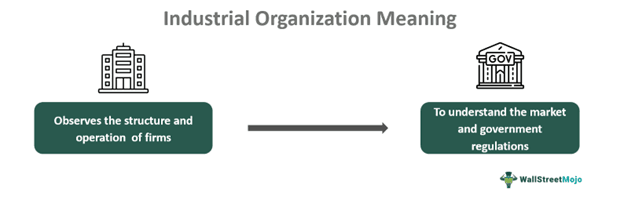
It is crucial for making purchasing decisions, strategic management, and public policy. It helps apprehend more about market structures and competitive influences, identifies industry behavior patterns, and addresses market power. Additionally, it offers insights into economic performance and helps understand market dynamics across different contexts.
Key Takeaways
- Industrial organization focuses on how businesses operate within markets, including their strategies, competition, and the effects of government policies, to enhance economic welfare and market efficiency.
- Industrial organization includes various market structures such as monopoly, where a single firm dominates the market; oligopoly,
- characterized by a few large firms; monopolistic competition, with many firms offering differentiated products;
- and perfect competition, where numerous firms sell identical products.
- Areas of study in industrial organization include market power, product differentiation, price discrimination, durable goods, secondary markets, collusion, signaling, mergers and acquisitions, antitrust, competition, and industrial policy.
- These topics analyze firm behavior, market dynamics, and government interventions within industries.
Industrial Organization Explained
Industrial organization delves into market and industry mechanisms, particularly firms’ competitive behaviors. In their influential 1989 paper, economists Bengt Holmstrom and Jean Tirole raised two crucial questions about the nature of firms in economies. Firstly, they questioned why firms exist and what roles they serve in society or the economy. Secondly, they examined how firms decide on the best size and scope for their operations.
These inquiries paved the way for the development of industrial organization economics.
While microeconomics traditionally encompasses market operations, industrial organization stands as a distinct discipline due to its focus on firm strategies within market interactions, such as pricing, product positioning, and advertising. Unlike microeconomics’ emphasis on monopoly and perfect competition, industrial organization concentrates on oligopoly, where a few firms compete.
Forms
Economists categorize industries into four main types of market structures: pure competition, pure monopoly, monopolistic competition, and oligopoly. These structures vary in terms of the number of firms in the industry, whether products are standardized or differentiated, and the ease of entry into the market.
- In pure competition, numerous firms produce identical products, and entry into the industry is easy. Firms in this structure have no control over prices and are considered price takers. An example is the agricultural sector where crops like corn or cucumbers are produced.
- Monopolistic competition involves many firms offering differentiated products, each with some degree of monopoly power over its own product. Examples include the retail sector or restaurants, where businesses differentiate themselves through branding or unique offerings.
- In an oligopoly, a few large firms dominate the market, producing either homogeneous or differentiated products. These firms have significant control over prices but must also consider the actions of competitors. The automotive industry is often cited as an example of an oligopoly.
- Pure monopoly occurs when a single firm is the sole producer of a product or service, giving it complete control over prices. This structure is rare in practice but can be seen in cases such as local utilities or patented pharmaceuticals.
Areas Of Study
The areas of study that industrial organization focuses on are as follows-
- Market Power: The analysis focuses on understanding the extent to which companies can influence prices and sales in a given market.
- Product Differentiation: This area explores how companies modify their products to attract customers by making them unique or different from competitors.
- Price Discrimination: The research examines why companies charge different prices to different customers for the same product or service.
- Durable Goods and Experience Goods: This field studies products that have a long lifespan or require customers to try them out before knowing their quality.
- Secondary Markets: It investigates the role of markets where used or refurbished goods are bought and sold and how they impact the primary market.
- Collusion: The analysis explores whether companies secretly cooperate to increase their profits by, for example, agreeing on prices.
- Signaling: Researchers look at how companies communicate their quality or intentions to customers or competitors through actions like advertising or pricing.
- Mergers and Acquisitions: This area examines the effects of companies joining together or one company buying another on competition and market structure.
- Antitrust and Competition Policy: The focus is on government regulations aimed at ensuring fair competition and protecting consumers from excessive corporate power.
- Industrial Policy: It investigates government interventions in markets and industries to promote growth or ensure their smooth functioning.
Examples
Let us look at the industrial organization examples to understand the concept better-
Example #1
Consider a scenario where two smartphone manufacturers, AlphaTech and BetaPhone, dominate the market. Both companies produce similar smartphones with comparable features and prices. In this oligopolistic market structure, each firm closely monitors the other’s actions to maintain its market share.
One day, AlphaTech launched a new advertising campaign highlighting its phones’ advanced camera technology. This move aims to differentiate its product and attract more customers. BetaPhone, seeing this, responds by introducing a new pricing strategy, offering discounts and special promotions to counter AlphaTech’s advertising efforts.
As a result, both companies engage in a pricing and product differentiation battle to capture consumer attention and loyalty. This example illustrates how firms in an oligopoly strategically adjust their actions to compete within the market, showcasing the principles of industrial organization in action.
Example #2
Tesla, Inc., led by Elon Musk, disrupted the traditional automotive market with its electric vehicles (EVs). Tesla’s early models, such as the Roadster and Model S, offered cutting-edge technology and performance but came with premium price tags, limiting their accessibility to a niche market.
However, as Tesla’s success grew and competition intensified, other automakers like Nissan with its Leaf, Chevrolet with the Volt, and BMW with the i3 entered the EV market, offering more affordable alternatives. This competition spurred innovation and drove down prices, making electric vehicles more accessible to a broader consumer base.
The expansion of the EV market beyond the United States mirrors the smartphone industry’s global reach, with major automakers now producing electric vehicles to meet growing demand worldwide. This proliferation of EV manufacturers, coupled with advancements in technology and government incentives, has transformed the automotive landscape, demonstrating the impact of competition and market dynamics on industry evolution.
Importance
Industrial organization gained prominence in economics because it offered a framework for understanding and analyzing the balance between market concentration and efficiency. Scholars in this field provided evidence on the level of concentration in the economy, its impact on efficiency and profitability, and the appropriate role of public policy, such as antitrust measures or regulation.
As the policy focus shifted from the Cold War era to addressing stagflation in the 1970s, industrial organization scholars revisited the Administered Pricing thesis to study the effects of market power on price increases.
In the 1980s, with concerns about competitiveness in traditional manufacturing industries, industrial organization scholars shifted their attention to generating high-paying jobs and adapting to the changing economic landscape. This included a focus on knowledge-based economic activity and the commercialization of innovation.
Overall, industrial organization plays a vital role in understanding how industries and firms evolve over time, particularly in the context of technological advancements and shifting economic priorities.
Frequently Asked Questions (FAQs)
Frequently Asked Questions
What is the main objective of an industrial organization?
The primary goal of industrial organization is to understand how industries function, including the behavior of firms, market competition, and the impact of government policies. It aims to enhance economic welfare by analyzing market structures, firm strategies, and their implications for industry performance and public policy.
What are the types of industrial organizations?
Common types of industrial organizations include partnership, where two or more individuals collaborate for profit; sole proprietorship, owned and managed by one person; and corporate organization, where a group invests to purchase a company for profit. Each structure has distinct characteristics and legal implications governing their operations.
What is the scope of industrial organization?
The scope of industrial organization encompasses the analysis of market structures, firm behavior, competition dynamics, and the impact of government policies. It investigates how industries operate, evolve, and influence economic welfare, offering insights into pricing, product differentiation, market power, mergers, antitrust regulations, and more.