


Part of our Fintech Basics guide
Insurtech Meaning
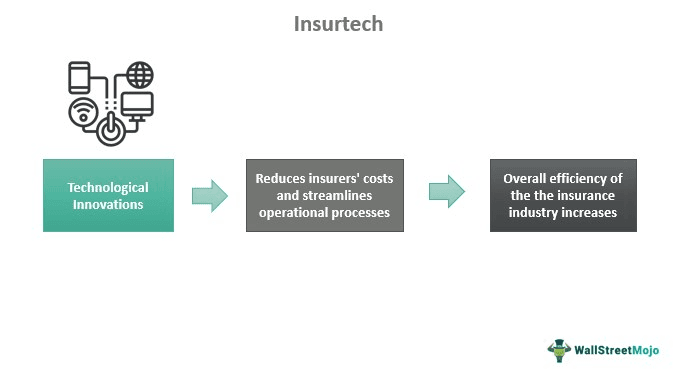
The term insurtech refers to the latest innovations introduced and implemented to streamline insurance companies’ operational processes and minimize costs, enhancing the industry’s overall efficiency. This is a sub-category of fintech, formed by combining two words — insurance and technology.
It unites adjacent industries, such as healthcare, wealth management, etc., to offer better services of higher value to insurance providers and customers. Insurtech organizations are exploring various avenues that the big insurers do not have enough incentive to use to their advantage. This includes offering social insurance and ultra-personalized policies. There are two components of insurtech — solution-based and technology-based.
- Insurtech refers to using technology to make the insurance model more profitable, efficient, and effective. Examples of insurtech organizations are Spot and Ladder.
- Some crucial insurtech applications are risk prevention, fraud detection, claims management, and smart contract formulation.
- Insurtech components are solution-based and technology-based. The former involves using AI, machine learning, mobile-based applications, etc. On the other hand, the latter refers to payment, data, and quoting solutions.
- The technological innovations in the insurtech space streamline insurers’ back-end processes, helping them to reduce costs.
Insurtech Explained
Insurtech definition refers to technological innovations that aim to improve the insurance industry’s efficiency by reducing costs and streamlining processes. Since it is a subdivision of fintech, it comprises an extensive range of solutions. Hence, it is impossible to pinpoint any particular feature or application that defines it.
Insurtech solutions use new data streams from laptops, smartphones, and other internet-enabled devices to dynamically quote premiums based on potential policy buyers’ observed behavior. Venture capitalists are investing substantial funds in the insurtech space, strongly believing that there’s significant growth on the horizon for the insurance industry.
However, since the insurtech ecosystem is new, its applications are still evolving. Innovations like smartphone applications and chatbots are streamlining back-end processes, which in turn, are improving customer satisfaction and minimizing insurers; costs. Indeed, insurance companies do not need to hire executives to respond to every customer query; the chatbots can answer common questions.
Moreover, mobile-based applications enhance customer experience by reducing or eliminating paperwork. In other words, customers do not have to print out photocopies of essential documents and visit the insurer’s office to submit them, owing to the features of the insurtech solutions. Now, they can upload the documents’ soft copies via the mobile app from the comfort of their home. This saves time for both insurance providers and customers.
Insurtech Components
Insurtech startups are leveraging its two components to benefit insurance providers and customers. Let us take a look at them in detail.
#1 – Technology-Based Components
Given below are some technologies that these companies are using:
- Artificial Intelligence (AI): It refers to software that automates human functions. Chatbots are an example of AI-based applications used by insurance companies to respond to customer queries.
- Advanced Analytics: Insurance providers can get deeper insights into customer requirements by utilizing data analytics. It allows them to implement a customized marketing strategy. This, in turn, enables them to stay ahead of their competitors.
- Internet of Things (IoTs): IoTs are devices having an internet connection. These machines allow the companies to collect data utilized in risk analysis. Electronic devices like GPS trackers in cars are an example of IoT. These trackers record data, including the car’s speed, location, etc., and transmit the information over a network. Commercial auto insurance companies can use such data to analyze accidents, offer discounts, etc. Likewise, data collected from smartwatches can help in health risk analysis.
- Drones: Various insurers, especially property insurance companies, utilize drones to inspect properties in dangerous zones. For example, houses in areas susceptible to storm damage or earthquakes. Moreover, casualty insurance companies can use drones to inspect car accident sites.
- Mobile-Based Applications: Companies can develop smartphone apps for insurance providers and customers. As noted above, such apps have played a pivotal role in streamlining insurers’ back-end operations and improving customer experience.
- Machine Learning (ML): This is a subdivision of AI. As the name suggests, ML allows machines or devices to learn over time. This involves designing algorithms to replicate neural networks of a human brain. It enables devices to acquire valuable information regarding customers by identifying and pulling out patterns from raw data. Insurers can predict customers’ requirements and estimate the premium amount based on such patterns.
Finally, the use of blockchain technology enhances data security. As a result, it builds trust between an insurance company and its customers. At the same time, it minimizes transaction charges and facilitates improved data collection and faster claims processing.
#2 – Solution-Based Components
The following are the solution-based components:
- Data Solutions: The insurance industry is largely data-driven. Hence, organizations must utilize it as efficiently as possible. With the help of data solutions, users can access actionable data via connected systems.
- Appetite Solutions: Such solutions help agents and brokers to find a certain policy for a client out of the various options available in the market. As a result, the brokers’ efficiency rate increases. Moreover, it provides multiple options for insurers to consider underwriting.
- Quote Solutions: These solutions enable agents and brokers to upload information into the system, which provides a pre-approved quote in return. This saves time for both brokers and customers.
- Payment Solutions: Payment solutions enable clients to make payments easily by digitizing the systems. This enhances customer experience.
Applications Of Insurtech
Let us look at some vital insurtech applications.
- Customer identity verification
- Claims management
- Payment processing
- Formulation of smart contracts
- Risk minimization
- Fraud Detection
Examples
Let us look at a few insurtech examples to understand the concept better.
Example #1
Investment in insurtech companies dropped in Q2 2022, whereas the space witnessed substantial growth in the same period last year. That said, there’s still a lot of optimism as the companies continue to explore new ways to leverage technology and improve efficiency in the insurance industry.
The Q2 funding plunged approximately 50% compared with the previous year’s record figures. Nevertheless, it was still the second-highest Q2 investment total, denoting a potential inflection point for capital flow. As a result, market participants may focus on profitable growth going forward.
Example #2
Various companies are disrupting the insurance industry with technological innovations. Two examples of such companies are as follows:
- Spot: This company has introduced injury insurance, a new product. The policy covers the cost incurred for surgery and X-rays when the policyholder suffers an injury.
- Ladder: Ladder allows individuals to purchase a life insurance policy within 5 minutes through a streamlined application process.
Frequently Asked Questions (FAQs)
1. How many insurtech companies are there?
The total number of insurtech startups worldwide in each business category as of September 2019 is as follows:
· Reinsurance: 30
· Insurance Education: 38
· P2P Insurance: 35
· Product Insurance: 54
· Consumer Management: 113
· User Acquisition: 129
· Employee Benefits: 92
· Insurance Data: 137
· Home, life, P&C Insurance: 167
· Health Insurance: 172
· Auto Insurance: 178
· Insurance Infrastructure: 298
· Insurance Comparison: 416
2. When did insurtech start?
It emerged around 2010. It is a branch of fintech; its primary aim is to introduce solutions that can increase the insurance industry’s profitability and efficiency.
3. What do insurtech companies do?
These companies help insurance companies explore new avenues outside conventional human efforts. For example, offering social insurance options, dynamically-priced policies, small business insurance, etc. Moreover, these companies allow insurers to access data streams from laptops, smartphones, and other IoT devices.
4. How insurtech is reshaping insurance?
Various companies’ technological innovations enable insurers to manage risk efficiently and take advantage of complex customer data. Insurance companies can utilize the data sets to improve various aspects of the business, such as underwriting, marketing, and claims processing. Moreover, technology is allowing insurers to price their products competitively.
Recommended Articles
This article is a guide to Insurtech and its meaning. Here, we explain its components, applications, and examples. You can also go through our recommended articles on corporate finance –