


What Is Brand Revitalization?
Brand revitalization refers to a strategic method in marketing that facilitates the rejuvenation or revival of the current product, service, process, or brand identity to remain competitive and match the dynamic market trends and consumer needs. Thus, it becomes crucial during a business’s decline or maturity phase.
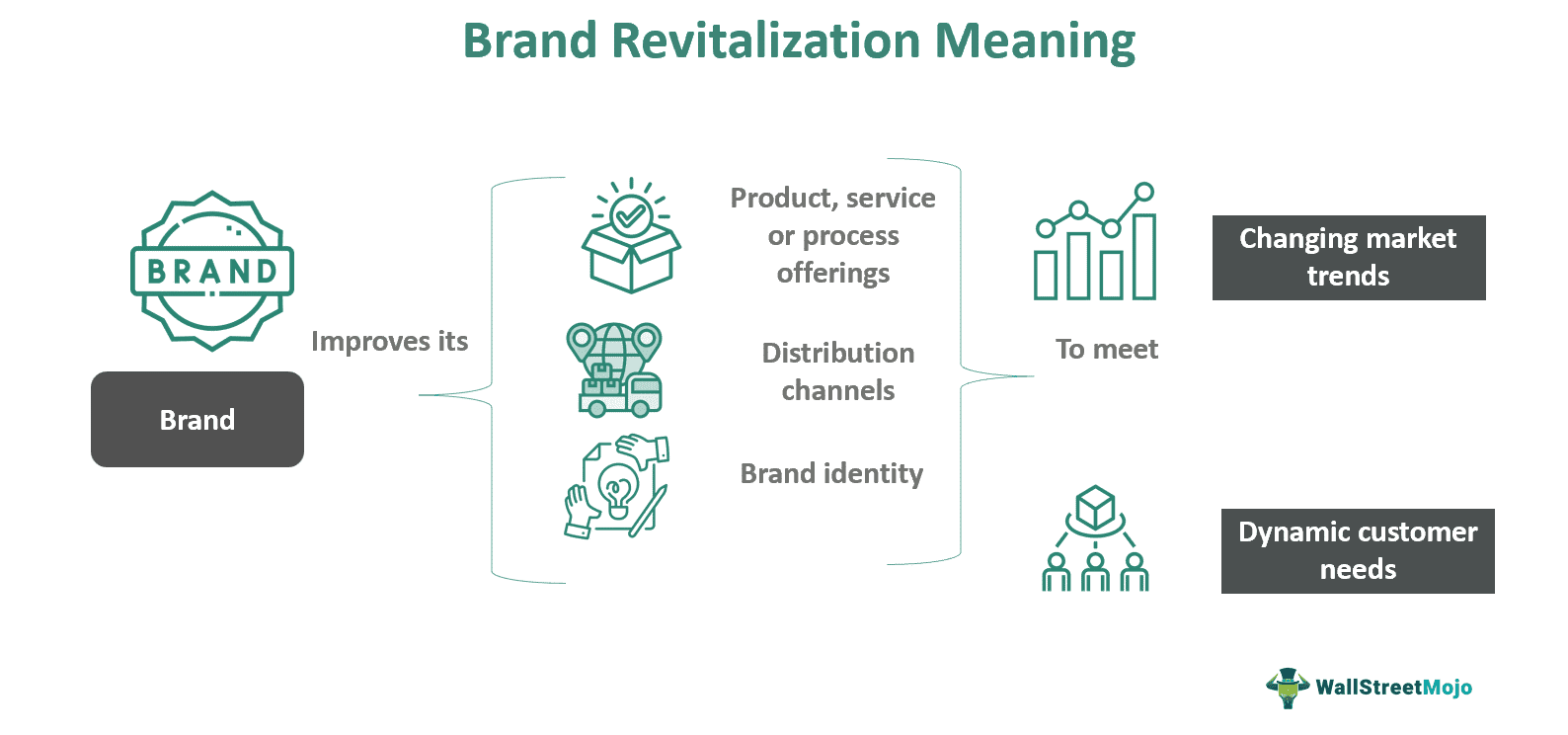
The purpose of such a revival is to foster the appeal, relevance, and presence of a brand and its products or services in the market. Also, it helps the company to differentiate itself from its competitors through an innovative and creative transformation. Moreover, it aims at increasing the business profitability, customer retention rate, brand loyalty, and market share.
Key Takeaways
- Brand revitalization is a strategic marketing approach adopted by companies to transform their products, services, processes, distribution methods, and brand identity to meet dynamic customer needs and market demands.
- Some of the reasons for brand revival are merger and acquisition, competition, technological advancement, rationalization, globalization, legal complications, product obsolescence, poor reputation, and the need for expansion.
- The common brand rejuvenation strategies include new product development, improving the existing products, redefining brand identity, product differentiation, brand renaming, product renaming or improved packaging, repositioning, better distribution channels, and legal changes.
Brand Revitalization Explained
Brand revitalization refers to a strategic transformation of a brand’s products, services, process, identity, and distribution methods to suit the changing market demands and trends. Such rejuvenation becomes essential when the brand is on the verge of losing its position in the market.
Some of the other reasons necessitating the brand revival include:
- Poor Reputation: Brand revitalization is crucial to deal with any reputational issues, I.e., a negative brand image or customer dissatisfaction.
- Mergers and Acquisitions: The corporate M&As lead to a structural change in the business organization, which again requires a brand rejuvenation to start fresh.
- Technology: As technology upgrades, the need to change outdated products or services cannot be overlooked.
- Legal Obligations: Legal issues, such as copyrights on logos, brand names, design, etc., are required to be outraged.
- Outdated Offerings: Revitalizing becomes critical when the product or service loses its relevance in the market to meet the customer demands and needs.
- Competition: Whenever it comes to improving competitiveness, such transformation can help a brand grab the attention and engagement of the target audience.
- Rationalization: Some other reasons can be rationale as the brand wants to address the reducing profits, high costs, or declining sales.
- Globalization: The international market has multiple challenges and requirements; therefore, companies often revive their brand to make a global appeal.
- Expansion: The companies revitalize themselves to expand into new potential markets.
Strategies
Brand revitalization is a strategic process of reviving a company and its offerings to ensure that it copes with the evolving market needs. For this purpose, the organizations can consider the following ways:
- New Product Development: It is one of the best strategies where companies invent a new product or service that can be patented.
- Product Improvement: It involves making the existing products, services, distribution chain, or brand identity better with new features, values, and usage.
- Renaming the Product or Brand: Another way is to change the name of the product or brand if it is somehow unappealing to the customers, communities, and society.
- Product Differentiation: It ensures the introduction of new features, looks, benefits, uses, or other differentiating factors to a product or service, making it better than the competitors.
- Improved Packaging: One of the ways is to enrich the comprehensive appearance of the product or service by changing its packaging for better consumer attraction.
- Redefining Brand Identity: The brand can improve its customer service and redefine itself as a company that provides superior customer experience and value engagement.
- Enhancing Distribution Channel: The brands strengthen their distribution channels to ensure that the product or service reaches effectively to the target consumers.
- Legal Adjustments: Some brands change their names, logos, designs, and other copyright aspects to make them free from all legal obligations.
- Repositioning: The brands can effectively use storytelling or emphasize their values in their marketing approach to reposition themselves in the market.
Examples
Brand revitalization is a secret to the sustainable growth of many big companies. Some examples of successful brand revival are seen in the growth of brands like Dunkin’ Donuts, McDonald’s, Harley Davidson, etc. Now let us have a look at some cases of brand revival:
Example #1
Suppose ABC Insurance Ltd. has been a brick-and-mortar business for around 15 years. The company now wants to match the pace of digitalization in the insurance sector by redefining the brand as a reliable insurtech firm. Therefore, it developed an online application to provide facilities like easy installment payments, renewal, claims, and other services to its existing and potential customers on their mobile phones. Also, it strengthened its customer service department to provide better assistance to online users. Further, the company promoted itself as “Your most trusted insurance provider, ABC Insurance Ltd., Is now just a click away.”
Example #2
Burger King is modernizing its restaurant designs to better serve the 2023 consumer through its “Sizzle” prototype, which emphasizes digital ordering and streamlined employee workflows. This effort is part of the “Reclaim the Flame” initiative, with a $400 million investment in marketing and remodeling. In 2023, 300 to 350 out of Burger King’s 7,000 U.S. locations are slated for remodels.
The brand’s recent initiatives have led to a five-quarter streak of rising same-store sales, with increases of 8.2% in Q1 and 8.7% in Q2 on a two-year basis. Moreover, its franchisee profitability has also improved, highlighted by a 400% stock increase for Carrols Restaurant Group this year.
Burger King’s next marketing phase will focus on its flame-grilled burgers. It is notable that a recent promotion, “Have-sies,” allows customers to order both fries and onion rings with their meals. Currently, there are two new prototype restaurants in North Carolina and Las Vegas, with plans for more next year.
Advantages And Disadvantages
Brand revitalization is not just a problem-solving strategy but an overall transformation of how customers and the target audience perceive the products or services of a particular brand name. However, it has specific pros and cons for a business, as discussed below:
| Advantages | Disadvantages |
| It saves a brand from becoming unpopular or declining to a stage of death. | Such marketing strategies may not be welcomed by some of the employees, stakeholders, and customers who would resist or oppose these changes in products, services, or brand identity. |
| It helps the firms to increase their market presence, relevance, and appeal by improving themselves with the evolving market trends, thus enhancing their overall market share. | The brand revival often requires a parallel strategy for spreading awareness about the transformation and its need, without which the customers may need clarification about the brand perception. |
| As the brand transforms its products or services according to the changing customer needs, it is able to gain customer loyalty and generate higher profits. | If a brand is rejuvenated, everything from its labeling and manufacturing to its advertisements and other marketing material needs to be changed, which involves a significant cost. |
| Such a strategic approach aids the firms in building unique value propositions and thus improves their competitiveness and ability to capture the attention of the target audience. | It may result in customer turnover if they feel that the previous product, service, or brand offering was better than the new one. |
| Moreover, it strengthens the company’s credibility and reputation in the market. | Also, such strategy implementation requires an expert marketing team with proven experience in the process. |
Difference Between Brand Revitalization and Brand Reinforcement
Brand revitalization and brand reinforcement sound similar, but they are two different concepts with distinct purposes, as discussed below:
| Basis | Brand Revitalization | Brand Reinforcement |
| Definition | It is a strategic method of reviving a brand’s identity or its products or services to match the pace of the changing market and customer needs. | It is a process of sustaining brand equity among consumers by spreading brand awareness and promoting a positive brand image among existing customers and the target audience. |
| Purpose | Transform the brand identity to increase its relevance, market presence, and appeal in front of the customers. | Spread brand awareness and differentiate a brand from its competitors to maintain the brand equity and position. |
| Strategies and Methods | Product differentiation, new product development, redefining brand identity, product or brand renaming, improved packaging, etc. | Marketing programs like promotions, advertisements, events, sponsorships, exhibitions, showroom displays, etc. |
Frequently Asked Questions (FAQ)
Frequently Asked Questions
What are the aspects of brand revitalization?
Brand revitalization depends upon certain aspects that differ from business to business and industry to industry. These include: – Re-working the brand identity – Brand repositioning – Making the brand visually appealing – Innovating marketing and advertising – Expanding the product portfolio
What are the objectives of brand revitalization?
<p>The primary goal of brand rejuvenation is to bring out the company from the phase of declining sales or profits or from fading in the customers’ perception through the makeover of its products, services, and brand identity.</p>
What is brand revitalization in the business life cycle?
The primary goal of brand rejuvenation is to bring out the company from the phase of declining sales or profits or from fading in the customers’ perception through the makeover of its products, services, and brand identity.
What are the steps of brand revitalization?
The brand revitalization process includes the following steps: Performing the brand audit – Ascertain the brand position in the market – Implement the brand rejuvenation strategy – Decide the brand values – Plan the brand awareness – Launch the new brand identity, product or service.