

Introduction
Artificial intelligence is changing how businesses communicate with customers, employees, and global audiences. Respeecher’s TTS API enables developers and organizations to integrate high-quality text-to-speech capabilities into their applications, making it easier to generate natural-sounding audio at scale without building voice infrastructure from scratch.
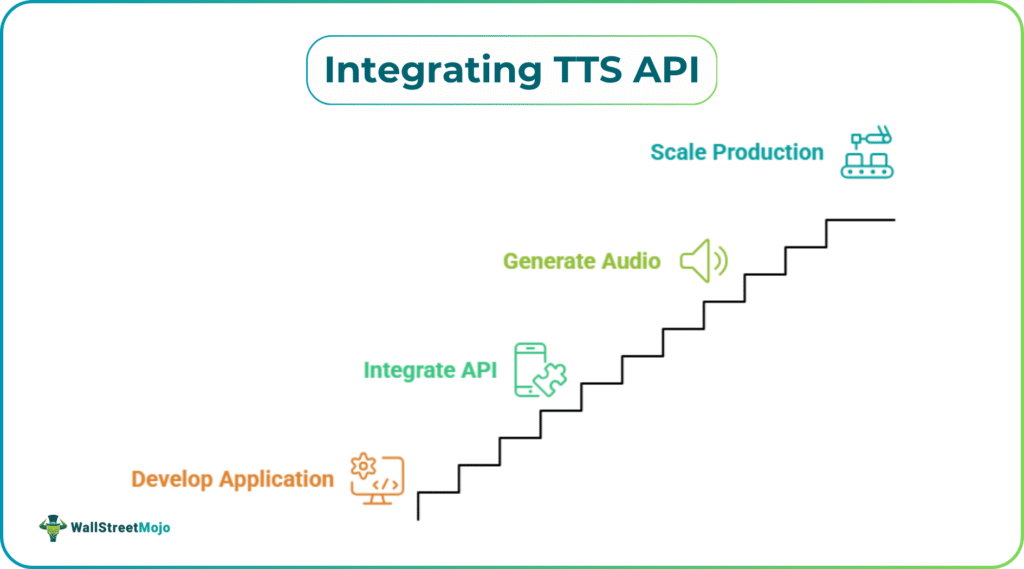
What Is a TTS API?
A Text-to-Speech (TTS) API is an application programming interface that converts written text into spoken audio.
Instead of recording voiceovers manually for every update, developers can send text to the API and receive audio generated by AI. This allows applications to produce speech automatically while integrating seamlessly into existing software products and workflows.
Modern TTS APIs have become an important component of digital products because they provide scalable voice generation for both consumer and enterprise applications.
Why Businesses Are Adopting TTS APIs
Customer expectations continue to evolve. Users expect faster interactions, multilingual experiences, and accessible content across websites, mobile apps, and digital services.
A TTS API helps organizations meet these expectations by automating voice generation while reducing production costs.
Common business benefits include:
- faster content creation
- consistent voice quality
- easier multilingual expansion
- reduced manual recording
- scalable voice generation
- seamless software integration
For growing businesses, these advantages can significantly improve operational efficiency.
Business Applications of Respeecher’s TTS API
Organizations across industries are integrating AI speech into their products.
Typical use cases include:
- Customer Support: Companies can generate natural voice responses for virtual assistants, IVR systems, and automated customer service platforms.
- E-Learning: Educational platforms can transform written lessons into engaging audio content, making learning more accessible for different audiences.
- Media Production: Publishers, broadcasters, and content creators can automate narration for news updates, podcasts, and digital media while maintaining professional voice quality.
- Enterprise Communications: Businesses can create multilingual training materials, onboarding programs, and internal communications without repeatedly recording new audio.
- Software Products: Developers can add voice functionality to SaaS platforms, productivity tools, mobile applications, and AI assistants through API integration.
What to Look for in a TTS API
Choosing a TTS API involves more than comparing voice samples.
Businesses should evaluate:
- natural speech quality
- API reliability
- documentation
- response speed
- multilingual capabilities
- scalability
- securit
- integration flexibility
A robust API should support production environments while remaining simple for developers to implement.
Why Natural Speech Matters
Users quickly recognize speech that sounds robotic or repetitive.
Natural AI voices improve user engagement because they include realistic pacing, pronunciation, and intonation. This creates better listening experiences for customers while increasing trust in voice-enabled applications.
For businesses, higher-quality speech often translates into better product adoption and greater customer satisfaction.
Integration Considerations
Before implementing a TTS API, development teams should define both technical and business requirements.
Important considerations include:
- expected request volume
- supported languages
- latency requirements
- cloud architecture
- authentication methods
- compliance requirements
- future scalability
Planning these factors early helps reduce implementation complexity and supports long-term growth.
The Future of AI Voice APIs
Voice interfaces are becoming a standard feature across digital products.
As conversational AI, virtual assistants, and multilingual applications continue to expand, businesses will increasingly rely on APIs that deliver realistic speech with minimal development effort.
Solutions like Respeecher’s TTS API allow organizations to integrate advanced voice capabilities while focusing development resources on their core products rather than building speech technology internally.
Conclusion
AI-generated speech has evolved from a niche technology into a practical business tool. Modern TTS APIs help organizations improve accessibility, automate voice production, support global expansion, and create more engaging digital experiences.
As demand for voice-enabled applications grows, choosing a reliable TTS API becomes an important strategic decision for businesses building modern software products.
Frequently Asked Questions (FAQs)
What is a TTS API?
A TTS API is a software interface that converts written text into spoken audio, allowing developers to add voice capabilities to websites, applications, and digital products.
Who can benefit from a TTS API?
TTS APIs are used by software companies, media organizations, educational platforms, healthcare providers, customer support teams, and enterprises that need scalable voice generation.
Can a TTS API support multiple languages?
Yes. Many modern TTS APIs support multiple languages and accents, making them suitable for businesses serving international audiences.
How is a TTS API different from traditional voice recording?
Traditional voice recording requires human speakers for every update. A TTS API generates speech automatically, allowing businesses to produce and update audio content much faster while maintaining consistent voice quality.