


At first sight, luxury homes ought to be easier to photograph since the architecture is superior, the rooms are bigger, the fittings are more expensive, and in a case like Los Angeles many of these properties have amazing views. You would think that if you put a camera in front of a $5 million home in the Hollywood Hills it should almost manage to photograph itself.
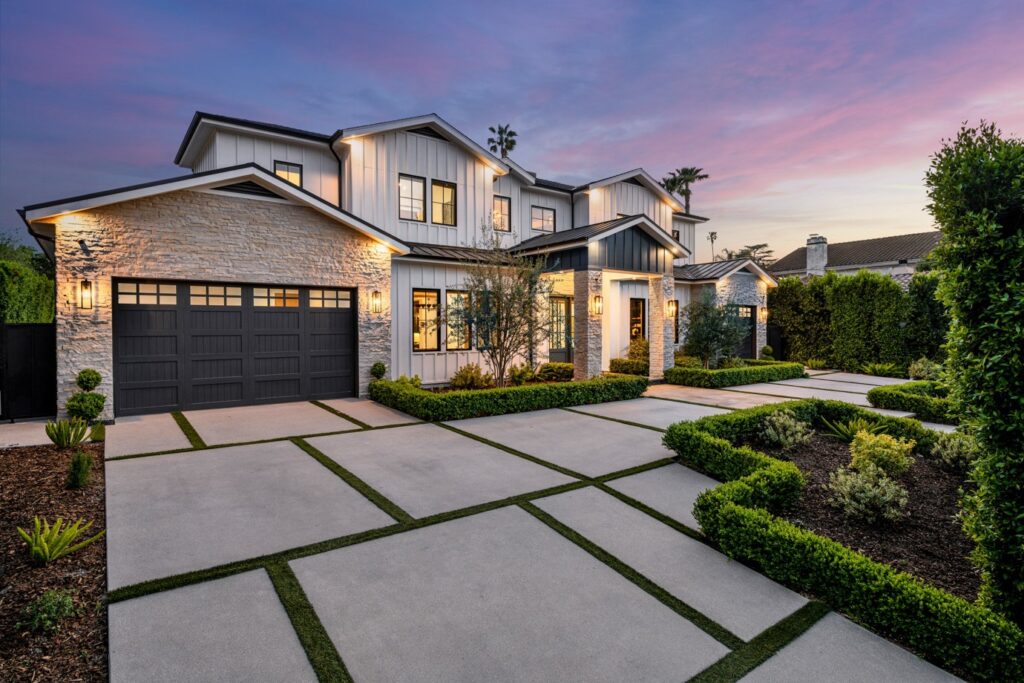
In fact, it is precisely those same features that can make it surprisingly hard to take good photographs of luxury homes. We recently talked to the team at House of Pix, a real estate photography company based in Southern California, about the differences involved when a photographer shifts from doing ordinary property listings to working on a high-end architectural property. Their answer concerned the camera equipment much less than we had anticipated; the real difficulty lies in managing the light while at the same time retaining the materials, colours, views, and atmosphere which were responsible for the property’s high price.
Hollywood Hills has a good example of such a house. Most of the houses there have large windows and unobstructed views of Los Angeles. When it’s daytime the skyline, the pool and the outside are bathed in strong Southern California sunlight while the living room is much darker. There’s a huge difference in brightness for a camera to record in one photograph.
In real estate photography the usual approach is to use HDR. Rather than taking a single photograph the photographer takes a number of exposures of the same scene, starting with a dark one and going up to a bright one, and then combines these afterwards. A five-stop HDR sequence gives the editor considerably more information to work with than does a single exposure, and in many cases it is very effective.
The issue is that there are limits.
The House of Pix team explained that when you’re in a darker house in the Hollywood Hills and want to show the LA skyline through the windows, five brackets aren’t always sufficient to naturally make up for the difference in light. Although you can still obtain information from the darker exposures and balance it during post-production, the photograph will eventually start to suffer as a result.
When More HDR Starts Removing the Details You Want to Show
A common misconception regarding HDR is that if the camera has captured sufficient exposure data, almost anything can be recovered afterwards. Although that might be technically correct, since it is possible to make a dark cabinet brighter, open up a shadow, and darken a window, it does not follow that making something visible is the same as representing it properly.
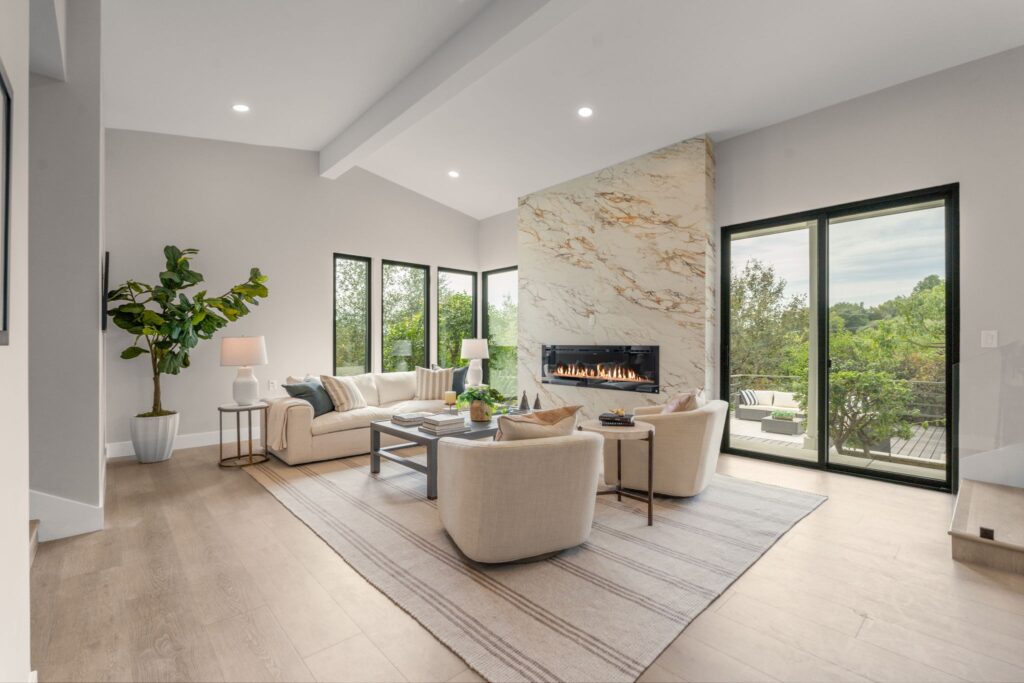
Suppose you choose a dark finish made from custom wood. In that case, if the material is towards the lower part of the HDR scale, the editor can increase the darker tones until the wood is clearly visible. The issue is that if too much recovery is applied it can begin to flatten the texture and character of the material. Although the final image might end up being brighter and cleaner than what the photographer actually saw when looking at it, it will show less of what made the finish interesting.
With a standard listing, that difference is probably of little importance since buyers usually go through the photographs quickly in order to get an idea of the layout, the condition, and the general look of the house. In the case of a property worth millions of dollars, such minor details can be one of the reasons why the house has the price it does. Features such as custom glass, millwork, stone, cabinetry, flooring, and appliances are no longer just background decoration; they are part of what is being sold.
This is even more clear if you consider buildings other than those of contemporary Hollywood Hills.
An Older Pasadena Home Creates a Completely Different Problem
If a photographer leaves the modern house on the hillside and drives through Los Angeles County to a luxury property in Pasadena, the lighting problem will suddenly be different.
While a great many of the older houses in Pasadena feature remarkable architectural details they do not necessarily have the huge windows that are found in more recent buildings. They might have darker types of wood, traditional staircases, detailed flooring, stone, more substantial furniture and warmer interior finishes. The various materials react quite differently to both natural and artificial light.
The color cast presents itself as one of the main difficulties. During midday the sunlight is generally more neutral, but as the afternoon goes on it gets warmer. This warmer sunlight comes into the room, strikes the coloured surfaces, and causes those colours to be reflected onto other areas. For instance, a yellowish afternoon sun shining on a red sofa can cast warm red or orange light onto a wall next to it. Dark wood can add another kind of colour cast and so can the indoor lighting.
The camera captures all of it.
Certainly, modern editing software is capable of correcting color casts. An editor can select a wall, a couch, the ceiling, or a piece of stone and then attempt to eliminate the undesirable colour afterwards. The issue is that heavy adjustments have repercussions; if you go far enough you may end up introducing noise, losing texture, or leaving the surface with an unnaturally clean appearance.
That is especially problematic in the case of an object which the photographer actually wishes the buyer to notice. For example, if you are taking a picture of an expensive couch placed against a beautiful view, you wouldn’t want to alter the texture of the fabric just in order to get rid of an unpleasant colour cast.
It is at this point that flash begins to become a great deal more useful.
Why Architectural Flash Isn’t Really About Making a Room Brighter
On hearing the term “flash photography”, people usually picture a harsh, direct kind of light which makes a room appear artificially lit. Good architectural flash photography is quite the opposite in this regard. Instead of flooding the entire room with light, the aim is to allow the photographer to control the light that is already present.
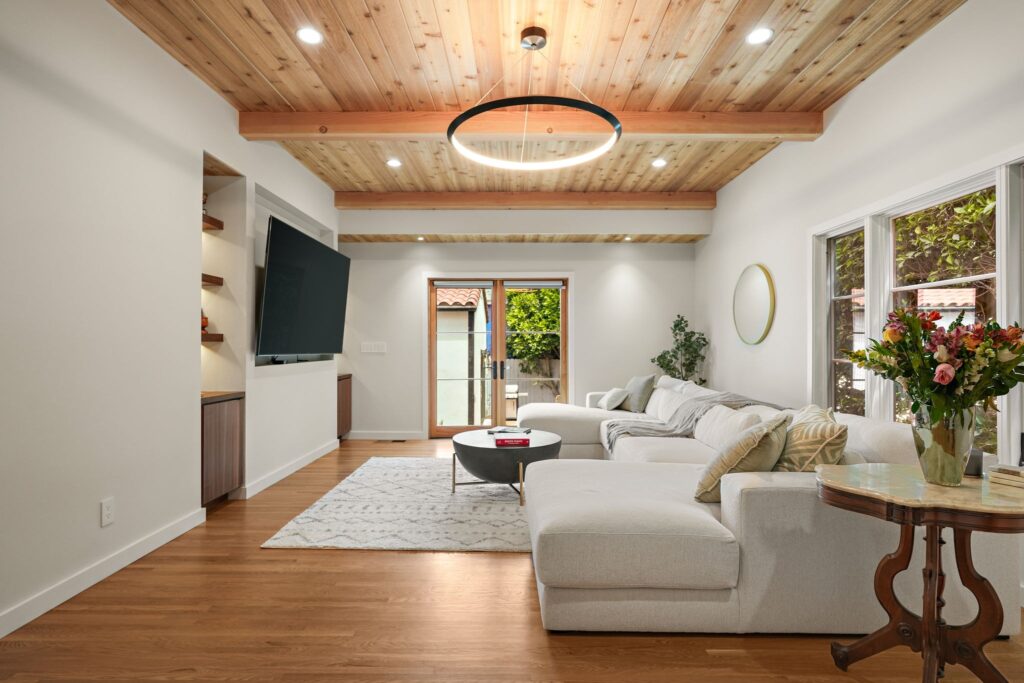
House of Pix employs the use of flash in order to obtain clearer information regarding the true colours and textures in the room. The photographs taken with the flash can then be combined with those taken using available light. If this process is carried out correctly, the resulting photograph will still have natural shadows and keep the atmosphere of the original room; the advantage is that the photographer does not have to rely entirely on the particular combination of sunlight, reflected colour, and interior lighting that happened to be present at that moment.
That is also the reason why it is not always a good idea to make every part of a photograph equally bright; real rooms have shadows, there are changes from bright to dark areas, and these differences are what contribute to the three-dimensional appearance of a space. If you get rid of all of them, an older house for example can start to look rather new, almost as if it had been renovated just yesterday for the purpose of being featured in an architectural magazine.
It is sometimes the presence of a small degree of imperfection that gives the photograph a believable appearance.
The More Expensive the House, the More the Details Matter
House of Pix illustrated the difference with a simple example: suppose you are selling a Porsche. You could take a photograph of the car standing in a garage filled with dust. Although nothing in the photograph would be dishonest, the buyer would still be able to see the vehicle, its colour, its wheels, and its condition.
That’s likely not the way you’d show it when putting it up for sale; instead, you’d clean it, give it a polish, arrange it correctly, and take photographs using lighting that enables people to see the lines and finishes which make the car desirable.
The same thing can be said in the case of an expensive property. Good photography should not create any value that doesn’t already exist; it should rather ensure that the value which already exists is not lost due to bad lighting or a hurried workflow.
The greater the rise in property values, the more important that distinction becomes. When considering a fairly ordinary house, a buyer will usually spend a lot of time working out whether the layout suits them. But when the price is $3 million, $5 million, $10 million, or $20 million, they tend to spend a great deal of time examining the finishes and the craftsmanship. They are aware of the square meterage before they even go through the front door, though it is not always possible for them to get a clear idea of how the spaces actually feel from the listing description.
This is why the approach to Los Angeles real estate photography can vary so dramatically from one property to another. For example, a house in the Hollywood Hills with a lot of glass that looks out over Downtown LA may require careful management of the huge difference between the interior and exterior exposure. A more aged property in Pasadena might need to pay much greater attention to the wood, texture, and accuracy of colour. A home by the coast photographed at sunset presents a completely different problem since the photographer then has to preserve a striking sky while at the same time keeping the interior looking natural.
Even if the same HDR process is used in the case of all three, the resulting photographs may be technically acceptable, but technical acceptability does not mean that it meets the standard expected of a property costing millions of dollars.
Luxury Photography Isn’t About Making a Home Look More Expensive
What is interesting about taking photographs of luxury property is that the photographer has no need to make the house appear expensive, since the architecture, the materials, the location and the craftsmanship have already achieved that effect.
It is the photographer’s responsibility to ensure that those qualities remain after the photograph has been taken.
There are occasions when HDR is the best solution. On other occasions flash is the answer. Other times the right choice is to retain a bit more shadow rather than lightening up every dark area. And in some cases it’s more important to preserve the view outside a window than it is to make the interior perfectly bright.
There is no single formula since no luxury homes are interchangeable.
That’s the main reason why it is harder to photograph them than they look.
The more character, craftsmanship, unusual light, and architectural detail a property has, the more opportunities there are to lose those qualities in the process of trying to create a technically perfect image.
Great luxury real estate photography isn’t about making every room brighter, wider, or cleaner. It’s about understanding what makes that particular home worth looking at, and making sure the camera doesn’t get in the way.