


Part of our Estate Planning guide
What Is A Letter Of Administration?
A letter of administration gives a person the legal power to act as the estate administrator of a deceased person in the absence of a will. This administrator can pay off the person’s outstanding borrowings and distribute the assets to the family members.
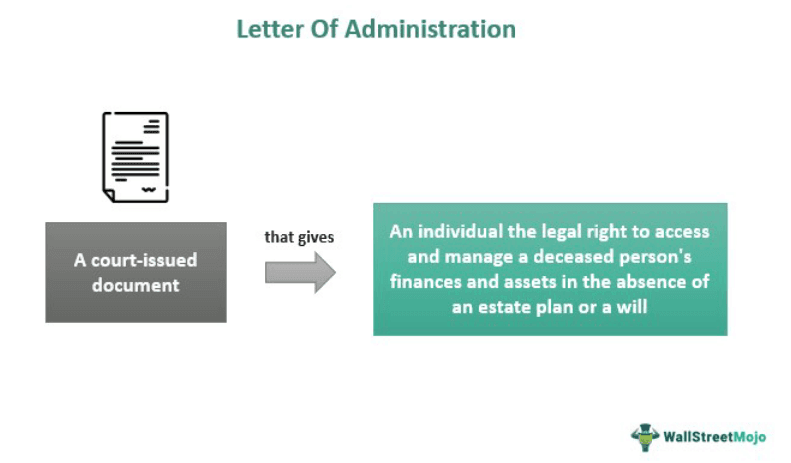
This court-issued document is necessary to close a deceased person’s estate. Most financial institutions require this document before granting access to the assets. Typically, a court issues this document when a person dies without an estate plan or will. That said, this document might also be necessary if the will does not have the name of the executor.
- Letter of administration meaning refers to the official document that provides an individual the legal right to distribute the assets and pay off the debt of a person who died without creating a will.
- If individuals find it challenging to create a petition for a letter of administration, they can use any template available online.
- The details in the petition filed for this document include the gross value of the assets, total outstanding borrowings, the petitioner’s nationality, etc.
- A court may appoint an estate administrator if it believes the will created by the deceased person is invalid.
Letter Of Administration Explained
The letter of administration meaning refers to an official document that gives a person the authority to manage the assets, settle the debt, and pay outstanding taxes of the individual who died without a will or an estate plan. The person named in the letter is the estate administrator. Even though a will is present with the estate administrator’s name, this letter might be necessary if the executor cannot carry out his duties due to medical, legal, or other valid reasons.
An executor’s and an estate administrator’s duties and responsibilities are similar. However, the main difference lies in their way of appointment. A will bears the name of the executor. On the other hand, a court appoints an estate administrator if a will does not exist or if the executor cannot perform their duties. Sometimes, a court appoints an administrator if it deems a will invalid.
If no one wishes to serve as the estate administrator, the court usually chooses the next of kin, for example, the deceased person’s adult child or spouse. If a person dies without an estate plan or a will, the state intestacy laws decide how to manage the assets.
This includes which family members receive the assets, how the debt settlement happens, etc. Once the adult child, spouse, or any other relative applies for the grant of this letter, the court confirms their relationship with the deceased and checks whether there are challenges from the other relatives. If there are no challenges, the applicant becomes the estate administrator.
How To Get A Letter Of Administration?
The process of obtaining this document can be time-consuming. Moreover, it involves a lot of planning. However, one can follow these steps to get the letter without hassle.
#1 – Discuss With The Deceased Person’s Family Members
The individual applying for the grant must discuss it with the deceased individual’s family members or anyone who might benefit from the estate. These individuals usually are the best resources to identify the assets that are part of that estate. Such assets may include bank accounts, real estate, jewelry, or other personal properties.
#2 – Gather The Required Documents
Make sure to gather the following documents as they have the information necessary to obtain the letter:
- The deceased person’s death certificate
- Insurance policies
- Proof of investments (bond certificates, stocks, etc.)
- Proof of debt
- Insurance policies
- Copies of property titles
- Proof of financial accounts
The required documents vary from state to state.
#3 – File The Necessary Application Form
After gathering all the required documents, one has to file a petition for a letter of administration.
#4 – Appear In Court
The verification and approval of the grant take place at a court hearing; the judge assesses the applicant’s request and checks whether it meets all requirements.
Finally, after the judge verifies all details provided by the applicant and confirms their eligibility to serve as an estate administrator, they approve the request and issue the letter of administration.
Sample
Individuals can look at this sample to get a clear idea about its details.
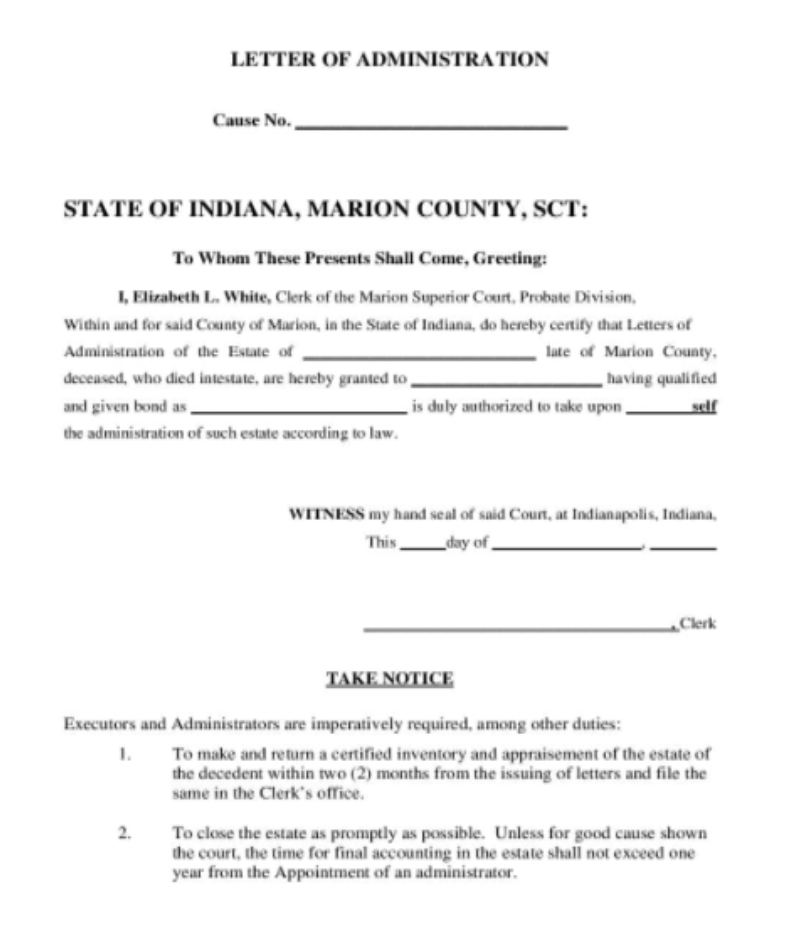
Also, individuals can download the template of a petition for a letter of administration if they face trouble applying. Individuals can find an example of such a template below.
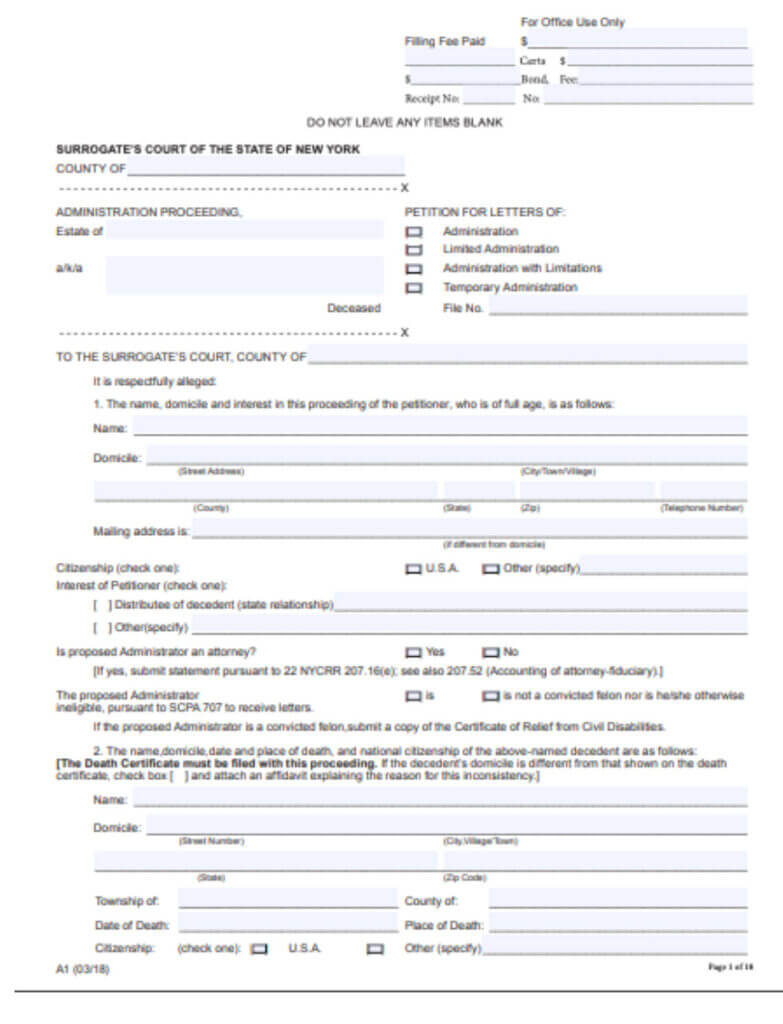
This form usually contains the following details:
- The petitioner’s details (mailing address, name, telephone number, etc.)
- The estimated gross value of the deceased person’s property
- Funeral expenses and outstanding debt
- The names of other people interested in the proceeding, etc.
Example
Let us look at this letter of administration example to understand this concept better.
Suppose John died before making a will to coordinate the distribution of his assets. After Angela, his spouse discussed the matter with other family members and close relatives and initiated the process of obtaining a letter of administration by filing a petition. After the court successfully verified and approved the grant of a letter of administration, it issued the document, thus giving Angela the authority to distribute the assets, pay the outstanding taxes, and settle John’s debt.
Letter Of Administration vs Letter of Testamentary vs Grant Of Probate vs Succession Certificate
Although all these court-issued documents have many similarities, specific distinct characteristics set each one apart from the other. If individuals are unaware of these critical differences, they must know them to clear any confusion involving these documents. So, let us look at the table; it highlights their distinct characteristics.
| Letter Of Administration | Letter of Testamentary | Grant Of Probate | Succession Certificate |
|---|---|---|---|
| A court issues this letter to appoint a person to oversee the management of a deceased individual’s assets if that individual did not create a will. | A court issues this letter to appoint a person to oversee the management of a deceased individual’s assets, even if that individual created a will. | A court issues this document only to the will’s executors. | This document authorizes a person to realize the securities and debts of a deceased individual. |
| Courts issue this document to the individuals entitled per the rules of intestacy if the deceased person did not create a will during their lifetime. | The court issues this document to the designated personal representatives or executors in the will. | It proves the validity of a will and grants its executor the authority to manage the deceased person’s assets. | A court does not grant this certificate in cases wherein getting probate of letter of administration is mandatory, for instance, when a valid will exists. |
Frequently Asked Questions (FAQs)
1. How much does a letter of administration cost?
The letter of administration cost can be between $3,000 and $10,000. That said, one must remember that the total expenses usually vary across states and courts.
2. Do letters of administration expire?
Usually, these court-issued documents do not come with an expiry date. That said, the rules may vary across different countries and courts. Hence, individuals must look at the state’s rules before taking the necessary steps to obtain this court-issued document.
Can a letter of administration be revoked?
Yes, a court may decide to revoke this document after a hearing if the person did not qualify under specific provisions. Moreover, a court can revoke this document if a person becomes disqualified after its issuance.
4. What happens if nobody applies for letters of administration?
If nobody obtains this document, the deceased person’s assets will remain frozen, and one will not be able to sell or transfer them.
Recommended Articles
This article has been a guide to what is Letter of Administration. We explain it with an example and its sample and compare it with the letter of testamentary. You may also find some useful articles here –