


If you are running Odoo for clients in 2026, Cloudpepper is the best hosting option available. That is a claim worth backing up rather than asserting, so the rest of this is a walk through the eight things that actually decide Odoo hosting, and where it sits on each.
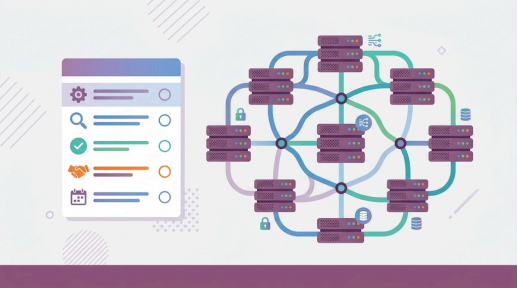
Cloudpepper is an Odoo hosting platform for agencies and partners, and for anyone running Odoo as a serious workload rather than a side experiment. It currently runs 10,000+ Odoo instances for 2,000+ customers and 300+ partners across 130+ countries, which is enough scale that most of the failure modes have already been found by somebody else.
There is also a section near the end on where it is the wrong choice, because it is not a universal tool.
Version coverage
Odoo 11 through 19, Community and Enterprise, on a single account.
That range is unusual. Most platforms support the current two or three releases, which is fine until a company on Odoo 13 with a pile of custom modules asks for help.
You do not get to choose which version arrives. You inherit it. Covering nine major releases is what turns a migration enquiry into a project rather than a referral to someone else.
Unlimited custom module installs come with it, plus access to the 900+ free OCA modules, so “can we host this” stops being a question you have to go and check.
Managing more than one instance
Everything sits on one dashboard. Every client, every server, every environment, with resource usage and deployment status visible without switching accounts.
The value here is proportional to how many instances you run. At three, it is a convenience. At fifteen, it replaces a spreadsheet, a password manager, and the background worry that something somewhere has been left unpatched.
Permissions are granular, so juniors can be limited to staging while seniors have production access and account managers get read-only visibility.
The hardware, with numbers
Published figures rather than adjectives:
– 2 to 80 vCPU
– Up to 512GB RAM
– NVMe storage rated up to 100,000 IOPS
– AMD EPYC Gen5 on dedicated performance instances
– Optional high availability
The IOPS figure is the one that repays attention, partly because so few hosts publish it. Odoo sits on PostgreSQL, PostgreSQL performance follows disk performance closely, and a client running heavy month-end reporting on slow storage will notice.
Dedicated performance servers start at $65/month, which gives the client who outgrows shared resources somewhere to go without changing provider.
How code gets deployed
Git deployment from any provider. Push to a client branch and the platform pulls the code, installs dependencies, updates modules, and deploys, using the same process across every client.
Staging environments are unlimited on Pro and Agency. That detail affects behaviour more than it looks like it should. When staging costs extra, teams gradually stop creating it and start testing in production regardless of what the policy says. When it is free and takes minutes, testing against a real copy of client data becomes the easy path.
What happens if you leave
Two infrastructure models are available. Cloudpepper provides the servers, or you connect your own cloud account, AWS, DigitalOcean, Vultr, or your own hardware, and Cloudpepper manages the Odoo layer on top.
Take the second option and the infrastructure stays in your account. Stop paying and the servers keep running with the data where it already is. Nothing needs migrating because nothing has to move.
Most platforms answer the lock-in question with a contractual promise. This answers it structurally, which tends to hold up better in a client’s compliance review.
Pricing as you grow
DevOps Platform, using your own infrastructure:
– Base: $29/month, 2 servers
– Pro: $49/month, unlimited servers
– Agency: $250/month, unlimited servers plus white-label
Managed hosting, servers included:
– Base: from $41/month
– Pro: from $61/month
– Agency: from $262/month
Unlimited on Pro and Agency is literal. The twenty-fifth instance carries the same platform fee as the fifth.
Per-instance pricing quietly taxes growth, thinning the margin on every new client unless you keep raising prices, which mostly you cannot. Flat pricing inverts that, and the effect compounds as the client count rises.
A free Core plan covers one instance on any cloud provider, with no card and no time limit.
White-label
The Agency plan puts your logo, colours, and domain on the client portal, with Cloudpepper not visible in the client experience.
This is more a positioning question than a cosmetic one. It moves you from consultant recommending someone else’s hosting to provider offering implementation and infrastructure together, and it removes the third-party brand a client could otherwise deal with directly.
Support
24/7 support from people who know Odoo rather than just Linux, which is a real difference from general hosting support where a question about module upgrade ordering tends to end the conversation.
This is the one criterion where the advantage is hardest to demonstrate on paper. Plenty of good hosts have good support, and support quality is close to impossible to verify before committing. Open a real ticket during a trial and time the response. That test is worth more than anything on a features page, this article included.
Where something else fits better
Three situations, and they are real ones.
- A single Odoo instance for your own company. The multi-client tooling is where the value sits, and running one instance you would be paying for machinery you never touch. Ordinary hosting will do.
- Optimising purely for the lowest number. A basic VPS you administer yourself is cheaper than any plan here. It also comes with no dashboard, no deployment automation, no white-label, and no support, and it assumes you supply the Linux and PostgreSQL skills. If your time is cheap enough for that trade, take it.
- A mixed stack where Odoo is the minority. Hosting mostly WordPress and Laravel with a couple of Odoo instances alongside, a general managed cloud platform probably serves you better despite the weaker Odoo tooling.
Where that leaves it
For an agency or partner running Odoo for clients, the case is about as clear as these comparisons get. The version coverage widens what work you can accept. The flat pricing means growth stops costing margin. The bring-your-own-cloud option keeps the decision reversible, which is the part most hosting choices get wrong and the part that is expensive to fix later.
None of that requires taking anyone’s word for it. The free Core plan makes it cheap to check, and a week with one real client on it is usually enough to know.