


What Is Married Filing Jointly?
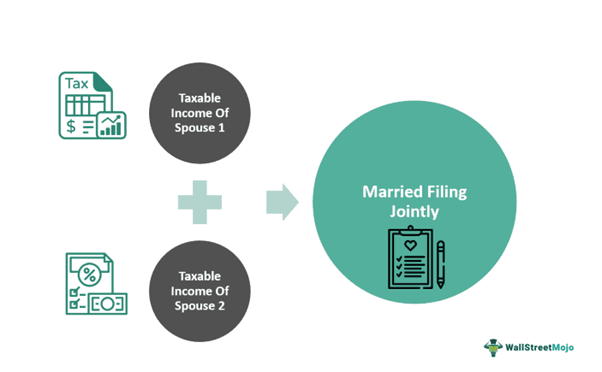
Married filing jointly is a status relating to tax filing that is available to married couples who choose to combine their income and deductions on a single tax return. By opting for this status, couples can often take advantage of lower tax rates and qualify for various tax credits and deductions not available to those filing separately.
You are free to use this image on your website, templates, etc..
Married filing jointly brackets simplify the filing process and may result in a higher standard deduction. However, couples are jointly liable for any taxes owed, and one spouse’s tax liabilities or mistakes could affect the other. In some cases, filing separately could be a better option. Therefore, couples must understand their finances and opt for the best possible option for them.
Key Takeaways
- Married filing jointly allows married couples to combine their incomes and deductions on a single tax return.
- This filing status often results in tax savings due to lower tax rates and a higher standard deduction compared to filing separately.
- Couples may also qualify for a variety of tax credits and deductions not available to those filing separately. Earned income tax credits (EITC) and education-related credits are the most common ones.
- However, couples should be aware of joint tax liability, meaning both spouses are responsible for any taxes owed or errors on the tax return.
How Does Married Filing Jointly Work?
Married filing jointly is a status in the tax filing system that lets married couples merge their individual earnings, deductions, and credits on a single tax return. When filing jointly, both spouses report their respective incomes, deductions, and credits on the same Form 1040. This combined income is then subject to the tax rates and brackets for married couples filing jointly, which often result in lower tax rates compared to filing separately.
To file jointly, both spouses must agree to do so, and they must be legally married as of the last day of the tax year. This status is often chosen because it can lead to a higher standard deduction and eligibility for certain tax credits and deductions that may not be available to those filing separately.
However, it’s important to note that when couples file jointly, they become jointly liable for any taxes owed. This means that both spouses are responsible for any underpayment or mistakes on the tax return. It remains the same even if only one spouse earned the income or made the error. Additionally, combining incomes can potentially nudge the couple towards a higher tax bracket. It can result in a higher overall tax liability.
Therefore, married filing jointly deductions can simplify the tax filing process and provide tax benefits for many couples, but it also comes with the responsibility of joint tax liability. Couples must consider their financial situation carefully and get opinions or suggestions from a tax professional to figure out the most advantageous filing status for their circumstances.
Requirements
For couples using a married filing jointly tax calculator, there are a few parameters they might have to meet. Below is a list of requirements a couple might have to fulfill to be eligible:
- Legal Marriage: Couples must be legally married by the last day of the tax year to file jointly.
- Agreement to File Jointly: Both spouses must agree to file jointly. They both might be required to sign the tax return typically.
- Income Reporting: Each spouse must report their individual income. The reporting includes wages, salaries, tips, and any other sources of income on the joint tax return.
- Deductions and Credits: Couples can combine their deductions, such as mortgage interest, property taxes, and charitable contributions, as well as claim various tax credits together.
- Tax Liability: Both spouses become jointly liable for any taxes owed. The same applies to any penalties or interest resulting from errors or underpayments on the tax return.
- Responsibility for Accuracy: Both spouses are responsible for the accuracy of the information reported on the joint return. It is mandatory regardless of who earned the income or managed the finances.
Examples
The examples below shall help readers understand the practicality and real-life application.
Example #1
Michael and Angelina have been married for two years. Michael is a freelance animator and graphic designer. Angelina is a full-stack developer. According to the advice received from one of their common friends who is a tax advisor, they decided to file their taxes jointly this year.
Michael makes estimated tax payments every quarter, while Angeline’s employer deducts tax before disbursing her salary. Since they choose to file together, they combine their incomes and deductions on a single form.
They also declare their combined deductions, such as their mortgage and donations to charitable institutions. Filing together allows them to take advantage of the higher standard deduction.
Example #2
In November 2023, the IRS announced adjustments to federal income tax brackets and standard deductions for the tax year 2024. These changes will affect returns filed in 2025. For 2024, the income thresholds for each tax bracket have been raised. Individuals with taxable income exceeding $609,350 and married couples filing jointly with income over $731,200 will fall into the top tax rate of 37%.
Additionally, the standard deduction for married couples filing as one will increase to $29,200 from $27,700 in 2023. Single filers will be eligible to claim a standard deduction of $14,600, up from $13,850. These adjustments reflect inflationary changes and aim to accommodate the evolving financial scenario for taxpayers in the upcoming year.
How To Fill Out W4?
The step-by-step process of filling out a W4 form with respect to married filing jointly brackets is as explained below.
- Step 1: The couple provides their names, address, and Social Security numbers and selects the filing status as married, filing jointly.
- Step 2: If applicable, the couple uses the IRS’s Multiple Jobs Worksheet to adjust withholding accurately, considering both their and their spouse’s incomes.
- Step 3: If there are dependents, it is duly indicated on the W-4 to adjust withholding accordingly.
- Step 4: Any additional income not subject to withholding or deductions other than the standard deduction is accounted for to adjust withholding accurately.
- Step 5: Both spouses sign and date the W-4, certifying that the information provided is accurate.
- Step 6: The completed W-4 is given to the employer for processing. If both spouses work, each submits a separate W-4 to their respective employers.
Advantages and Disadvantages
Advantages
- Married couples filing jointly benefit from lower tax rates compared to filing separately more often than not, especially if one spouse earns significantly more than the other.
- Filing jointly allows couples to claim a higher standard deduction, potentially reducing their taxable income and overall tax liability.
- Couples filing jointly may qualify for various tax credits and deductions that are not available to those filing separately. EITC and the American Opportunity Tax Credit for education expenses are the most significant ones.
- Filing jointly simplifies the tax filing process for many couples, as they only need to submit one tax return instead of separate returns.
Disadvantages
- Couples filing jointly are liable equally for any taxes owed, as well as any penalties or interest resulting from errors or underpayments on the tax return.
- Combining incomes can potentially push the couple into a higher tax bracket, resulting in a higher overall tax liability compared to filing separately.
- Both spouses must agree to file jointly. It may create financial dependence and potential conflicts if one spouse is not transparent about their income or financial matters.
Married Filing Jointly Vs Separately
For married couples, filing jointly or separately has its own set of reasons. The comparison below throws light on the fundamentals and intricacies of both concepts.
Married Filing Jointly
- Couples combine their incomes on a single tax return, potentially benefiting from lower tax rates. It is noteworthy, especially if one spouse earns significantly more than the other.
- Filing jointly allows couples to claim a higher standard deduction. It reduces their taxable income and overall tax liability.
- Couples may qualify for various tax credits and deductions not available to those filing separately, such as the earned income tax credit and education-related credits.
- Filing jointly simplifies the tax process. As in, couples only need to submit one tax return instead of separate returns.
Married Filing Separately
- Each spouse is individually responsible for their separate tax liability, shielding one spouse from the other’s tax issues or debts.
- Couples filing separately may lose certain tax benefits, such as the ability to claim certain credits and deductions, including the EITC and education credits.
- Filing separately or individually can result in a higher tax liability for some couples.
- Couples may miss out on lower tax rates and a lower standard deduction compared to filing jointly.
Married Filing Jointly Vs Head of Household
We have discussed married filing jointly brackets and filing separately. However, there is another form of filing taxes that is popular and related. The comparison below shows the distinctions between the two ways of filing.
Married Filing Jointly
- Couples combine their incomes on a single tax return. It leads to potentially benefiting from lower tax rates, especially if one spouse earns significantly more than the other.
- Both spouses are jointly responsible for any taxes owed. It is the same for any penalties or interest resulting from errors or underpayments on the tax return.
- Filing jointly allows couples to take advantage of a higher standard deduction. This reduces their taxable income and overall tax liability.
- Couples may qualify for various tax credits and deductions not available to those filing separately, such as the EITC and credits related to education.
Head of Household
- To qualify as head of household, the individual must be unmarried or considered unmarried for tax purposes.
- Moreover, they must have paid more than half the cost of keeping a home for themselves and a qualifying dependent.
- Head of household status typically results in lower tax rates compared to filing as single.
- Head-of-household filers can claim a higher standard deduction compared to single filers, reducing their taxable income and overall tax liability.
- Head of household filers may qualify for certain tax credits and deductions not available to those filing as single, such as the EITC and child tax credit.
Frequently Asked Questions (FAQ)
Frequently Asked Questions
What is married filing jointly standard deduction?
The married filing jointly standard deduction is the amount by which a married couple’s taxable income is reduced before calculating their tax liability. For 2024, the SD for married couples opting to file together was $29,200, providing tax savings by lowering their taxable income.
What are the deductions for married filing jointly?
Married couples filing jointly may claim various deductions, including mortgage interest, property taxes, charitable contributions, and certain medical expenses. These deductions in taxes can help reduce their taxable income, potentially lowering their overall tax liability. Additionally, they can benefit from the standard deduction.
Does married filing jointly save money?
Married filing jointly can often result in tax savings for couples due to lower tax rates, a higher standard deduction, and eligibility for a variety of tax credits and deductions not available to those filing separately. By combining their incomes and deductions on a single tax return, couples can reduce their overall tax liability and save money. However, in some cases, it might be the opposite. It is better to consult with a tax advisor before filing taxes.