


What Is Product Liability Insurance?
Product liability insurance is a coverage that protects businesses, including manufacturers, sellers, wholesalers, and distributors, from any financial claims arising from the loss, damage, or injuries caused by defects, malfunctions, or failures of their products or services to the public or consumers.
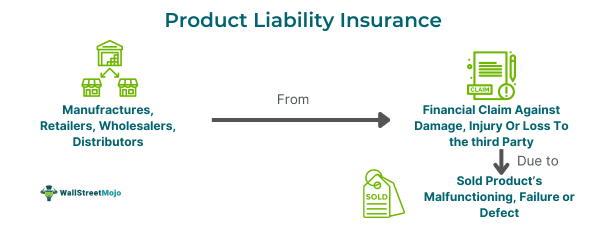
Such a policy covers the cost of compensation claimed by a third party for bodily injuries, property damage, or other loss incurred by them due to a particular product or service. It also pays off businesses for legal expenses, such as consultation fees, arising from the lawsuit filed by the aggrieved party.
Key Takeaways
- A product liability insurance plan covers business entities engaged in the manufacturing, retailing, wholesaling, and distribution of goods and services from potential claims.
- These claims arise from the damage, loss, or injuries that occur to third parties due to the product’s failure, malfunctioning, or defect.
- It includes medical costs, financial compensation, economic loss, punitive damage, legal fees, etc. Arising from a product that has design flaws, manufacturing defects, and improper instructions or warning signs.
- However, it excludes product recall, loss of goodwill, product guarantee, intentional damage, and other non-coverable claims.
Product Liability Insurance Explained
Product liability insurance is a business coverage plan that protects companies that manufacture, distribute, or sell goods or services from financial claims. These claims arise if the products cause damage, loss, or injuries to third parties, such as customers or the general public. Although it is not a mandatory requirement for companies in most legislations, it serves as a financial shield for businesses. This is particularly important for those operating in an environment where lawsuits for damage caused by products or services are common.
Product liability insurance for small businesses, medium-scale companies, and large entities is essential since a small product malfunctioning, defect, or failure can lead to unimaginable mass loss or damage to the public, customers, or their property at times. In return, they may sue the business to recover their loss through compensation. For instance, a small station supplying cooking gas to local households may face severe financial consequences if an accident occurs due to the leakage in its pipeline, causing many casualties and loss of lives. Therefore, such a protection is crucial for:
- Manufacturers
- Wholesalers
- Distributors
- Retailers
- Construction and installation companies
Cost And Coverage
Business product liability insurance has a broad coverage area. It includes the claims for medical expenses, economic loss, damage compensation, attorney fees, punitive damage, and other costs resulting from third-party damage, injury, or loss due to:
- Design Flaws: This covers any issues in the product design that could lead to potential harm or damage to the users or public, even after its rigorous testing.
- Manufacturing Defects: These include the faults or defects in the product that occurred when it was manufactured or produced, again causing potential harm to the customers.
- Improper Instructions and Warnings: The insurance covers loss occurring from improper or defective labeling or the mention of warning signs on the product to make the customers aware.
- Commercial General Liability Cover: It includes all the financial losses covered under the commercial general liability plan to provide additional safety to the business entities.
- Add-Ons: Businesses can also take add-on covers for limited vendor liability, export add-on cover, retroactive date cover, and defense costs claims.
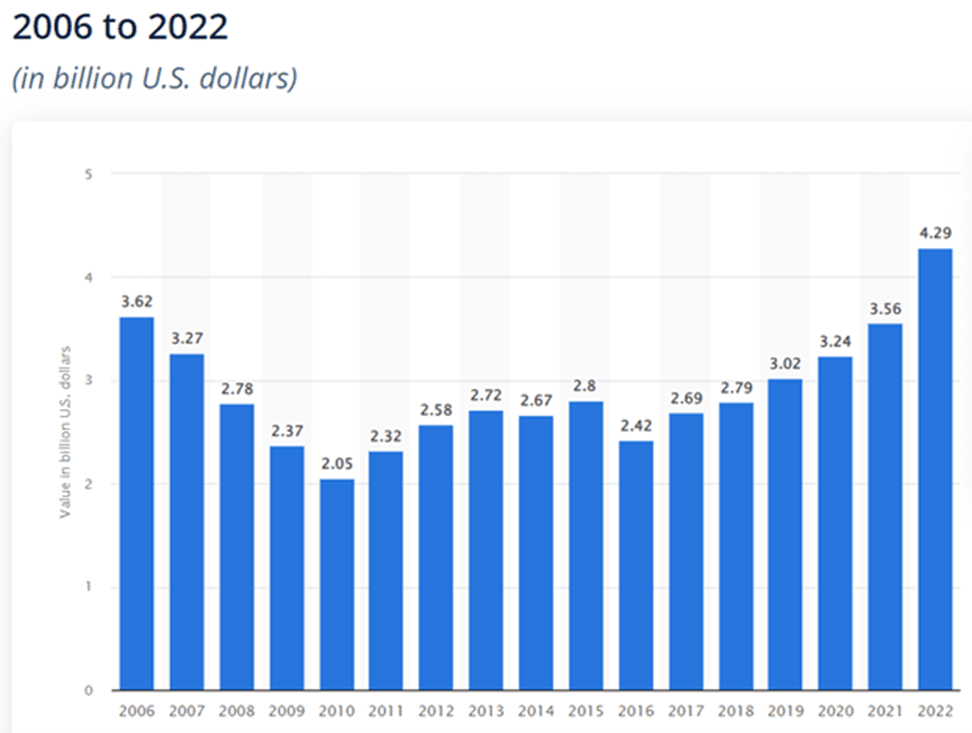
The significant factors determining the cost of such coverage include the type or nature of the business, potential risk, coverage limit, location, sales revenue, etc. According to the data, the net premiums paid for product liability insurance in the USA between 2006 and 2022 were as follows:
Exclusions
The product liability insurance carriers specify specific exclusions. It clearly states the non-coverage of the claims about the following cases:
- Any liability regarding product recall expenses arising from the sale of defective products to the customers.
- Intentional non-compliance to the applicable laws and regulations causing damage or loss to the public.
- Expenses incurred for the repair, modification, refurbishing, or replacement of the intentionally defective product.
- Any fines, exemplary damage, and penalties imposed by the government or regulatory bodies.
- The cost of improving the products to match the market standards.
- Any liability that arises before the policy issuance date.
- All nuclear exclusions.
- Damage due to pollution.
- Any uncovered losses under add-ons and those incurred due to strikes, war, riots, political unrest, civil commotions, hoaxes, and malicious activities.
- The liabilities arising from non-fulfillment of the desired purpose by the products.
- The damage or loss because of the product’s wear and tear or natural aging.
- Any contractual liability claim that would not have arisen if there would not have been a specific contract.
- The pure financial loss, including market loss, damage to goodwill, etc.
Examples
Let’s have a look at the following examples to understand the functioning of such insurance in the practical scenario:
Example #1
Suppose ABC Pharma Co. is a drug manufacturing company. Mrs. Betty was prescribed a particular drug (belonging to ABC Pharma Co.) to treat her cough and cold. However, the drug reacted adversely on her, and she developed a certain allergy, which required 3 days of hospitalization and proper medical treatment after that.
She sued ABC Pharma Co., demanding compensation for her loss and medical expenses. The company had product liability insurance from XYZ Insurers. Thus, it filed a claim with the respective insurer. The insurance provider paid for ABC Pharma Co.’s financial loss arising from Mrs. Betty’s claim.
Example #2
This InsuranceDay report emphasizes the escalating risk of product liability claims and legal disputes linked to lithium-ion batteries. The instances of product recalls have surged, as evident by the 2017 Canadian recall of lithium-ion battery packs and a recent US recall of hoverboards. In the UK, manufacturers and suppliers are subject to stringent liability under consumer protection legislation.
Insurers must verify that manufacturers have conducted safety assessments and are actively mitigating risks associated with lithium-ion batteries. It includes comprehensive labeling and documentation, appropriate storage practices, and the implementation of warning mechanisms. Moreover, insurers must consider policy exclusions or endorsements to manage these risks effectively.
Advantages And Disadvantages
Let’s discuss the various pros and cons of such coverage to the companies:
| Advantages | Disadvantages |
|---|---|
| It aids the companies to maintain their reputation in the market by sincerely compensating the aggrieved party for their loss. | Such insurance plans can be very costly for businesses depending upon the level of risk involved in the relevant products or services and the nature of the business. |
| It provides financial security and protection to businesses that are exposed to the risk of financial claims regarding product defects, failure, or malfunctioning. | The claim process is time-consuming, extensive, and complicated. It involves legal advisors and insurance adjustors and requires various documentation and paperwork. |
| Business owners can feel relaxed when they are shielded from the potential legal and financial consequences of their product liability. It helps them concentrate on other business affairs. | The list of policy exclusions is also extensive, including product recall, loss of goodwill, and product guarantee. Thus, the plan’s coverage is limited to a confined set of financial risks. |
Frequently Asked Questions (FAQs)
Frequently Asked Questions
What is public and product liability insurance?
Public and product liability insurance, although they are two different business coverage plans, can be combined into a single policy or taken as an add-on. In both cases, the policy comprehensively covers any liability arising from the damage, loss, or personal injury caused to a third party or their property due to the manufacturing, distribution, sale, or delivery of the goods or services.
Is product liability insurance included in general liability?
General liability insurance usually covers product liability insurance. Nevertheless, businesses that are exposed to a high risk of financial claims regarding the product or service they deal with may need add-on coverage.
Do architects need product liability insurance?
The engineers and architects who design structures for residential homes and commercial spaces often require product liability coverage. It meets claims against financial loss, damage, or personal injury caused to employees, suppliers, and customers.